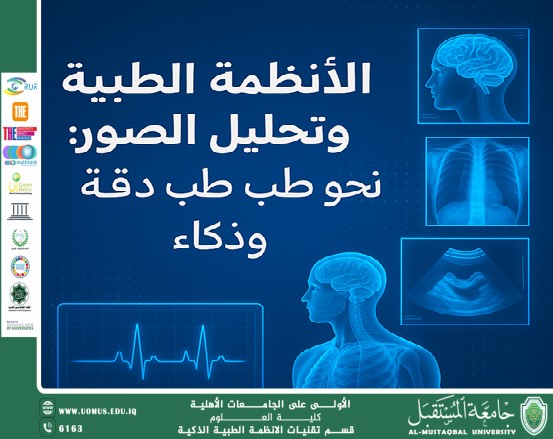
Medical Systems and Image Analysis: Toward Smarter and More Precise Medicine (Asst. Lecturer Quesy Muneer Dhiyab)
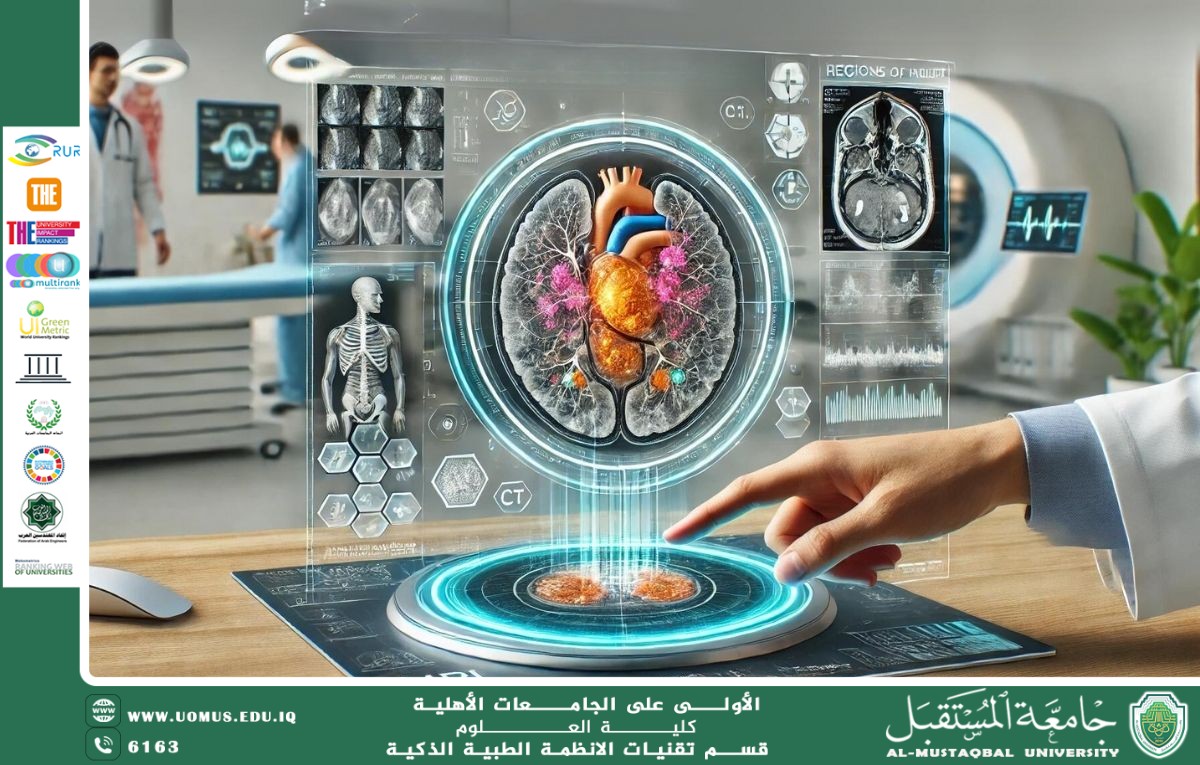
<br />Modern medical systems are considered foundational pillars in advancing healthcare, as they contribute to enhancing diagnosis and treatment through the use of digital technology. These systems integrate smart devices and advanced software to provide accurate information that assists physicians in making swift and informed clinical decisions. This includes record-keeping systems, decision support tools, and vital sign monitoring technologies, all of which improve medical workflow efficiency and reduce human error.<br /><br />One of the most critical applications within these systems is medical image analysis, which offers a clear view of internal body structures without the need for invasive procedures. This analysis utilizes various imaging techniques such as X-rays, magnetic resonance imaging (MRI), and ultrasound. These images are essential for diagnosing many chronic and serious conditions, including tumors, cardiovascular diseases, and neurological disorders—with remarkable precision and clarity.<br /><br />Modern image analysis heavily relies on artificial intelligence (AI) techniques, where algorithms are trained on millions of medical images to automatically recognize pathological patterns. These systems can detect subtle tissue changes and compare images over time to monitor disease progression. Additionally, 3D imaging has become a vital tool in surgical planning, providing a detailed visualization of internal structures and significantly reducing the risk of errors during procedures.<br /><br />These systems also contribute to advancing telemedicine, allowing physicians to analyze patient images and monitor their conditions without requiring in-person visits—saving time and effort. They also enable image sharing between doctors at different institutions, opening the door to collaborative diagnostics and team-based decision-making in complex cases. This capability has greatly enhanced the quality of care, especially in remote areas or regions lacking specialized medical personnel.<br /><br />Despite all these advantages, medical systems and image analysis face challenges—chief among them being the protection of privacy and securing medical data against breaches or loss. Therefore, these systems must be supported by robust infrastructure and well-trained personnel. With the advancement of artificial intelligence and the continuous improvement of algorithms, the future of medicine is becoming increasingly <br /><br />Al-Mustaqbal University – The First University in Iraq.<br />