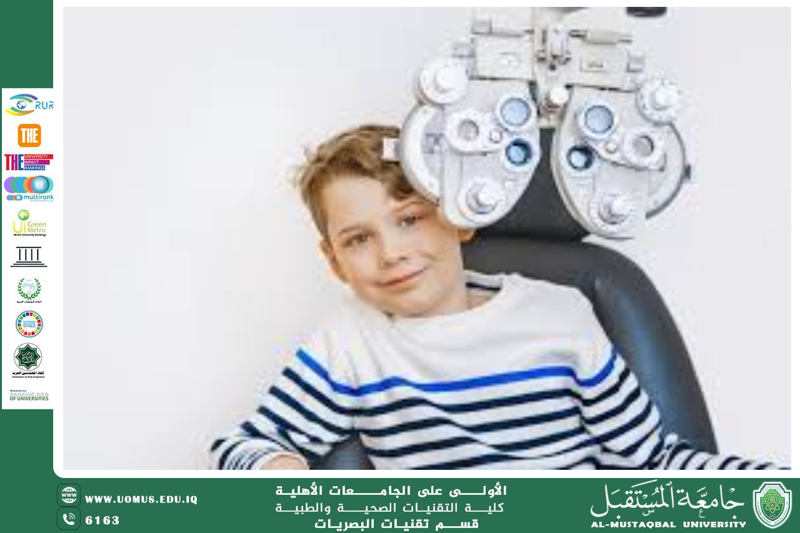
A scientific article by the lecturers, Assist.Prof.Dr. Munther Sameen Shukur / Lect. Mohaimen Sameer Aref / Lect. Ali Hadi Al-Husseini (Vision and Academic Performance in Children: The Importance of Early Eye Examinations)
This article highlights the critical role of vision as a fundamental component in the learning process. Studies indicate that over 80% of the information acquired by children in school is visually mediated, making eye health essential for academic success. The article explains how even minor visual impairments can negatively impact academic performance and may be mistakenly interpreted as behavioral issues or learning disabilities.<br />It details warning signs that may indicate visual problems, such as frequent eye rubbing, complaints of headaches, or sitting too close to the board. The article emphasizes the importance of conducting eye examinations at key developmental stages—at 6 months, 3 years, and prior to school entry—to detect conditions such as amblyopia (lazy eye) and binocular vision disorders, which can interfere with reading and concentration.<br />Furthermore, the article underscores the crucial role of both parents and teachers in observing behavioral and visual changes in children and encouraging timely visits to optometry clinics. These clinics, in turn, should be equipped to provide comprehensive pediatric visual<br />assessments. The article concludes by affirming that healthy vision is just as vital as intelligence or diligence, and that early detection and timely intervention can significantly enhance a child’s educational journey and self-confidence.<br />