A scientific article by the lecturer, Lect. Ali Hadi Al-Husseini (Retinal Detachment)
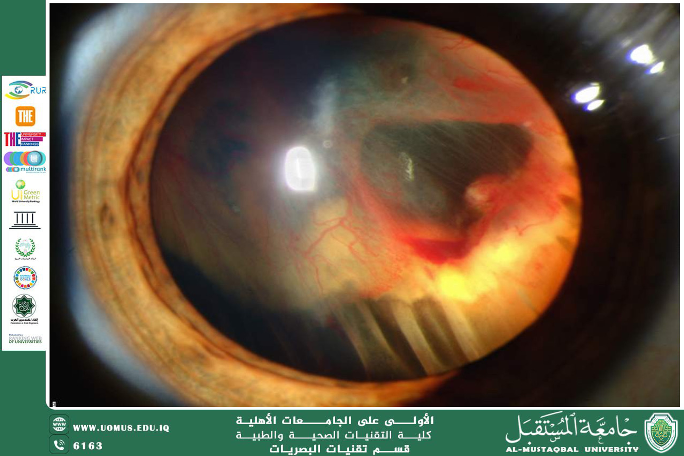
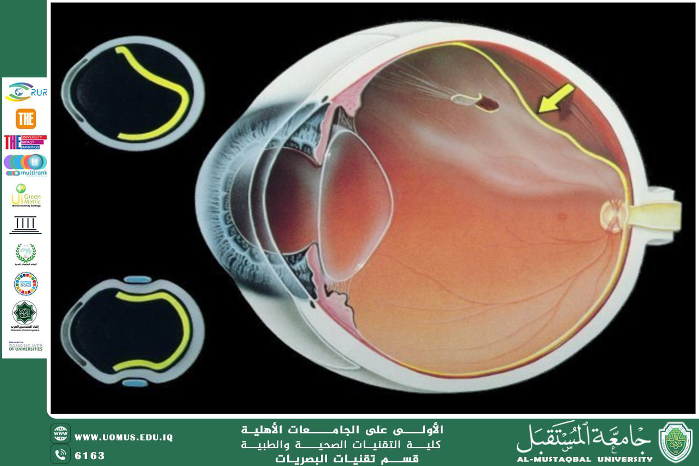
Introduction<br />Retinal detachment is a serious ocular condition in which the retina separates from the underlying supportive tissue. In this state, the retina cannot function properly, and if not treated within 24 to 72 hours, the patient may suffer permanent vision loss.<br />Who Is at Risk for Retinal Detachment?<br />The following groups are considered at increased risk for retinal detachment:<br />• Adults with high myopia (nearsightedness)<br />• Individuals with a history of eye trauma<br />• Those who have undergone cataract removal surgery<br />• Individuals with a family history of retinal detachment<br />Spontaneous retinal detachment can also occur without prior warning, particularly among older adults and people with significant myopia.<br />Symptoms of Retinal Detachment<br />Common signs and symptoms include:<br />• Flashes of light in the visual field<br />• Floaters (small moving shapes or threads in vision)<br />• Shadow or curtain-like darkness over the peripheral (side) vision<br />Notably, retinal detachment is painless, but the presence of any of these symptoms requires immediate consultation with an ophthalmologist.<br />Diagnosis<br />Diagnosis of retinal detachment is made through a comprehensive eye examination performed by a retinal specialist.<br />Treatment Options for Retinal Detachment<br />Several treatment techniques are available, depending on the severity and location of the detachment:<br />1. Laser Photocoagulation or Cryotherapy<br />o Effective when retinal tears are detected early.<br />o Uses either heat (laser) or extreme cold (cryotherapy) to seal retinal breaks.<br />2. Pneumatic Retinopexy (Gas Bubble Injection)<br />o A small gas bubble is injected into the vitreous cavity to press the retina back into place.<br />o Laser or cryotherapy is often applied afterward to permanently seal the tear.<br />o Success rate: ~85%<br />3. Scleral Buckling<br />o Involves placing a silicone band around the sclera (white of the eye) to hold the retina in position.<br />o The band is not visible and remains permanently in place.<br />o May be combined with laser or cryotherapy.<br />o Success rate: ~95%<br />4. Vitrectomy<br />o Used for larger or more complex detachments.<br />o The vitreous gel is removed and replaced with a gas bubble or silicone oil to support the retina.<br />o Has a success rate comparable to scleral buckling.<br />Can Retinal Detachment Be Prevented?<br />Early diagnosis is the key to preventing vision loss due to retinal detachment. Routine eye examinations—at least once a year or more frequently for high-risk individuals—are essential.<br />In systemic conditions like diabetes, routine screening may detect early retinal changes that the patient is unaware of. Additionally:<br />• Managing diabetes helps prevent diabetic retinopathy<br />• Controlling blood pressure reduces the risk of retinal vascular damage<br />Individuals with high myopia or a family history of retinal disease should be especially vigilant with regular eye checkups. If a patient is unsure about their risk, they should consult their ophthalmologist to determine the appropriate screening frequency.<br />