The Intelligent Surgeon: Surgical Robots That See Finer Details Than the Human Eye (Prof. Dr. Mehdi Ebady Manaa)
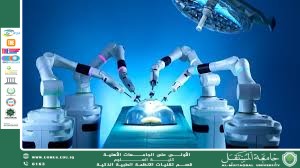
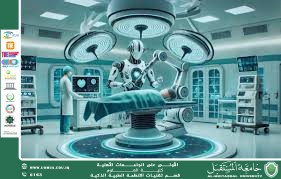
In advanced operating rooms, the surgeon is no longer alone in facing complex challenges. Standing beside them is the “phantom surgeon,” an artificial intelligence system powered by ultra-sensitive surgical robots capable of performing microscopic movements beyond the reach of the human hand.<br />This surgeon does not possess a physical body in the traditional sense, but it has robotic “arms” that receive commands from real-time algorithms analyzing three-dimensional imaging and live magnetic resonance scans. It can distinguish healthy tissues from diseased ones with micrometric precision, avoiding nerves and delicate blood vessels as if navigating through a living biological map.<br />During surgery, the phantom surgeon continuously monitors the patient’s vital signs—blood pressure, oxygen saturation, and brain activity—moment by moment. If any sudden change occurs, it can instantly adjust the surgical plan, such as rearranging cutting steps or stopping bleeding even before the human surgeon notices.<br />In some leading hospitals, these systems do not merely assist; they learn from every operation they perform. Over time, they become more experienced, building a global surgical database that any medical team can benefit from.<br />The phantom surgeon does not replace doctors, but it opens a new horizon of precision and safety, where medical errors become nearly impossible and surgery becomes more humane—thanks to technology that works quietly in the background.<br /><br />Al-Mustaqbal University — the number one university in Iraq.<br /><br />