Cybersecurity in Intelligent Medical Systems (Assistant Lecturer Qusay Munir Diab)
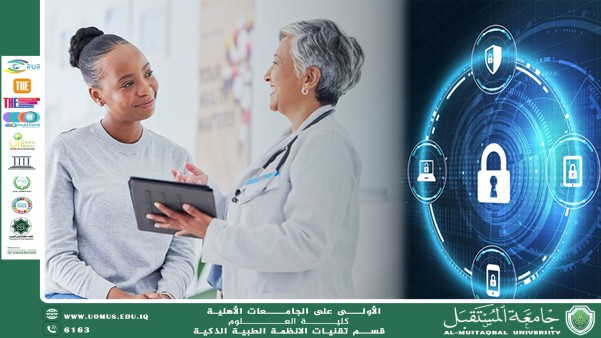
As medical data transitions into the digital world, new challenges have emerged regarding its protection from breaches and cyberattacks. Intelligent medical systems, containing highly sensitive patient information, have become an attractive target for hackers. This is where programming plays a vital role in building secure and reliable systems.<br />Programmers develop advanced encryption protocols to ensure data protection during transmission and storage. Intrusion detection systems (IDS) powered by artificial intelligence are also designed to monitor medical networks and detect any abnormal activities before they cause harm.<br />Programming in this field requires a deep understanding of both cybersecurity and medical systems, as there must be a balance between protecting data and ensuring easy access for physicians when needed. Languages such as C++, Python, and Java are widely used in developing these systems, along with encryption techniques like AES and RSA.<br />Protecting medical data is not merely a legal requirement — it is a fundamental element in maintaining patient trust and ensuring the continuity of intelligent medical services without disruption or threat. As cyber threats evolve, programming will remain the first line of defense in combating digital risks within the healthcare sector.<br /><br /><br />Mustaqbal University – The First University in Iraq<br /><br /><br /><br /><br />