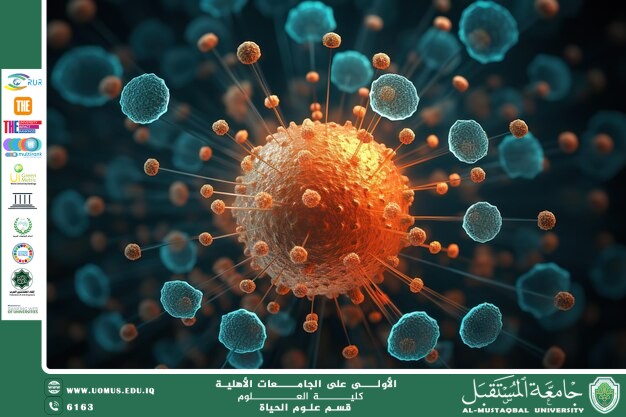
A scientific article by Ms. Noor El-Huda Azmi Hassan entitled "The role of biology in combating epidemics"
biology play a pivotal role during epidemics by analyzing disease pathogens, studying their modes of transmission, and developing strategies to mitigate their impact.<br /><br />Biology contributes to combating epidemics.<br />1. Pathogen Analysis<br />Biologists study viruses or bacteria that cause epidemics, in terms of:<br />Genetic makeup<br />Model of transmission between individuals<br />How they interact with human cells<br /><br />2. Providing accurate and rapid diagnosis<br />Developing advanced diagnostic methods, such as:<br />PCR (polymerase chain reaction) technology<br />Rapid immunoassay tests<br />These tests enable early detection, helping to limit the spread of infection.<br /><br />3. Developing Vaccines and Treatments<br />By understanding how the immune system responds to viruses, we work to:<br />Design effective vaccines<br />Produce antiviral or antibacterial drugs<br /><br />4. Monitoring virus developments and mutations<br />Using advanced genetic analysis techniques, genetic changes in viruses are tracked to assess:<br />The extent of changes in infection severity<br /><br />The impact of mutations on vaccine effectiveness<br /><br />5. Promoting public health and prevention<br />Biology provides accurate data that helps in:<br />Taking appropriate precautionary measures (such as quarantine and social distancing)<br />Raising public awareness to prevent infection<br /><br />Biology is a pivotal element in combating and responding to epidemics. Through it, diseases can be accurately diagnosed, vaccines and treatments developed, viral mutations monitored, and decision-makers provided with the necessary data to protect public health and prepare for future health crises.<br /><br /><br />Al-Mustaqbal University is the first university in Iraq.