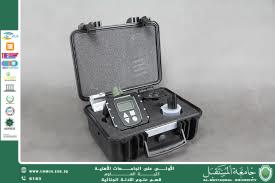
The Use of Sensors for Detecting Traces of Explosive Materials in Forensic Science (Riyam Thaer Ahmed)
Detecting explosive materials is one of the major challenges faced by law enforcement and forensic investigators, due to the dangerous nature of such substances and their potential use in criminal or terrorist activities. A modern approach in forensic science involves the use of sensors to detect traces of explosives at crime scenes or on suspects.<br /><br />Importance of sensors in forensic investigations:<br /><br />High sensitivity: Sensors can detect extremely small amounts of explosive residues (trace explosives), even when invisible to the naked eye.<br /><br />Speed and accuracy: They provide immediate results that help investigators make rapid decisions.<br /><br />Safety: They reduce the risk of direct handling of explosives by bomb disposal experts.<br /><br />Forensic evidence: Sensor readings can be documented and presented in court as reliable evidence.<br /><br />Types of sensors used:<br /><br />Chemical sensors: Detect chemical reactions with explosive molecules.<br /><br />Mass spectrometry sensors: Accurately identify the type and composition of explosive substances.<br /><br />Biosensors: Utilize enzymes or genetically modified bacteria to detect specific compounds.<br /><br />Optical sensors: Rely on light changes or fluorescence when exposed to explosive residues.<br /><br />Challenges:<br /><br />The need for portable and lightweight devices for field use.<br /><br />Possible interference from other chemicals present at the scene.<br /><br />The requirement for trained personnel to properly operate the devices and analyze results.<br /><br />In conclusion, the use of sensors represents a significant advancement in forensic science, enabling investigators to link suspects or crime scenes to explosive residues and enhancing the credibility of evidence presented in court.<br />Al-Mustaqbal University, the first university in Iraq