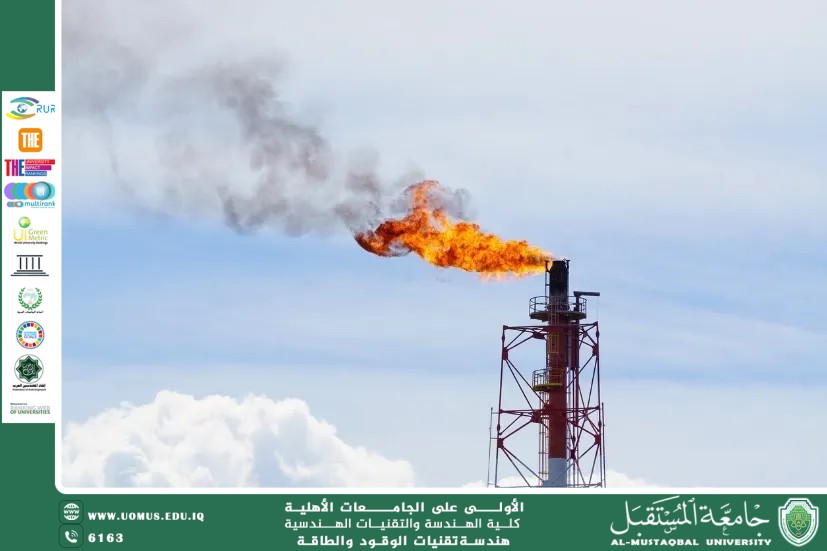
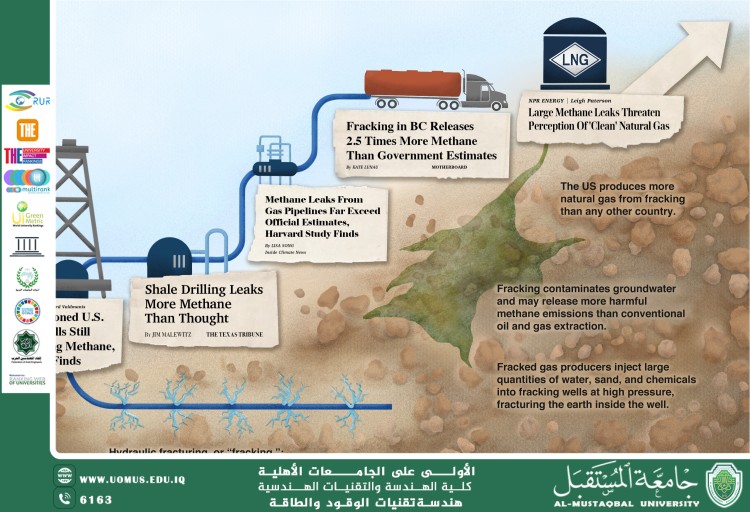
Risks of Methane gas
Risks of Methane gas<br />Assist. Prof. Malik Mustafa Mohammed<br />Methane (CH₄) itself is not typically toxic to humans in the classical sense, but it can still pose significant risks. Here's what you need to know:<br />Asphyxiation Risk:<br />1. Oxygen Displacement: Methane can displace oxygen in enclosed spaces, leading to asphyxiation or oxygen deprivation. <br />2. Symptoms of Exposure: High concentrations (>10% methane in air) can cause dizziness, headaches, nausea, and loss of consciousness due to oxygen deprivation. <br />3. Detection Challenges: Methane is odorless and colorless, so leaks often go unnoticed without specialized equipment (e.g., gas detectors). <br />Flammability and Explosion Risk:<br />1. Lower Explosive Limit (LEL): Methane becomes flammable at concentrations as low as 5% in air (50,000 ppm). <br />2. Ignition Sources: Open flames, sparks, or even static electricity can trigger explosions. <br />3. Upper Explosive Limit (UEL): At concentrations above 15%, methane mixtures are too rich to ignite. <br />Other Considerations:<br />- Confined Spaces: Risks amplify in poorly ventilated areas (e.g., mines, tunnels, closed rooms). <br />- Secondary Hazards: Incomplete combustion of methane produces carbon monoxide (CO), which is highly toxic. <br />- Physiological Impact: Prolonged exposure to >50% methane can lead to respiratory failure or death due to oxygen deprivation. <br /><br />Safety Measures: <br />- Use gas detectors to monitor methane levels. <br />- Ensure proper ventilation in industrial/agricultural settings. <br />- Avoid ignition sources in areas where methane accumulation is possible. <br />Here’s a detailed breakdown of methane mitigation strategies and detection methods:<br /> Methane Detection Methods <br />1. Optical Gas Imaging (OGI) <br /> - Uses passive infrared cameras to visualize methane leaks in real time, particularly effective in gas fields. Handheld OGI devices enable on-site inspections.<br />2. Laser-Based Technologies <br /> - Tunable Diode Laser Absorption Spectroscopy (TDLAS): Measures methane concentrations in air with high precision.<br /> - Gas Mapping LiDAR: Aerial LiDAR systems detect, localize, and quantify methane emissions from the air. <br />3. Drone and Aerial Sensing <br /> - Drones equipped with sensors provide 3D maneuverability for detecting leaks in hard-to-reach areas. <br /> - Satellite-based remote sensing monitors large-scale methane emissions.<br />4. Tracer Techniques and Sniffers <br /> - Tracer methods track methane dispersion patterns, while "sniffer" devices detect localized concentrations. <br />5. Continuous Monitoring Systems (CMS) <br /> - Fixed sensors or multispectral infrared cameras monitor flare combustion efficiency and emissions. <br /> Methane Mitigation Strategies <br />1. Leak Detection and Repair (LDAR) <br /> - Regular inspections using OGI or drones to identify and repair leaks, reducing fugitive emissions.<br /> - Programs like Canada’s clean tech initiatives emphasize proactive LDAR campaigns.<br />2. Flaring Optimization <br /> Ensure flares are always lit and equipped with automatic re-ignition systems to prevent the release of unburned methane.<br /> - Monitor flare combustion efficiency with multispectral imaging.<br />3. Zero-Bleed Systems <br /> - Replace gas-driven pneumatic controllers with compressed air or electric alternatives to eliminate venting’<br />4. Methane Capture and Utilization <br /> - Capture methane from livestock (e.g., via enclosure chambers) or industrial sources for energy production.<br /> - Anaerobic bioreactors can oxidize methane using archaea/bacteria [citation:20]. <br />5. Technology Standards and Policy Measures <br /> - Implement emissions control devices and replace high-emitting components. - Programs like the Methane Mitigation Technologies initiative aim for zero emissions by 2030.<br />6. Data-Driven Approaches <br /> - Combine measurement tools (e.g., bottom-up source-level estimates) with modeling for accurate reporting and verification.<br /> Key Innovations and Trends <br />- Cost-Effective Solutions: 60% of methane reduction measures could be deployed at low or negative cost by 2030.<br />- Cross-Sector Collaboration: Canadian companies lead in methane detection/reduction technologies.<br />- Global Initiatives: Projects funded by the Climate and Clean Air Coalition (CCAC) focus on policy implementation.<br /><br />Al-Mustaqbal University – The No. 1 Private University in Iraq<br /><br />