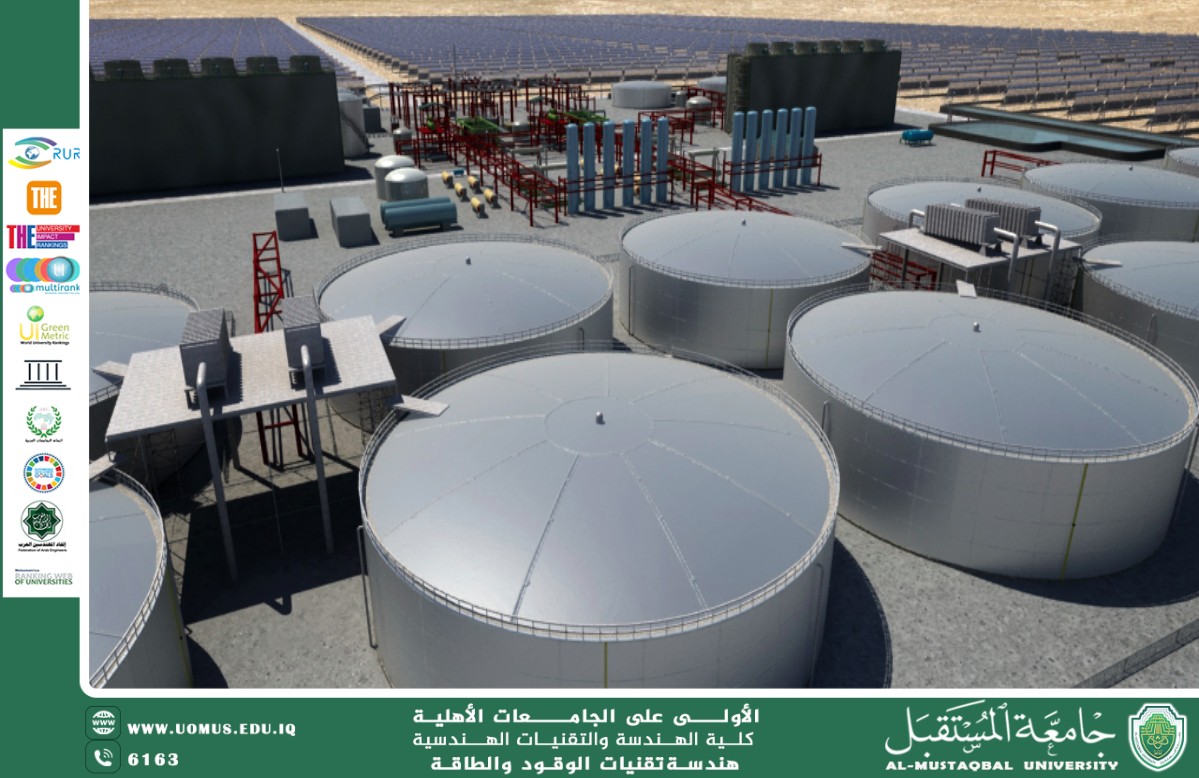
Thermochemical Energy Storage for Concentrated Solar Power Systems
Thermochemical Energy Storage for Concentrated Solar Power Systems<br />Author: Asst. Lecturer Shahad Ammar Hatem<br /><br />Sustainable Development Goals:<br /> Affordable and Clean Energy<br /> Climate Action<br /> Industry, Innovation, and Infrastructure<br /><br />Introduction<br />Concentrated Solar Power (CSP) systems offer a promising approach for large-scale renewable electricity generation by using mirrors or lenses to focus sunlight onto a small area to produce high-temperature heat. A key challenge with CSP, however, is the intermittency of solar energy. To overcome this, Thermochemical Energy Storage (TCES) provides an efficient and scalable method for storing solar energy in chemical form, enabling power generation even when the sun is not shining.<br /><br />How Thermochemical Energy Storage Works<br />TCES systems store thermal energy through reversible chemical reactions. When solar heat is available, it is used to drive an endothermic reaction, storing energy in the form of chemical bonds. Later, during periods of low or no solar input, the reverse (exothermic) reaction is triggered, releasing the stored heat to drive turbines or generate electricity. Materials commonly used in TCES include metal oxides, carbonates, and ammonia-based compounds.<br /><br />Advantages Over Other Storage Methods<br />Compared to sensible or latent heat storage (such as using molten salts), TCES offers higher energy density, longer-duration storage, and minimal thermal losses over time. It also allows for transportation of stored energy in chemical form, making it flexible for various industrial and remote applications. Additionally, the use of thermochemical cycles enables operation at high temperatures, which improves the efficiency of the overall CSP plant.<br /><br />Challenges and Research Directions<br />The main barriers to widespread adoption of TCES include the high cost of reactive materials, material degradation over repeated cycles, and the need for complex thermal management systems. Research is ongoing to identify low-cost, stable materials and to design reactors that can operate efficiently under real-world conditions. Integration with advanced CSP designs and hybrid renewable systems will further enhance the viability and performance of TCES in the energy sector.<br /><br />Al-Mustaqbal University – The No. 1 Private University in Iraq