Hydropower and Its Role in Achieving Sustainable Development
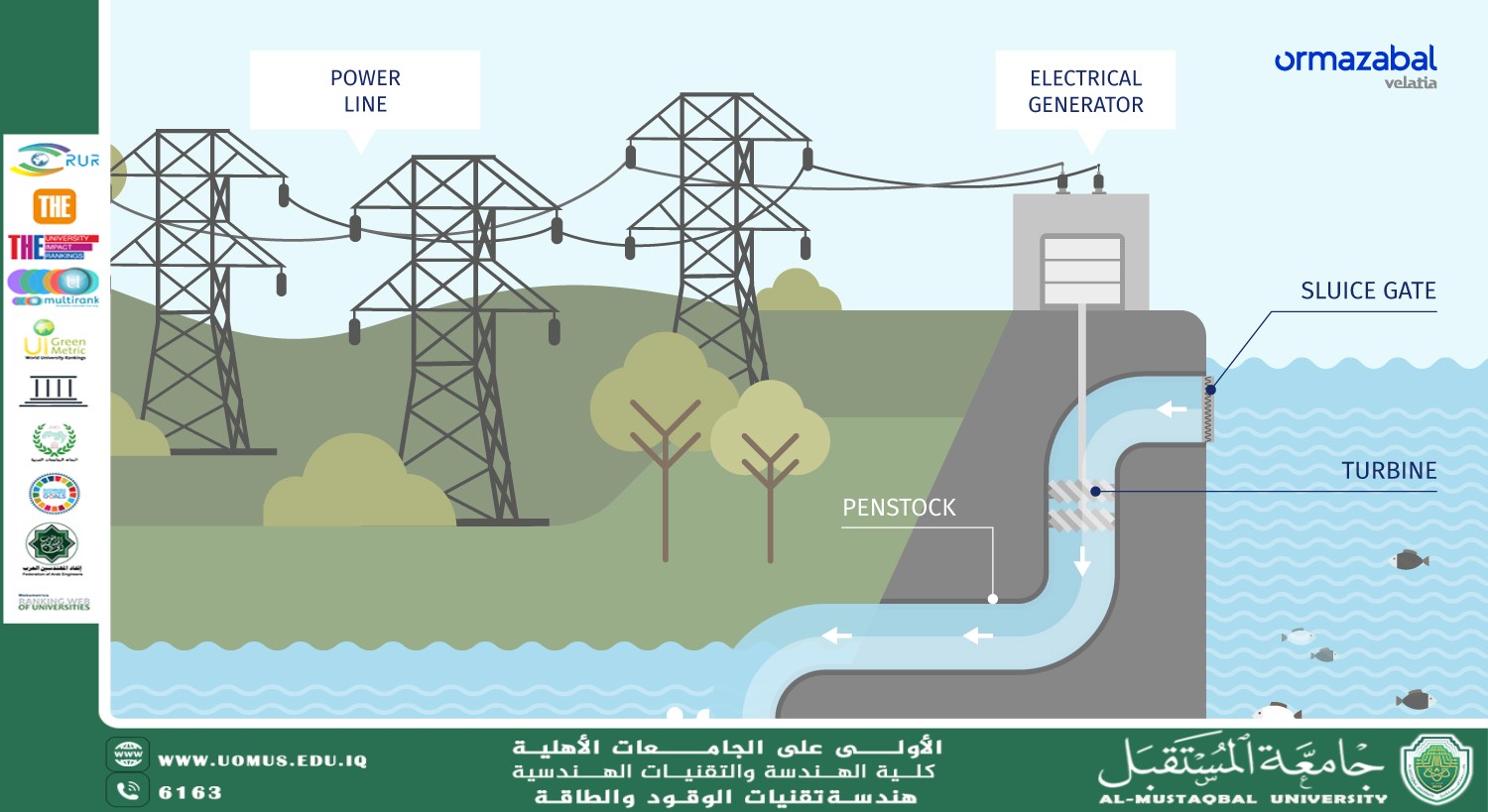
Hydropower and Its Role in Achieving Sustainable Development<br />Author: Eng. Nourhan thamer assi<br /><br />Introduction<br />As the world moves toward a low-carbon and more sustainable future, hydropower stands out as one of the most important sources of renewable energy. It harnesses the power of flowing water to generate electricity, offering a clean, safe, and reliable energy source that significantly reduces dependence on fossil fuels.<br />________________________________________<br />What Is Hydropower?<br />Hydropower is electricity generated by the movement of water, such as rivers, waterfalls, or through the controlled release of water from dams. The kinetic energy of flowing water is converted into electrical energy using turbines and generators.<br />________________________________________<br />Types of Hydropower Plants<br />1. Reservoir (Dam) Plants:<br />Store water behind large dams and release it to generate electricity when needed.<br />2. Run-of-River Plants:<br />Use the natural flow of rivers without large-scale water storage.<br />3. Pumped Storage Plants:<br />Pump water to a higher reservoir during low demand, then release it to generate electricity during peak demand.<br />________________________________________<br />Hydropower and the Sustainable Development Goals (SDGs)<br />Goal 7: Affordable and Clean Energy<br />Hydropower provides a stable, renewable source of electricity, particularly in river-rich regions.<br />Goal 13: Climate Action<br />It produces electricity with virtually no direct greenhouse gas emissions.<br />Goal 9: Industry, Innovation, and Infrastructure<br />Large hydropower projects support the development of strong infrastructure and innovation in energy technologies.<br />Goal 6: Clean Water and Sanitation<br />Dams can aid in water storage and improve water management systems.<br />________________________________________<br />Advantages of Hydropower<br />• Renewable source that relies on the natural water cycle.<br />• Low operating costs over the long term.<br />• Flexible: can be adjusted easily to meet electricity demand.<br />• Long lifespan: facilities can operate for 50+ years.<br />________________________________________<br />Challenges of Hydropower<br />• Environmental impact: flooding of land, disruption of aquatic ecosystems.<br />• Displacement: large dam projects can displace local communities.<br />• Climate dependency: droughts or reduced rainfall can lower power generation.<br />• High initial construction costs.<br />________________________________________<br />Conclusion<br />Hydropower is one of the cleanest and most efficient energy sources available. With proper resource management and environmental safeguards, it can play a vital role in sustainable development by reducing carbon emissions, providing clean energy, and supporting economic growth—while minimizing its social and ecological impacts.<br />________________________________________<br />Al-Mustaqbal University – The No. 1 Private University in Iraq<br /><br />