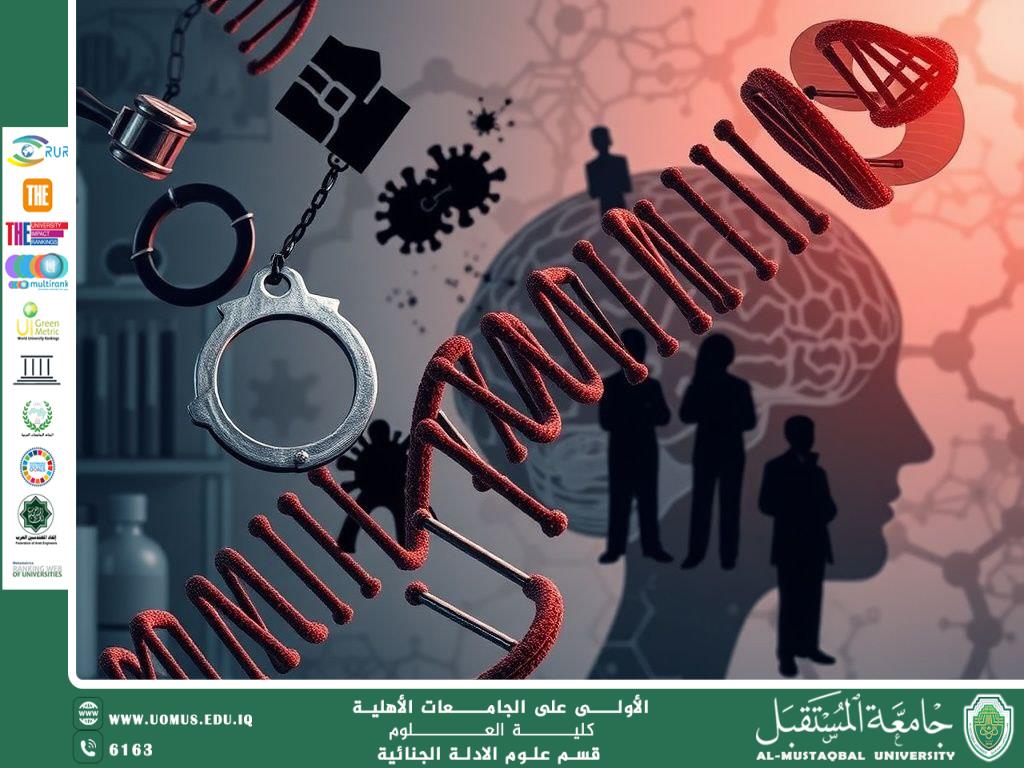
The Role of Violence-Related Genes in Explaining Heinous Crimes (M.M. Howayda Nazzal Hussein)
Introduction:<br />The relationship between genes and violent behavior is still a subject of widespread scientific debate, but it has become an active field in forensic psychology.<br /><br />Context:<br />Genes that may influence violent behavior include:<br /><br />MAOA: Associated with the regulation of serotonin and dopamine<br /><br />5-HTT: Controls the brain's response to stress<br /><br />COMT: Affects cognitive processing and emotional behavior<br /><br />However, these genes do not cause crime; rather, they increase a person's susceptibility to emotional or violent behavior when faced with environmental triggers.<br /><br />Application in Cases:<br /><br />Providing Genetic Analysis of Criminal Behavior<br /><br />Leniency in Sentencing in Some Cases Based on "Genetic Predisposition"<br /><br />A Deeper Understanding of Crime Motives<br /><br />Conclusion:<br />Studying genes associated with violence enhances specialists' ability to understand crime, but it is not a complete legal justification, rather a tool for understanding the psychological context.<br />Al-Mustaqbal University – The First University in Iraq