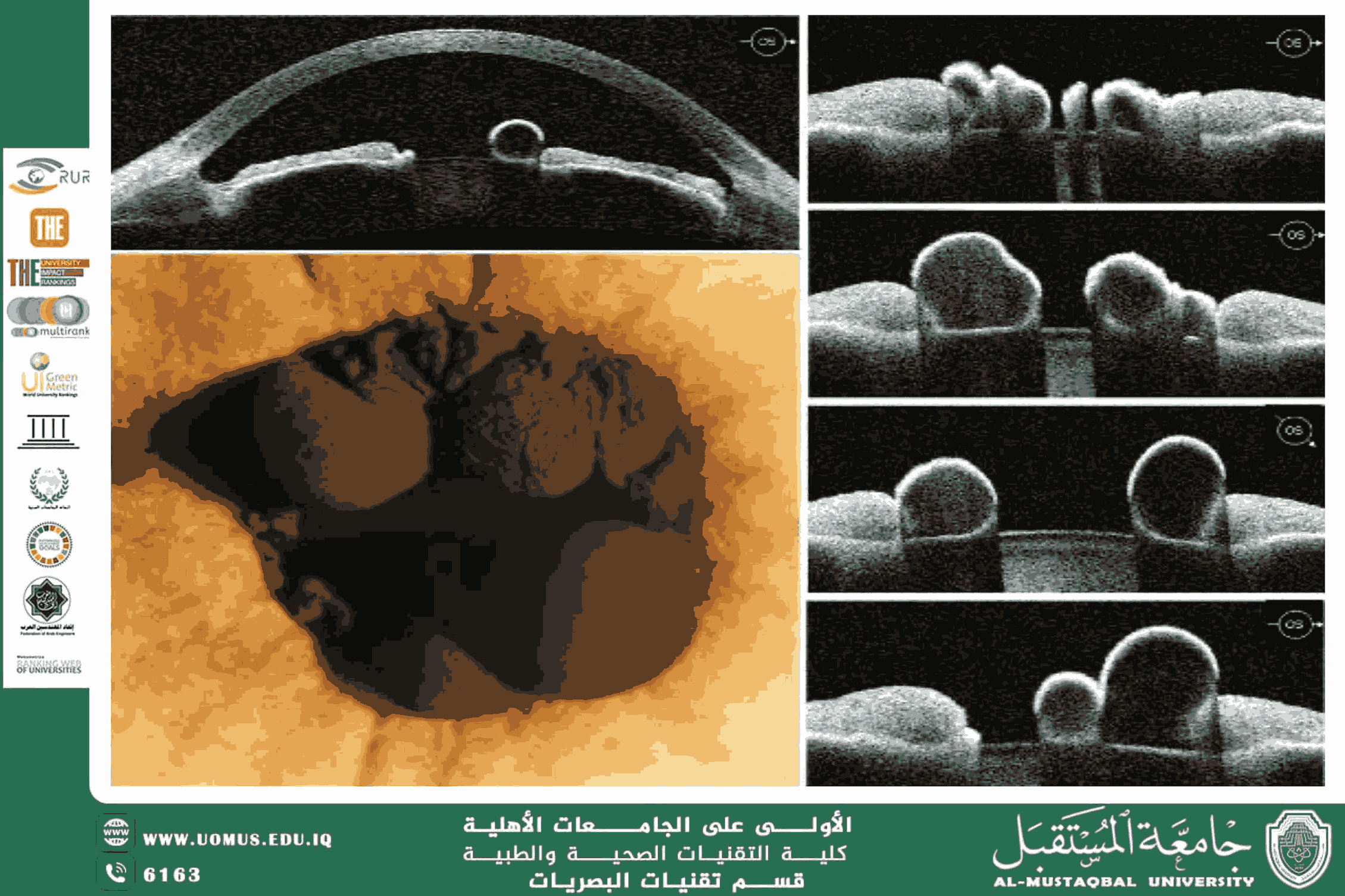
A scientific article by the lecturer, Asst. Lecturer Hassan Qahtan Kazem Al-Hussein (Optical Coherence Tomography: An Early Window into Systemic Diseases)
The eye is no longer considered merely an organ of vision, but in recent years it has become a true "window" into the health of the entire body. With the advancement of Optical Coherence Tomography (OCT), it is now possible to detect early signs of serious systemic diseases such as diabetes, hypertension, and neurological disorders.<br />OCT relies on low-energy light beams that provide micron-level imaging of the retinal layers, allowing for the detection of subtle changes invisible in traditional examinations. For instance, diabetic macular edema can be identified at a very early stage, giving patients a chance for timely intervention and preservation of vision.<br />Interestingly, OCT is no longer limited to eye diseases alone. Physicians today use it as a tool to understand the systemic impact on ocular structures. Hypertension leaves its fingerprints on the fine retinal vessels, and multiple sclerosis may show early thinning of the optic nerve fibers even before neurological symptoms become evident.<br />