
A scientific article by the lecturers, Assist.Prof.Dr. Munther Sameen Shukur / dr. Ibtehal Noori/Lect. Mohaimen Sameer Aref (Under Standing Double Vision Treatment Physically.)
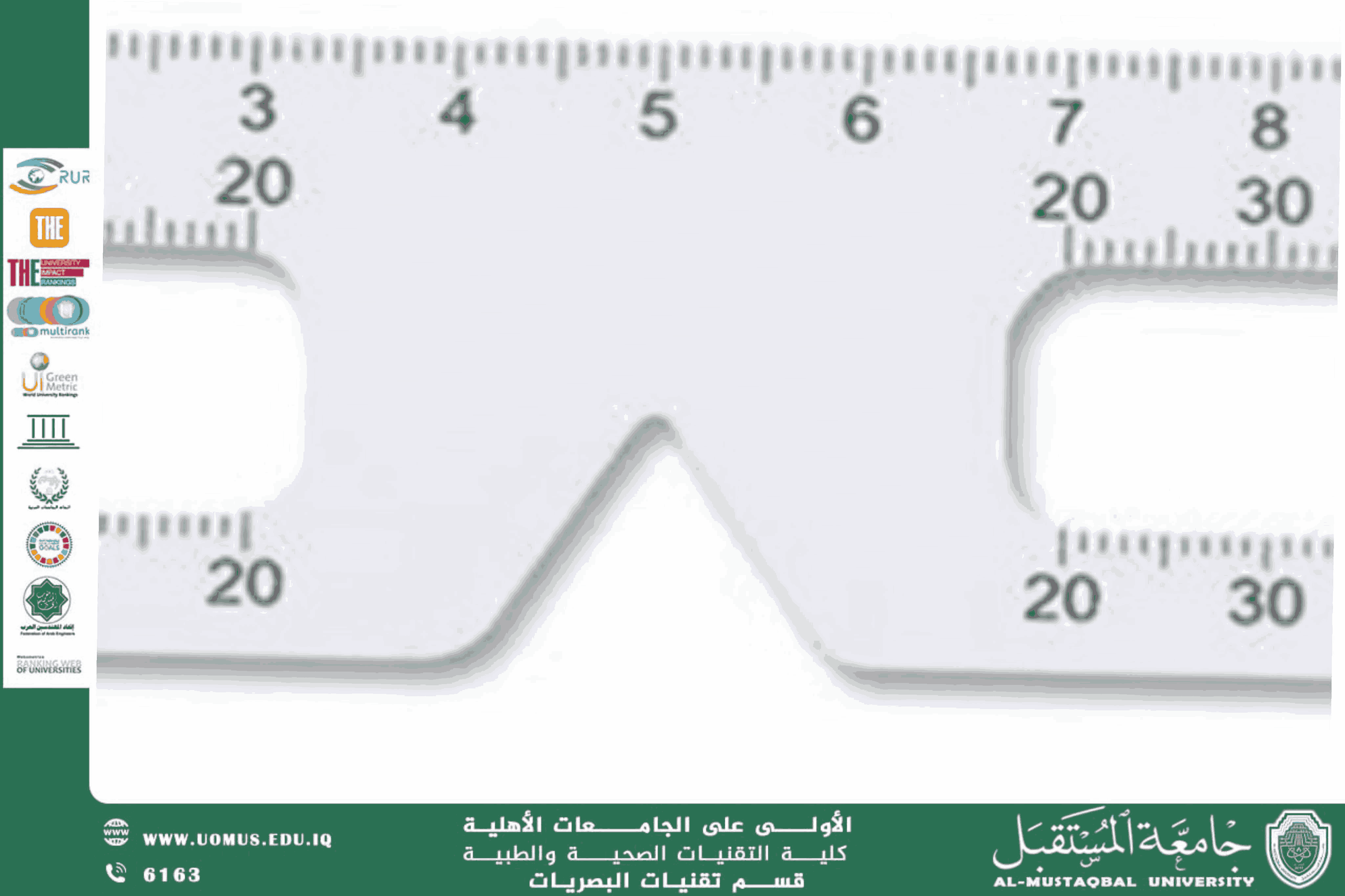
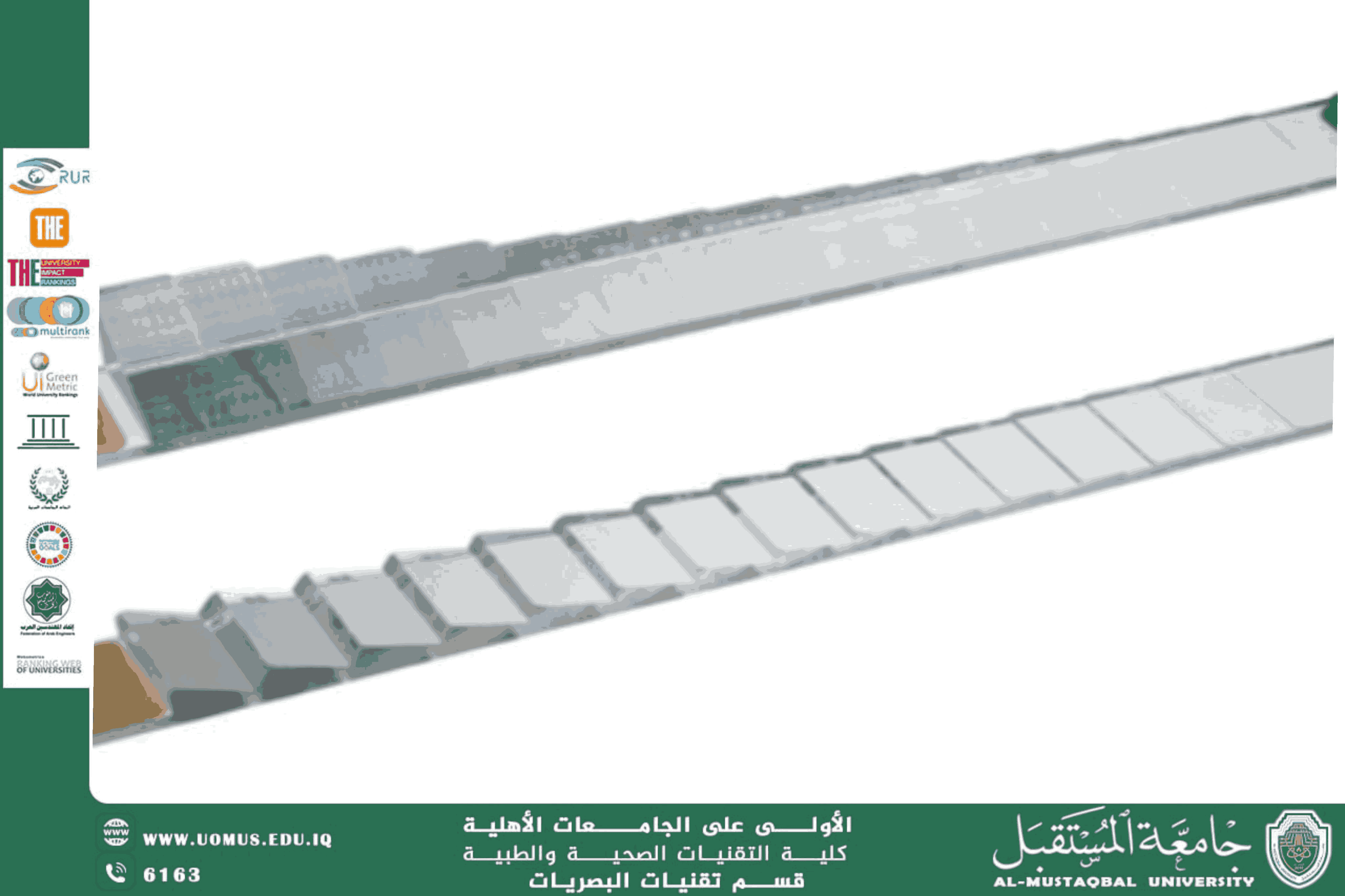
Abstract <br />Diplopia is the medical term for double vision as seeing 2 images of a single object when one pension is looking at if there are 2 types of diplopia. A study the method of treating Diplopia by Which is the result of many reasons, the most important of which are strabismus, diabetes and trauma, where the diplopia is here in both eyes, or as a result of refractive error and hormone. Across sectional of study of 20 selected patients with diplopia use done (20-40 years) of age. physical exercises were the only method chosen for the method. Aim of study tis he knew method of treating diplopia by Physical exercises. All patients underwent thorough ophthalmic examination including visual acuity testing, ocular motility testing, cover testing, worth for dot testing and fundus examination in from Consulting Clinic for Health and Medical Technologies - Baghdad during period from 2024/10/1 up to 2025/4/1.in this study was found 65% of males and 36% female’s maximum in 20-25 years’ age group 35%. It was the most common reason where It was found that (5% of Trauma), (25 % squint), (15 % Refractive error) (10 % Hormone), (25% Muscle),(5% Diabetes mellitus),and others. In this study treatment of muscle activation, by physical exercises,<br />Key word; Diplopia, bar prism, decent ration, strabismus and physical exercises.<br />1-Introduction.<br />Double vision is when you see two images of the same thing. You might know it as diplopia. You might have diplopia in one eye is called monocular diplopia or both. Generally, in both eyes is more serious than if you have it in just one. Types of diplopia: An eye care specialist will classify your double vision as either monocular or binocular (1).<br />1-Monocular diplopia happens when you have double vision even when you close or cover one of your eyes. It is like shadows clear vision. Monocular diplopia is the most common type.<br />2-Binocular diplopia is having double vision when both of your eyes are open. It goes away when covering one eye. Your eyes being out of alignment or health conditions that affect your vision are common causes. Binocular diplopia is usually more serious. the doubled images appear in your vision (2).<br />Vertical diplopia means you’re seeing extra images above or below your true vision. Or Horizontal diplopia appearing side to side which is caused by muscles continuing eye movement at moves that innervates. Them Compared to individuals without diplopia, those with the condition report higher levels of general impairment symptoms and negative sentiments on their overall quality of life. This issue is referred to as double vision. This eye problem is typically caused by an underlying condition, one can again his vision. (3). <br /> <br /> Fig.1.1 Double vision (4). one can get a monocular duplication if one of his eyes is not working properly. Double vision can be caused by a problem with your brain or the nerves that go to your eyes. Monocular double vision is less frequent than binocular double vision and results from a problem with one eye. One of the images will usually be very sharp while the other will be duller, according to many people with monocular duplication (5). The presence of a defect in the eye muscles, causing the appearance of double vision, in addition to other reasons. the extraocular muscles' functionality can be evaluated along with that of the other extraocular muscles. Squint and binocular diplopia are just two issues that can result from any misalignment of the eyes, which is frequently brought on by restricted movement of the muscles surrounding the eye. When eyes are misaligned, which can result in diplopia, the corneas correctly direct light onto the retinas, but the misalignment causes the light to focus on various regions of the retina in each eye. Physical exercises and decent ration is the most significant method for treating strabismus and double vision [6}. The simultaneous perception of two images of the same object, which may be offset horizontally is known as diplopia. Due to this, the brain receives 2 slightly different views of the same thing from each eye, leading to double vision.<br />2-Causes of double vision in one eye:<br />It mostly related to your eye itself (as opposed to a nerve or brain condition). Likely causes include:<br />1-Dry eye<br />Dry eye can be a temporary symptom of another condition, such as allergies. Dry eye can also be chronic. In this case, it’s referred to as dry eye syndrome.<br />When the surface of your eye isn’t getting lubrication from your natural tears, a blurred or “phantom” image in one eye is not unusual (7)l.<br />2-Astigmatism imperfection of the curve of your eye’s lens or cornea. When the lens or cornea don’t have a perfect curve, you may experience a distortion. Astigmatism in only one eye, you may experience double vision in just that eye.<br />3-Keratoconus<br />keratoconus usually appears in your late teens or early 20s. keratoconus experience double vision in just one eye (8). According to the American Academy of Ophthalmology.<br />4-Cataracts<br /> cause the lens that helps focus your eye to become cloudy. If you have a cataract in one eye, double vision in one eye may be an early indicator (9). <br />5- Eye muscle weakness:<br />The eye muscles play a crucial role in controlling eye movement. If one eye muscle is weak, the eye is unable to move smoothly, or to look in directions controlled by the weak muscles (10). When these muscles are weakened or affected by conditions such as myasthenia gravis, it can become difficult for the eyes to work together, causing double vision. …………. etc.<br />3-Material and Methods.<br />Study design was an institution based cross sectional study. sample population was selected 25 patient’s male and female with Diplopia. from Consulting Clinic for Health and Medical Technologies - Baghdad during period from 2024/10/1 up to 2025/4/1 Data collection: all cases were interviewed with a constructed questionnaire include (Age, Gender, History of family, VA with and without glasses, Refractive error, Any disease, Method of treatment). All patients were examined by ophthalmologist and optometrists to evaluate their state. Instruments: all patients underwent thorough ophthalmic examination including visual acuity testing, cover test, Target of ocular motility, Worth four dot test. Statistical issues: by SPSS.<br />1-Snellen chart: is an eye chart that can be used to measure visual acuity(VA) .<br />Printable PD Rulers come in several types. It could be a digital printable ruler, a physical printed ruler, or a mixture of the two. It is used to measure the intra pupillary distance (IPD) in mm (11)<br /><br /><br /> Figure. 3.1 Printable PD Ruler in mm.<br />An objective refraction tool called retinoscopy can determine someone's mistake without them having to express it to you. People who are unable to speak, such as young children or those suffering from mental illness can benefit much from it. To illuminate the retina, light is shone into the patient's eye. At the far point of the patient, an image of the lighted retina is created (the reflex stage).<br />The cover test is an objective determination of the presence and amount of ocular deviation, it is typically performed by orthoptists, ophthalmologists, and optometrists during eye examinations [36]. Extraocular muscle function testing examines how the eye muscles work. By using a target, one observes the movement of the eyes in nine specific directions. All patients were examined by using retinoscopy to obtain accurate results for refractive errors, and it was used with non-cooperative patients. The patient was set at a distance and then asked to sit or stand with his head up and looking straight ahead. We moved the body without moving his head to discover which muscle there was weakness in. Measuring pupillary distance by using a ruler for adults is around 54–68 mm. (12) We covered the eyes with a cloth. Binocular diplopia is present if the patient's vision fades while one or both eyes are covered When the affected or "bad" eye covered is. double vision goes away in the case of monocular diplopia. <br />When using the prism bar and the above figures that will be displayed on the exam, determine the amount of aberration. The kind of treatment is chosen. Cover test is an objective determination of the presence and amount of ocular deviation. It is typically performed by optometrists during eye examination.<br />Prism bar: This device to measure horizontal and vertical ocular deviation .<br /> <br /> Figure.3.2 Vertical and horizontal prism bar (12). <br /><br />4 Results and Discussion.<br />4.1 Results<br />Table.1: Relationship between age(years) and Sex.<br />Age(years). Male Female Total <br />20-25 6 3 45%<br />26-30 5 3 40%<br />31-35 2 1 15%<br />Total 13. 7 100%<br />The largest number of patients they were of males (rate of 65 %) ‚with number of females (rate of 35%)Distributed among three age groups .<br /> Table 2 shows the most important causes of double vision.<br />Age R.E Squint Traum Muscle Cataract Diabetes Meliltustus Hormone Dry Eye Total<br />20-25 1 3 1 2 _ _ 1 1 45%<br />26-30 2 1 _ 1 _ 1 _ 1 30%<br />31-35 _ 1 _ 2 1 _ 1 _ 25%<br /><br />In table 2 It was found that (5% of Trauma), (25 % squint), (15 % Refractive error) (10 % Hormone), (25% Muscle), (5% Diabetes mellitus), (dry eye 10%) and (5% Cataract).<br />Table 3 Represents number of patients before and after physical therapy according to different age. groups.<br />Age(years) No. of patients before <br />Treatment* No. of patients after treatment Total <br />20-25 9 7 35%<br />26-30 6 5 25%<br />31-35 5 4 20%<br />Total 20 16 80%<br /><br />Most of the patients in our r study were treated by physical therapy exercises. 80%were the total patients included و35% of them are young people aged 0-25 years and the lowest treatment rates were in the 30-35% category, age of 20%.<br /><br /><br />Table4, determine a method for treating patients and different groups.<br />Age<br />(years). No. of patients before Treatment* No. of patient’s treatment by Physical exercises No. of patients by other treatments. Total<br />20-25 9 6 1 30%<br />26-30 6 4 1 20%<br />31-35 5 2 2 10%<br />Total 20 12 4 60%<br />60%of patients’ were treatment depend on Physical exercises, 20% were treatment by other methods also 20% They did not improve due to neglect of Physical exercises.<br />4.2 Discussion<br />Our shows we found out that male sex has close association with diplopia as compared. It was found that 65% of total patients whom use exercises were males while only 35% were females. Most of the patients under investigation with strabismus, refractive errors, and eye muscle disorders were aged 20-30 years. The major affected rates were based on the younger group of ages (20-25), most of whom are university students due to the continuous using smart devices caused strabismus and its problems, their percentage was (25%), trauma and bicycles accidents contributes the second causes of squint .and strong blows that cause nerve problems, that 5% hormonal change es affecting to males mostly (10%), particularly inter milieu day squint. we wait for the hormones to stabilize and then start treating the eyes A measured the patients' VA before treatment and after treatment by Physical exercises (60%) and prism glasses (20%), the patient was connected to the highest visual acuity the most of the patients under study were treated with this method, at a rate of 80%. But the stayed is 20% did not improve due to neglect of Physical exercises.<br />5-Conclusion and Recommendations.<br />5.1 Conclusion.<br /><br />1-Using smart devices at close distances is harmful so avoided it.<br />2- Some patients with acquired double vision, of all ages, can be treated with physical therapy or prism lenses<br />3-. Avoid scheduling surgical management for strabismus or diplopia. Unless both physical and topic management are not beamish.<br />4- Early detection of the condition is the best in terms of treatment through periodic review of the ophthalmologist and optometrist.<br /><br />5.2 Recommendations.<br />1- Not use smart devices from close distances to avoid strabismus, which causes double vision.<br />2-Avoid starting with surgery as a treatment for Diplopia and start with a gradual treatment, using exercises to stimulate the muscles, then decantation, and prism glasses, then resorting to surgery as a final step.<br />