A scientific article by the lecturers, Assist.Lect. Mohaimen Sameer Aref / Assist.Lect. Ali Hadi Al-Husseini (Blue Light Exposure from Digital Devices: Retinal Implications and Circadian Dysregulation)
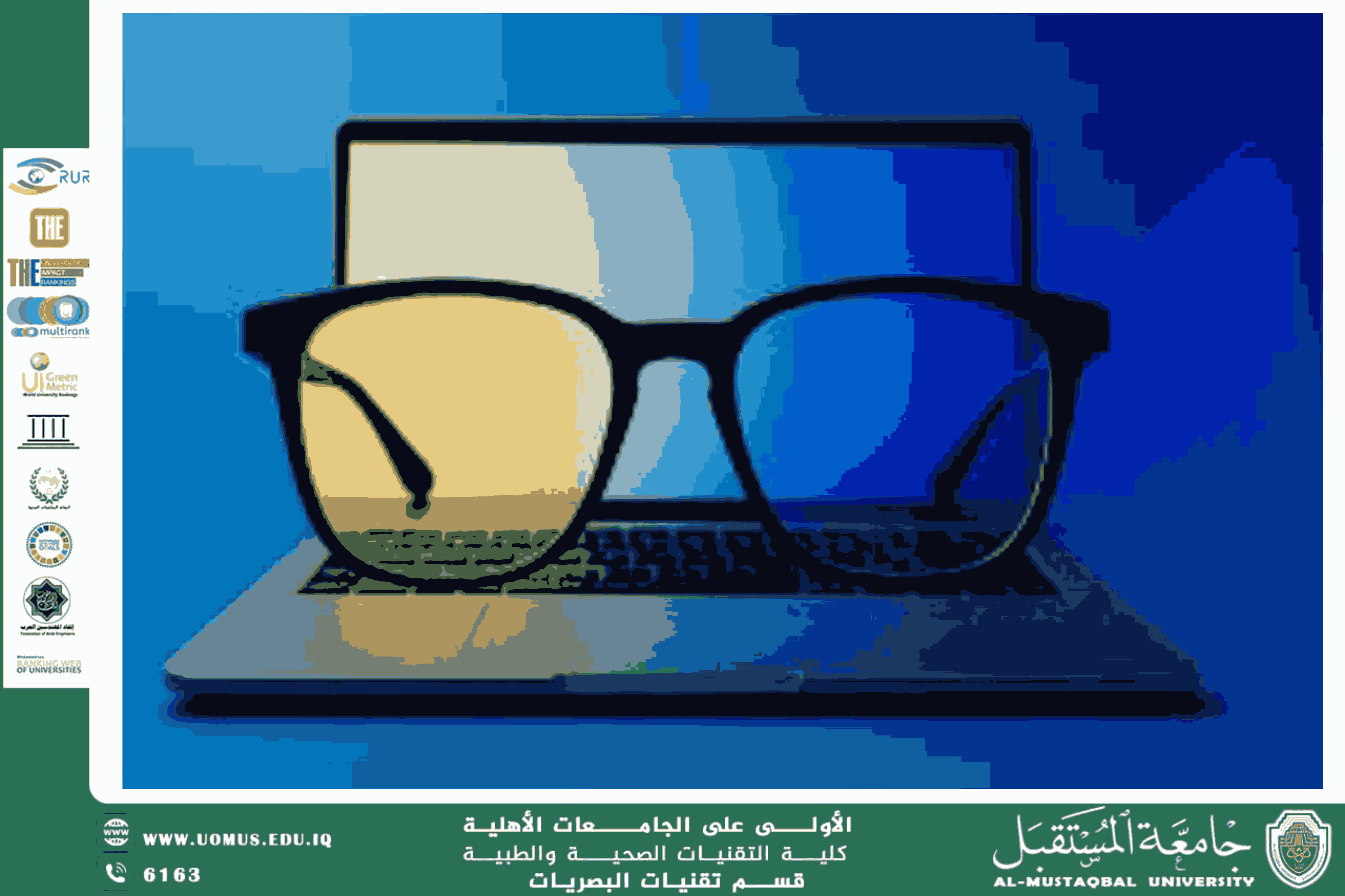
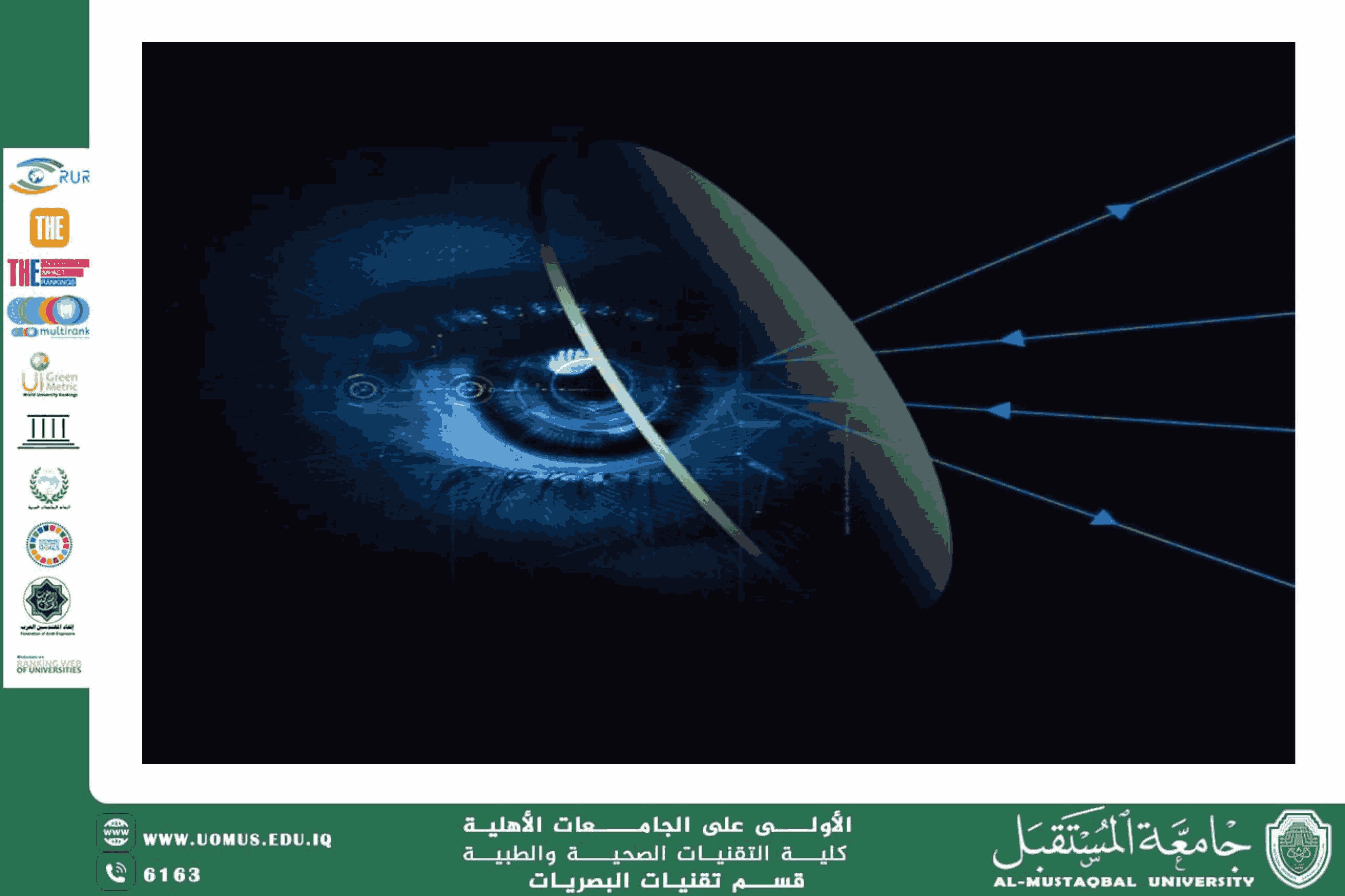
The widespread use of digital devices has raised concerns regarding the impact of short-wavelength blue light (400–490 nm) on retinal health and circadian biology.<br /><br />Blue light penetrates the crystalline lens and reaches the retina, where it induces oxidative stress in photoreceptors via reactive oxygen species (ROS). Chronic exposure may accelerate the risk of age-related macular degeneration (AMD).<br />At the neural level, intrinsically photosensitive retinal ganglion cells (ipRGCs), containing melanopsin, regulate circadian rhythms by controlling melatonin secretion. Nocturnal exposure to blue light suppresses melatonin release, causing sleep disturbances, circadian misalignment, and increased metabolic risk.<br />Digital Eye Strain (DES), manifested as headaches, blurred vision, and ocular dryness, results from prolonged screen use and reduced blink rate.<br /><br />Future Perspectives<br />• Integration of blue-light filtering technologies in optical lenses.<br />• Enhancement of digital screen filters (e.g., Night Shift, f.lux).<br />• Promotion of behavioral guidelines such as the 20-20-20 rule.<br /><br />Conclusion<br />Blue light poses risks beyond visual discomfort, extending to systemic health via circadian disruption. Proactive prevention and optical interventions are necessary for ocular and general well-being.<br />