A scientific article by the lecturers, Assist.Lect. Mohaimen Sameer Aref (Neuroplasticity in Amblyopia and Strabismus: New Horizons in Visual Rehabilitation)
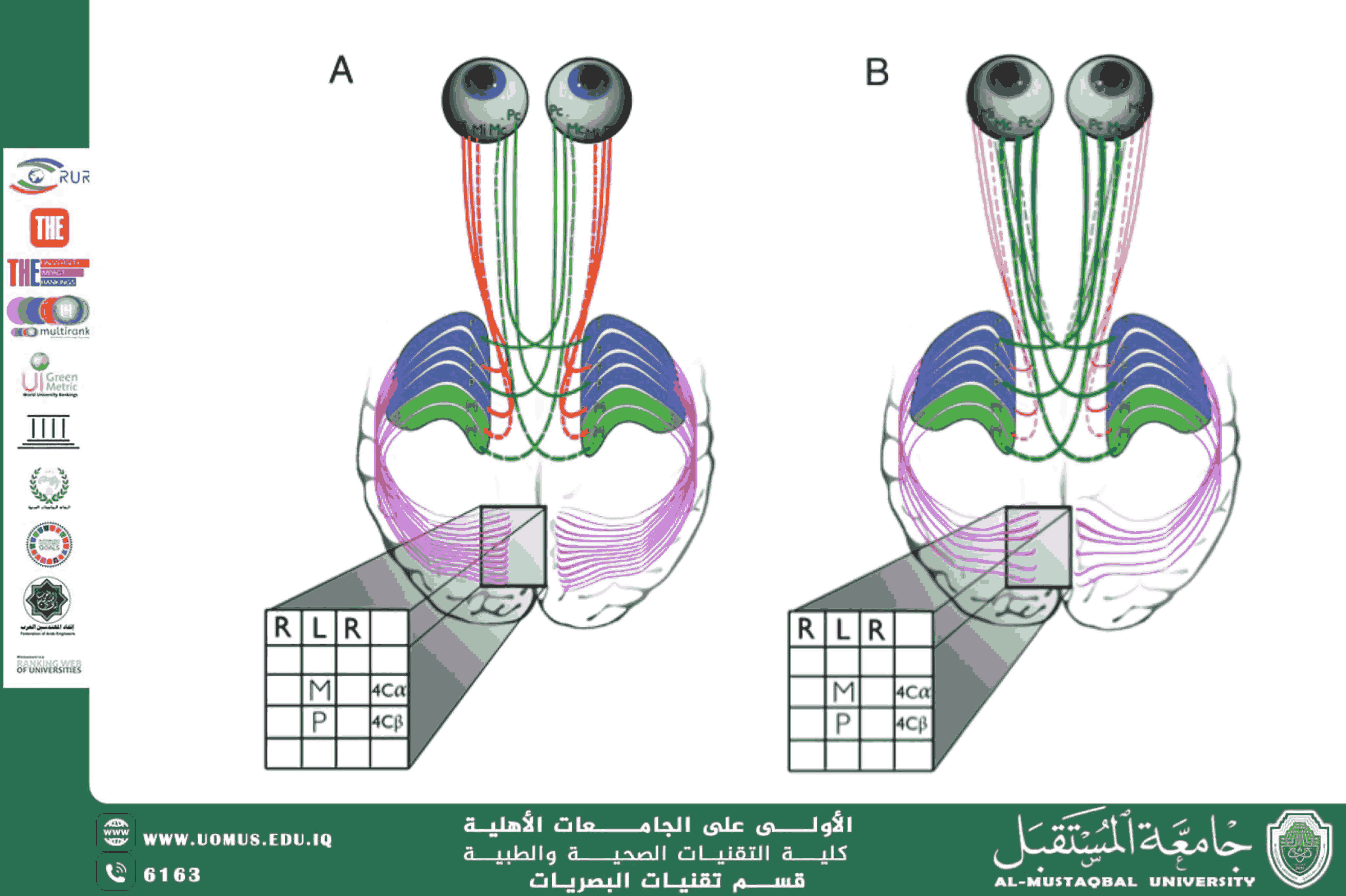
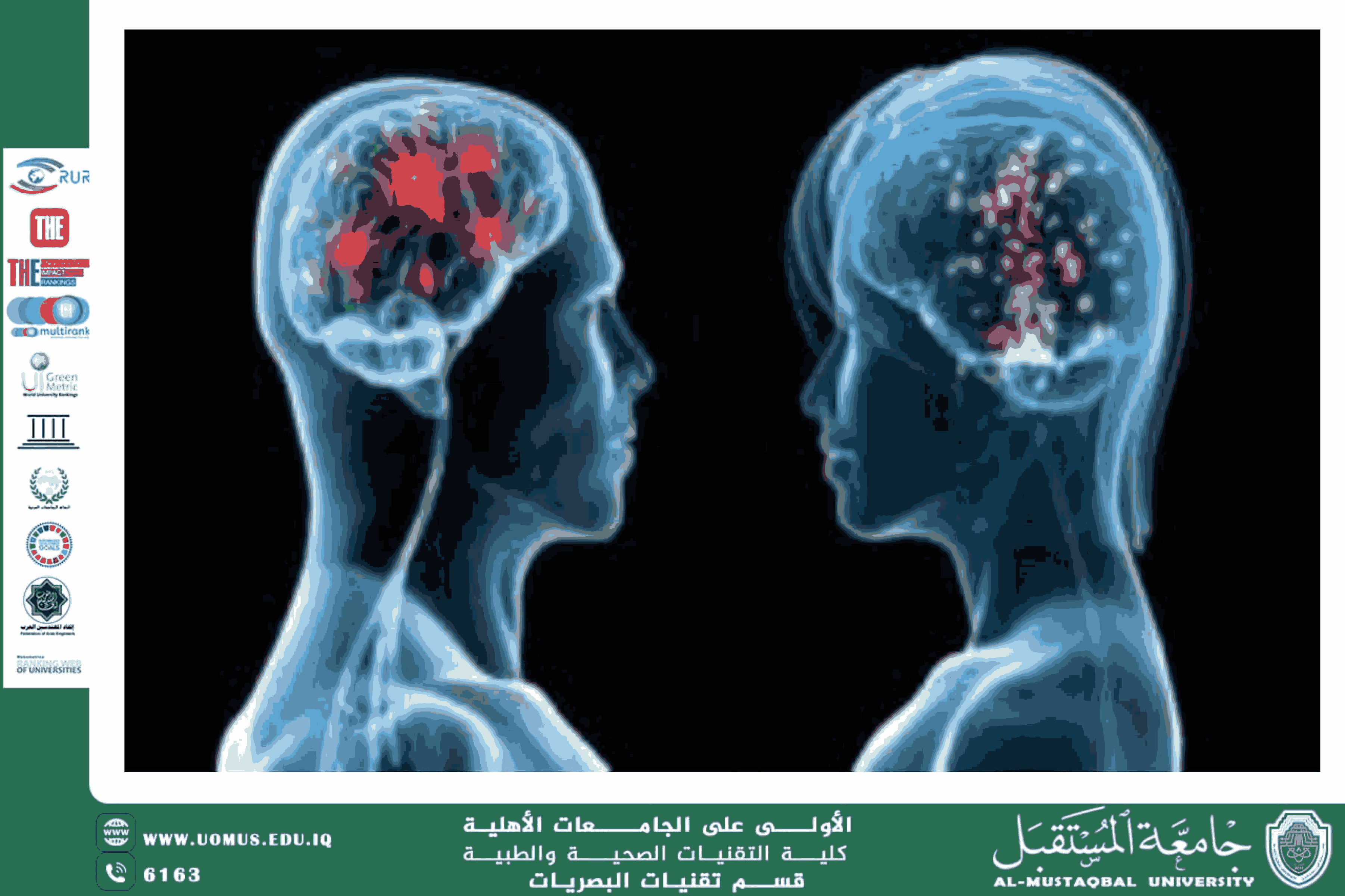
Amblyopia and strabismus have long been regarded as disorders confined to the critical period of visual development in childhood. Recent research, however, demonstrates that the adult brain retains significant neuroplasticity within the visual cortex.<br />In amblyopia, cortical suppression of the weaker eye occurs in the primary visual cortex (V1) and higher visual areas. Strabismus disrupts sensory-motor fusion, leading to impaired binocular vision.<br />Functional MRI studies reveal enhanced cortical activity following binocular training in adults, indicating retained plasticity.<br />Novel therapeutic approaches include:<br />• Binocular Therapy: virtual reality-based games promoting simultaneous input from both eyes.<br />• Non-invasive brain stimulation: transcranial direct current stimulation (tDCS) and transcranial alternating current stimulation (tACS) to enhance cortical excitability.<br />• Pharmacological interventions: agents such as Levodopa and Citicoline shown to augment visual learning.<br />Clinical trials indicate that adults can achieve improvements of two or more lines in Snellen acuity with intensive therapy.<br /><br />Future Perspectives<br />• Integration of AI with VR for personalized amblyopia treatment.<br />• Development of smart visual training devices incorporating real-time cortical feedback.<br /><br />Conclusion<br />The long-standing belief that amblyopia is irreversible beyond childhood is being challenged. Harnessing neuroplasticity offers promising avenues for lifelong visual rehabilitation.<br />