Artificial Intelligence in Accelerating and Advancing Drug Discovery (Asst. Lecturer Ali Saleem Haleem)
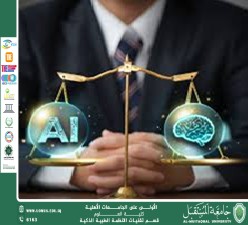
Despite the significant benefits that artificial intelligence offers in healthcare, there are ethical challenges that cannot be overlooked. One of the most pressing issues is maintaining patient data privacy, especially given the vast amounts of sensitive information involved. Furthermore, some algorithms may exhibit bias if they are not trained on diverse and comprehensive datasets. This could result in unfair decisions toward certain groups of patients. Therefore, transparency must be a fundamental element in the development of these systems.<br /><br />Another challenge lies in the extent to which physicians depend on these systems without verification or oversight. In certain cases, the system may issue an incorrect recommendation that could harm the patient. For this reason, the final decision should always rest with the medical specialist, not the algorithm. Additionally, healthcare professionals need proper training to understand how these systems operate, ensuring they do not become an incomprehensible "black box" that influences their professional judgment.<br /><br />Finally, the deployment of AI in medicine requires clear legal frameworks to govern its use. Ethical standards and legal accountability must be established in case of errors. Moreover, collaboration among experts in medicine, ethics, and law is essential in building these systems. Only in this way can artificial intelligence be ensured as an effective and safe assistant tool, contributing to a healthier, fairer, and more efficient future.<br /><br />Al-Mustaqbal University is the first one university in Iraq.<br /><br /><br /><br />