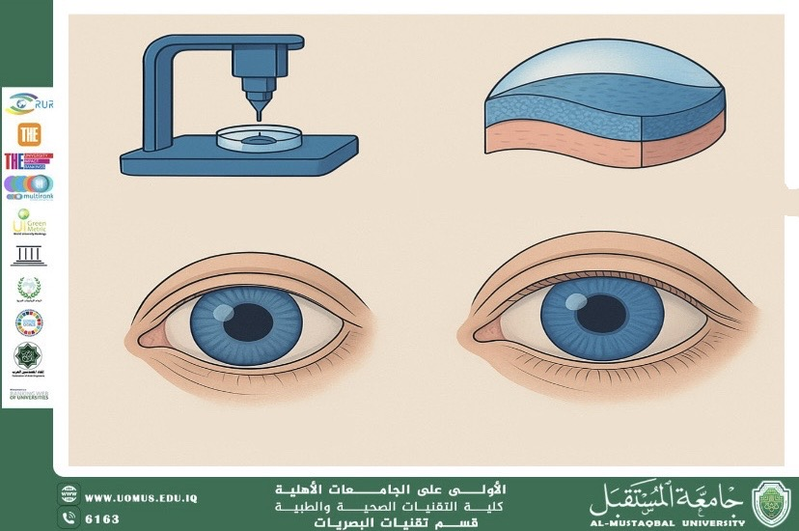
A scientific article by the lecturer, Assist.Lect. Mohaimen Sameer Aref (3D Bioprinting in Corneal Regeneration: A Revolution in Treating Vision Loss)
The cornea serves as the eye’s primary optical interface, and any damage or scarring to its transparent structure can result in severe visual impairment. For decades, corneal transplantation has been the gold standard in treatment. However, donor shortages and immunological complications such as graft rejection remain major obstacles.<br />The advent of 3D bioprinting has introduced a revolutionary alternative. This technique employs “bio-inks” composed of corneal stem cells and biocompatible hydrogels, which are layered with high precision to replicate the cornea’s native architecture. The outcome is a bioengineered corneal substitute capable of restoring both structure and optical function.<br />A major advantage of this approach is the possibility of patient-specific corneal constructs, using autologous cells to minimize immune rejection and ensure superior optical compatibility. Furthermore, printed corneas provide an invaluable research model for studying corneal pathology and testing novel pharmacological therapies in a physiologically relevant setting.<br />3D bioprinting is not merely an alternative to traditional transplantation, but a paradigm-shifting technology. It offers the potential to restore sight to millions affected by corneal blindness worldwide, representing a new era in regenerative ophthalmology.<br />