A scientific article by the lecturer, Assist.Lect. Ali Hadi Al-Husseini (Impact of Crystalline Lens Disorders on Binocular Vision and Ocular Accommodation in Adults)
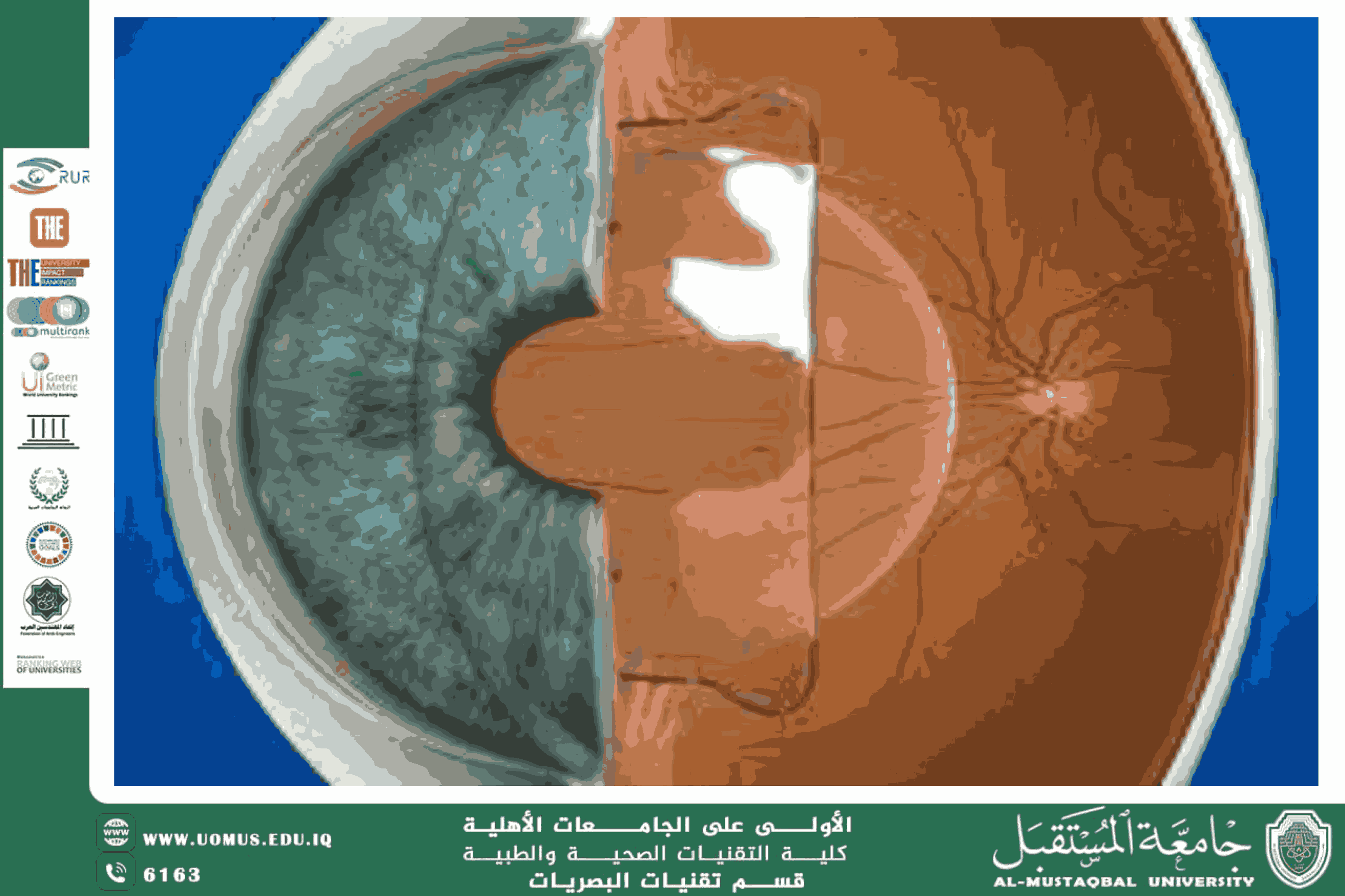
The crystalline lens is a critical component of the eye’s optical system, responsible for focusing light onto the retina and adjusting focal length to achieve sharp vision. Aging or certain pathological conditions can compromise lens function, adversely affecting binocular vision and ocular accommodation, leading to blurred vision, headaches, and persistent visual fatigue.<br />Types of Lens Disorders and Their Effects<br />1. Cataract Formation: Causes reduced visual acuity, altered color perception, and difficulties adapting to varying light conditions, disrupting binocular balance.<br />2. Lens with Partial Functional Decline: Results in decreased accommodation capacity across distances, increased reliance on the dominant eye, and exacerbation of binocular vision problems.<br />3. Post-Surgical or Refractive Lens Changes: Procedures such as intraocular lens implantation may temporarily disturb binocular vision and accommodation due to refractive mismatches between the eyes.<br />Clinical Significance<br />• Assessing lens function and accommodation is an essential part of routine ophthalmic and optometric evaluations.<br />• Improving binocular vision may involve targeted visual therapy exercises or the use of special corrective lenses to restore ocular balance.<br />• Early diagnosis of lens alterations can prevent chronic eye strain and vision-related headaches.<br />The crystalline lens is not merely a static optical structure; it plays a dynamic role in maintaining binocular function and accommodation. Routine lens assessments in adults are crucial for preserving visual quality and overall ocular health.<br />