
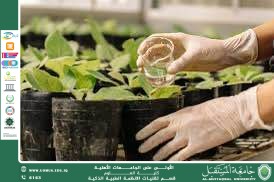
Smart Medicinal Plants: The Genetic Engineering Revolution Toward a Sustainable Pharmaceutical Industry (Asst. Lect. Najat Hamed Jassim)
<br />(Assist. Lecturer Najat Hameed Mousa)<br />The pharmaceutical industry is undergoing a radical transformation with the emergence of smart medicinal plants, which represent a true revolution in modern medicine through the use of genetic engineering techniques. This approach involves inserting specific genes into plants to enable them to produce advanced pharmaceutical compounds, including therapeutic proteins, antibodies, and vaccines.<br />Advantages of Innovation<br />• Low-cost and high-efficiency production: Plants offer an eco-friendly alternative to chemical factories and animal cell cultures.<br />• High safety and quality: Reduced risk of microbial contamination and the ability to produce highly pure pharmaceutical molecules.<br />• Innovative vaccination solutions: Such as edible vaccines produced from potatoes and bananas, making it easier to deliver immunization to remote areas without the need for costly cold-chain logistics.<br />Practical Applications<br />• Tobacco plants engineered to produce therapeutic antibodies against viral diseases.<br />• Genetically modified food crops capable of producing edible vaccines, promoting greater equity in global access to medicine.<br />Personalized Medicine and Epidemic Response<br />This technology enables the design of plants to produce drugs targeting specific diseases or patient groups. It also allows for a rapid response to epidemics by modifying crops to generate new vaccines or treatments in a short period of time.<br />Existing Challenges<br />• Environmental risks: The potential transfer of modified genes to wild plants or food crops.<br />• Regulatory hurdles: The need for strict approvals on safety and efficacy before products can be commercially released.<br />Contribution of Smart Medicinal Plants to Achieving the Sustainable Development Goals (SDGs)<br />1. Goal 3: Good Health and Well-being<br />o Providing safe, affordable vaccines and medicines improves global access to healthcare.<br />o Supporting personalized medicine and rapid epidemic response enhances prevention and reduces mortality rates.<br />2. Goal 9: Industry, Innovation, and Infrastructure<br />o Utilizing plants as pharmaceutical production platforms marks a major shift in the drug industry.<br />o Fostering innovation in genetic engineering strengthens the bio-economy and applied research.<br />3. Goal 12: Responsible Consumption and Production<br />o Replacing chemical factories with plant-based production reduces environmental impact.<br />o Conserving natural resources by enabling more sustainable methods of drug manufacturing.<br />4. Goal 17: Partnerships for the Goals<br />o Encouraging collaboration between universities, research centers, and global companies for development and application.<br />o Sharing knowledge and technology accelerates the adoption of innovative therapeutic solutions worldwide.<br />Smart medicinal plants represent a strategic step toward a more innovative, safe, and sustainable pharmaceutical industry. Beyond reducing costs and accelerating production, they also contribute to environmental protection and global health improvement, fully aligned with the United Nations Sustainable Development Goals 2030.<br /><br /><br />Al-Mustaqbal University is the first one university in Iraq.<br />