
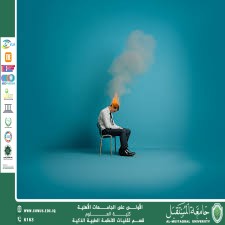
Addressing Physician Burnout through Smart Automation in the Workplace (Asst. Lecturer Qusay Muneer Diab)
<br />Burnout has become one of the most significant challenges facing medical professionals in the twenty-first century. Recent studies indicate that more than 50% of physicians suffer from psychological and professional burnout symptoms, such as emotional exhaustion, decreased job satisfaction, and reduced clinical performance. This phenomenon not only threatens the quality of healthcare and patient safety but also drives many physicians to leave the profession prematurely—negatively impacting SDG 3: Good Health and Well-Being, which emphasizes improving individual and community health.<br />Here, the role of smart automation and artificial intelligence emerges as a crucial tool to reduce this burden. Instead of spending long hours entering medical data or handling administrative tasks, physicians can rely on intelligent systems that manage these routine processes with accuracy and efficiency. Examples include:<br />• Smart scheduling systems that minimize the stress caused by random shifts.<br />• Predictive systems that help distribute workloads more equitably among medical teams.<br />Scientific evidence confirms that the use of AI in managing repetitive tasks has reduced overtime by up to 20% in some hospitals. Moreover, physicians working in AI-supported environments report higher levels of job satisfaction compared to their peers in traditional settings. These outcomes directly contribute to SDG 8: Decent Work and Economic Growth, as they enhance working conditions and support the productivity and stability of the medical workforce.<br />However, it is essential to recognize that technology is not a magical cure. Excessive reliance on automation may reduce human interaction within medical teams, which remains vital for maintaining physicians’ mental health and professional harmony. Therefore, intelligent systems must be designed in a collaborative manner that enhances, rather than replaces, the physician’s role—striking a balance between technology and human input. This approach aligns with SDG 9: Industry, Innovation, and Infrastructure, by promoting innovative solutions that preserve the sustainability of the healthcare sector.<br />Addressing physician burnout thus requires a comprehensive approach that includes:<br />1. Developing supportive and healthy work environments.<br />2. Adopting smart automation to ease administrative burdens.<br />3. Providing psychological and social support programs for physicians.<br />In Iraq, where medical staff face extraordinary pressures due to limited resources and high disease burdens, investment in these digital solutions represents a strategic necessity rather than a luxury. It is therefore clear that strengthening SDG 3 (Good Health and Well-Being) and SDG 8 (Decent Work and Economic Growth) cannot be separated from SDG 9 (Industry, Innovation, and Infrastructure), as together they form <br /><br /><br /><br /><br />Al-Mustaqbal University is the first one university in Iraq.<br /><br />