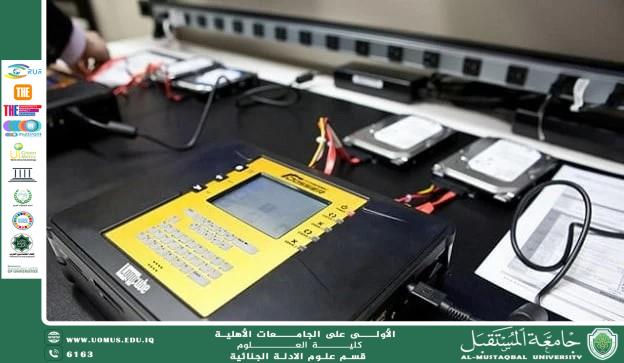
Computer Forensic Tools and Data Recovery Applications in Support of Justice and Sustainable Development (Waqar Chafat Jassim)
Computer forensics is a vital discipline that bridges technology and law, relying on specialized tools to analyze electronic devices and extract digital evidence. Among its most important functions is data recovery, which enables the retrieval of deleted or corrupted files that may serve as crucial evidence in criminal or cybercrime cases.<br /><br />Key forensic data recovery applications include:<br /><br />EnCase: A powerful tool for digital investigations and hard disk analysis.<br /><br />FTK (Forensic Toolkit): A comprehensive platform for digital examination and evidence extraction.<br /><br />Autopsy: An open-source tool for digital data analysis.<br /><br />R-Studio: A versatile program for recovering files across multiple operating systems.<br /><br />The use of these tools contributes directly to the United Nations Sustainable Development Goals, particularly:<br /><br />Goal 16 (Peace, Justice, and Strong Institutions): by strengthening justice through reliable digital evidence.<br /><br />Goal 9 (Industry, Innovation, and Infrastructure): by advancing innovative technologies for effective digital forensics.<br /><br />Goal 4 (Quality Education): by training students and researchers on modern tools and scientific practices.<br /><br />Thus, computer forensic tools not only aid investigations but also form part of the broader framework of cybersecurity and sustainable development in modern societies.<br />Al-Mustaqbal University the first university in Iraq<br/><br/><a href=https://www.un.org/sustainabledevelopment/ar/ target=_blank>SDGS</a>