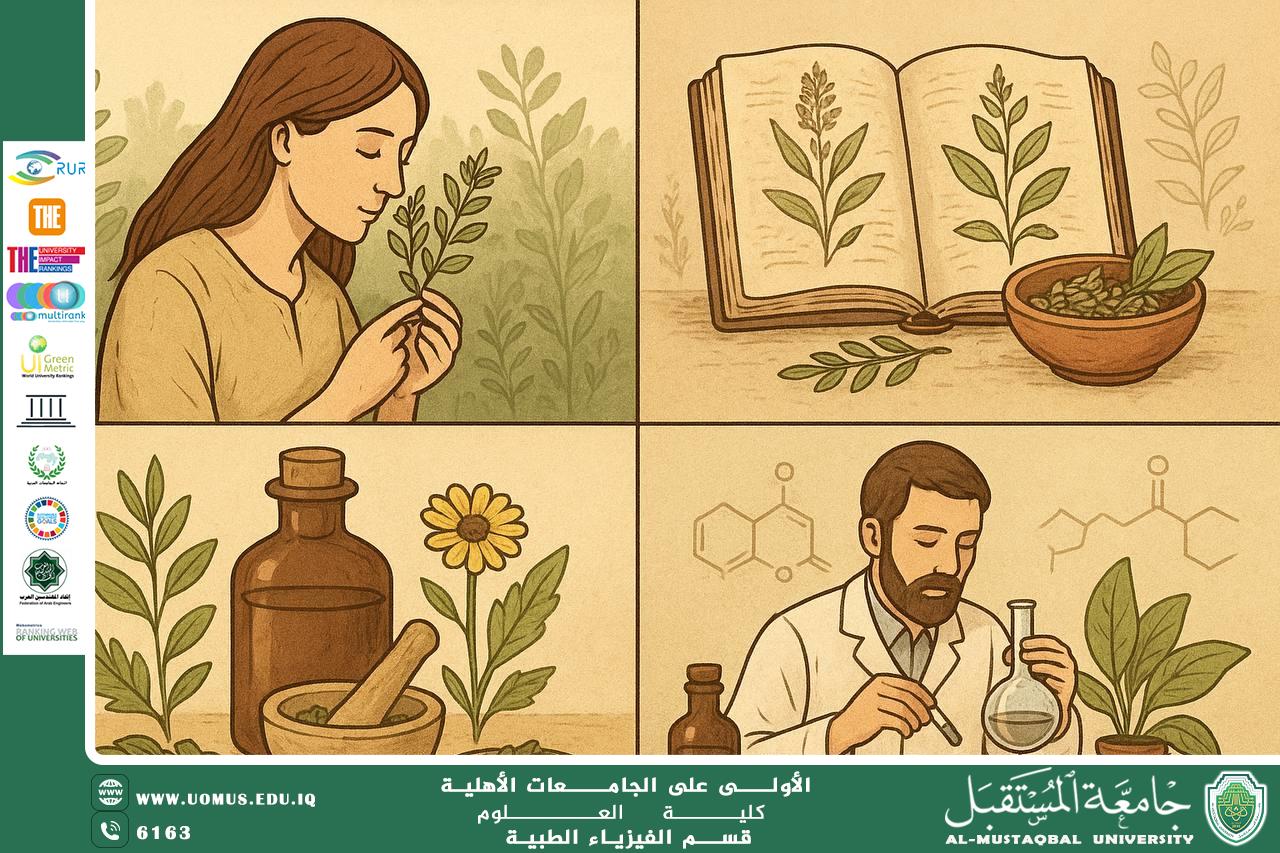
A scientific article by the administrator (Nour Issa) entitled “Medicinal Plants: A Cultural Heritage and Natural Treatment Since Ancient Times”
Introduction<br /><br />Since ancient times, humans have sought remedies in nature to heal their ailments and strengthen their bodies. Medicinal plants emerged as natural treatments and preventive measures against diseases. They were not merely therapeutic resources but also part of the cultural and civilizational heritage of societies, as their use was closely tied to traditional knowledge, folk medicine, and even spiritual and religious practices.<br /><br />Historical Roots of Medicinal Plants<br /><br />Ancient civilizations such as the Sumerian, Egyptian, Indian, and Chinese recognized the value of medicinal plants, documenting remedies on clay tablets and papyri. For example, the Egyptian Ebers Papyrus contains more than 800 herbal prescriptions. In the Islamic tradition, scholars such as Avicenna (Ibn Sina) and Al-Razi produced encyclopedic works detailing herbs and their therapeutic properties.<br /><br />Therapeutic Properties of Medicinal Plants<br /><br />Medicinal plants are rich in bioactive compounds, including:<br /><br />Alkaloids: with analgesic and stimulating effects on the nervous system (e.g., caffeine, quinine).<br /><br />Flavonoids: powerful antioxidants that help prevent chronic diseases.<br /><br />Essential Oils: antimicrobial and antifungal agents used in aromatherapy.<br /><br />Tannins: known for their astringent and anti-inflammatory properties.<br /><br />These compounds have made medicinal plants a cornerstone of modern medicine, with over 25% of pharmaceutical drugs derived from plant sources.<br /><br />Contemporary Applications<br /><br />Today, alternative and complementary medicine continues to rely on medicinal herbs to treat common ailments such as digestive disorders, skin diseases, and colds. Some are also used to strengthen the immune system and promote general well-being. Furthermore, medicinal plants serve as essential sources for natural cosmetics and dietary supplements.<br /><br />Challenges and Future Prospects<br /><br />Despite their benefits, the use of medicinal plants faces several challenges, including:<br /><br />Lack of standardized quality control for herbal products.<br /><br />Risks of contamination with pesticides or heavy metals.<br /><br />Overharvesting leading to the depletion of certain plant species.<br /><br />Nevertheless, the global trend toward natural medicine and eco-friendly products strengthens research efforts to discover new bioactive compounds and develop safer, more effective drugs.<br /><br />Conclusion<br /><br />Medicinal plants represent a cultural heritage spanning thousands of years. They are not merely relics of the past but foundations for modern medical innovation. With scientific advancement, integrating traditional knowledge with contemporary research offers the best path to harnessing this natural treasure in building a healthier and more sustainable future.<br /><br /><br /><br /><br /><br />"AL_mustaqbal University is the first university in Iraq"<br/><br/><a href=https://uomus.edu.iq/Default.aspx target=_blank>al-mustaqbal University Website</a>