
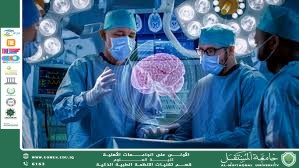
Virtual and Augmented Reality in Training Healthcare Professionals — Immersive Medical Education and Its Link to the Sustainable Development Goals (Asst. Lecturer Qusay Munir Diab)
<br />Virtual Reality (VR) and Augmented Reality (AR) have emerged as powerful modern tools in medical education. They provide immersive and safe learning environments where students and trainees can practice medical procedures realistically without endangering patients’ lives. These technologies rely on 3D anatomical models, interactive surgical simulations, and emergency scenarios to train physicians in making quick and effective decisions under pressure.<br />Educational and Training Benefits<br />• Intensive Practice: Trainees can repeat complex procedures multiple times until mastery is achieved (SDG 4: Quality Education).<br />• Safe Application: Reduces medical errors and enhances patient safety when transitioning to real-life practice (SDG 3: Good Health and Well-Being).<br />• Real-Time Guidance: AR enables the display of vital signs and medical instructions directly during surgeries, improving performance accuracy.<br />Studies have shown that VR/AR in medical training increases knowledge retention and practical application by 25–30% compared to traditional methods, while also strengthening critical thinking and decision-making skills.<br />Current Challenges<br />Despite these benefits, integrating VR/AR faces several challenges:<br />• High cost of hardware and software (SDG 9: Industry, Innovation, and Infrastructure).<br />• The need for strong digital infrastructure in universities and hospitals.<br />• Training academic staff on how to effectively use these advanced tools.<br />Application in the Iraqi Context<br />In Iraq, where educational and medical institutions often face financial limitations and weak infrastructure, gradual and practical approaches can be adopted, such as:<br />• Using digital surgical simulators in classrooms.<br />• Introducing VR-based modules in teaching laboratories.<br />• Establishing partnerships with technology companies to reduce costs (SDG 17: Partnerships for the Goals).<br />This step-by-step strategy enhances the quality of medical training without requiring massive investments.<br />Contribution to the Sustainable Development Goals (SDGs)<br />• SDG 3: Good Health and Well-Being — Reducing medical errors and improving patient safety.<br />• SDG 4: Quality Education — Strengthening interactive and applied learning for healthcare professionals.<br />• SDG 9: Industry, Innovation, and Infrastructure — Supporting digital transformation in medical education.<br />• SDG 10: Reduced Inequalities — Providing equal training opportunities for students across different backgrounds.<br />• SDG 17: Partnerships for the Goals — Fostering collaboration between universities, hospitals, and technology firms.<br />Virtual and augmented reality represent the future of medical education, blending theoretical knowledge with practical experience in safer and more efficient ways. When aligned with the SDGs, these technologies are not only educational tools but also strategic enablers for preparing highly skilled medical professionals who can meet modern clinical challenges and drive sustainable health and education development in Iraq and beyond.<br /><br /><br />Al-Mustaqbal University – The First University in Iraq.<br />