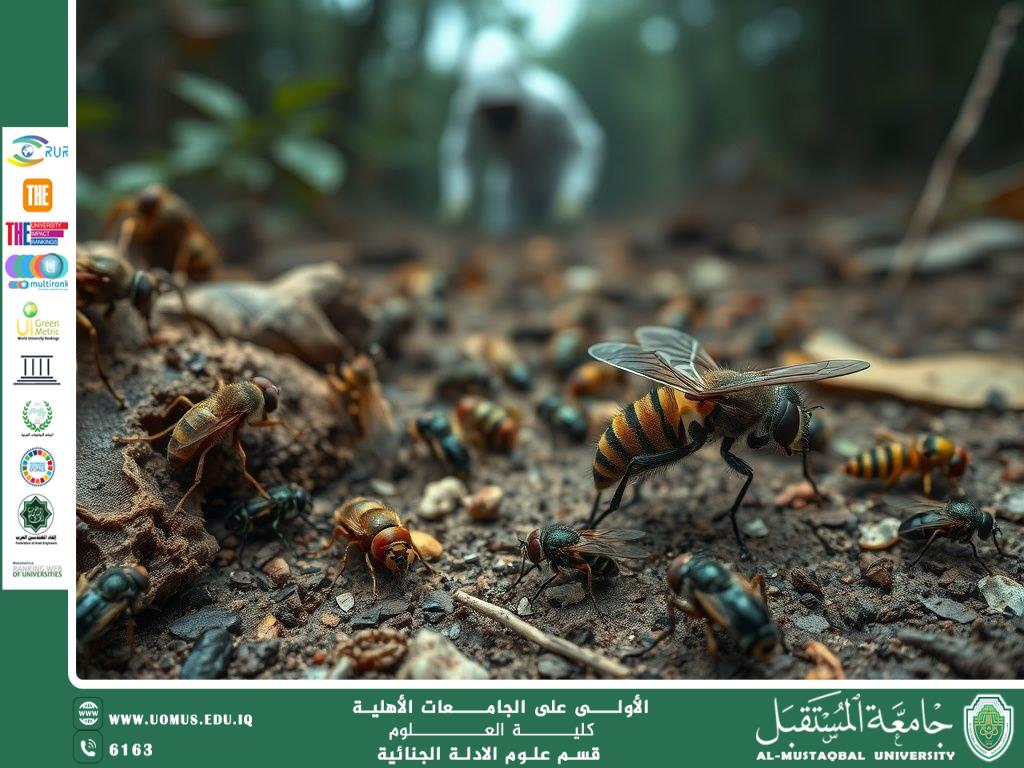
Insects as Forensic Indicators: An Evolutionary and Ecological Analysis (M.M. Howayda Nazzal Hussein)
Insects play a crucial role in the field of forensic entomology, serving as powerful tools for uncovering the circumstances of crimes and estimating the postmortem interval (PMI). Their significance stems from both evolutionary adaptations and ecological sensitivities that make them reliable biological indicators.<br /><br />From an evolutionary perspective, insects exhibit advanced survival strategies such as rapid reproduction and short life cycles, enabling multiple generations to emerge within a brief time span. This gives them an advantage in colonizing human remains shortly after death, with blowflies (Calliphoridae) being among the first to appear within hours of death.<br /><br />Ecologically, the diversity of insect species and their variable responses to environmental factors such as temperature and humidity provide valuable biological records. For example, the presence of certain beetles may indicate whether a body was exposed outdoors or located in a moist environment.<br /><br />Moreover, insect communities can reveal additional forensic details, including whether a body was moved from one location to another, or whether the victim had been exposed to toxic substances—since larvae can absorb and retain poisons from the body.<br /><br />Thus, the use of insects as forensic indicators represents an intersection of ecology, evolution, and forensic science, demonstrating how tiny organisms can uncover major truths in criminal investigations.<br />Al-Mustaqbal University – the first university in Iraq.<br/><br/><a href=https://www.un.org/sustainabledevelopment/ar/ target=_blank>SDGS</a>