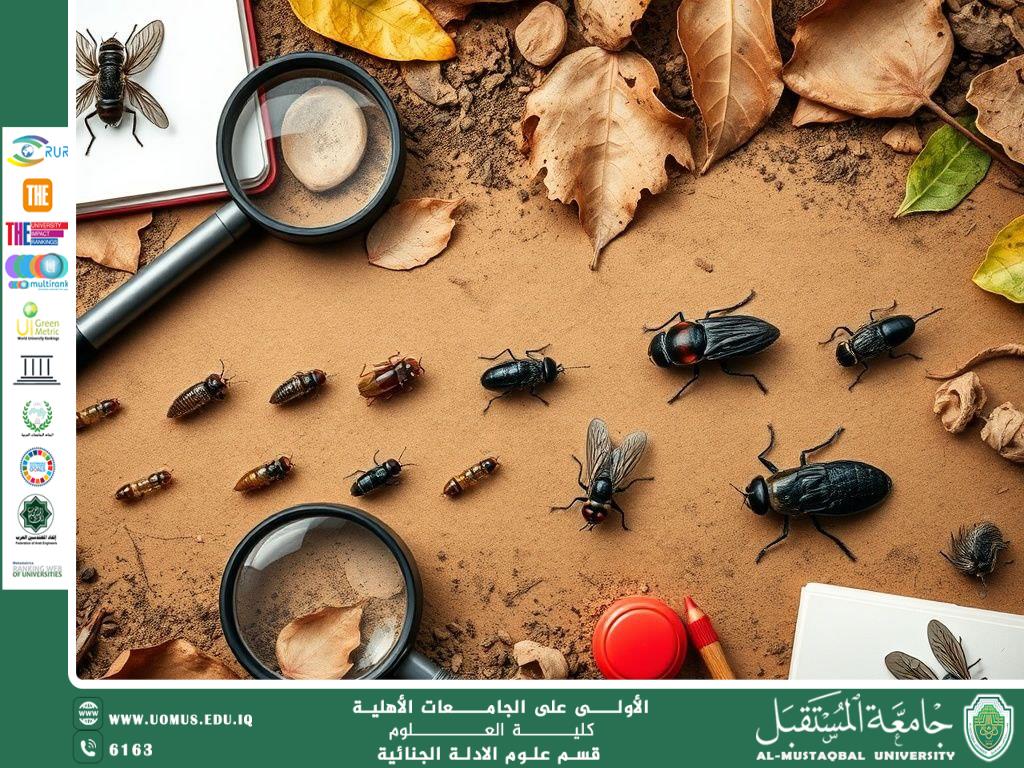
From Larva to Truth: The Role of Insects in Forensic Investigations (M.M. Howayda Nazzal Hussein)
Insects are among the most valuable tools in forensic science. Despite their small size, their life cycles and ecological behaviors provide a natural timeline that experts can use to uncover the mysteries of crime.<br /><br />This field, known as Forensic Entomology, focuses on studying insects that colonize a body after death. The process often begins with blowflies and houseflies, which lay eggs on the body within hours. These eggs hatch into larvae, which then grow through predictable stages until they become pupae and eventually adult flies.<br /><br />By understanding how long each stage lasts, forensic experts can estimate the Post-Mortem Interval (PMI)—the time that has passed since death. For instance, finding larvae in a specific developmental stage allows investigators to determine whether death occurred days or even weeks earlier.<br /><br />The role of insects goes beyond estimating time of death. They can also provide:<br /><br />Clues about the original crime scene: Insects may carry environmental or botanical traces indicating whether a body was moved.<br /><br />Evidence of toxins or drugs: Since larvae ingest chemicals from decomposing tissue, their analysis can reveal poisoning or drug use.<br /><br />Insights into neglect or trauma: The pattern of insect activity may show whether the body was left exposed, hidden, or otherwise altered.<br /><br /><br />Conclusion:<br />From a tiny larva unnoticed by most people, crucial truths can be revealed that aid the pursuit of justice. Forensic entomology proves that nature records everything, and it is up to humans to learn how to read these records with precision.<br /><br />Al-Mustaqbal University – the first university in Iraq.<br/><br/><a href=https://www.un.org/sustainabledevelopment/ar/ target=_blank>SDGS</a>