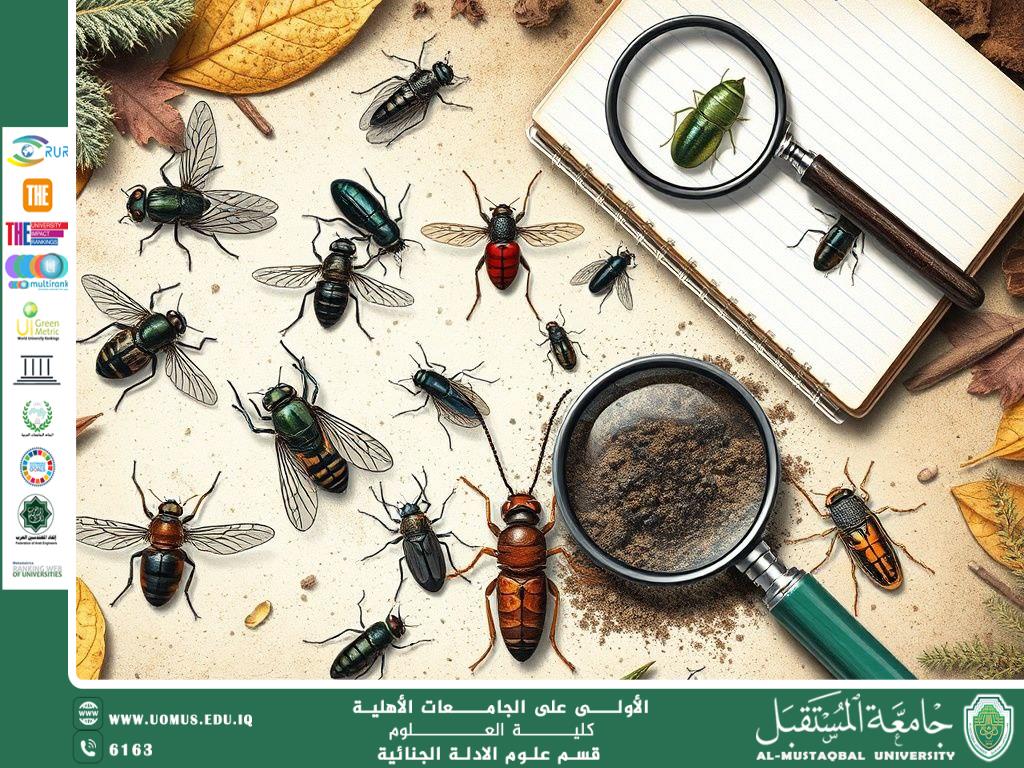
Insects and Forensic Evidence: A Biological Reading in Solving Mysteries (M.M. Howayda Nazzal Hussein)
Insects are among the most diverse and widespread organisms on Earth, yet their significance extends beyond ecology to the realm of justice. The study of insects associated with human remains has given rise to a specialized field known as Forensic Entomology, which applies biological knowledge of insects to criminal investigations and the resolution of unexplained deaths.<br /><br />When insects such as blowflies, houseflies, and beetles colonize a body, they follow a predictable life cycle (egg → larva → pupa → adult). These developmental stages serve as a natural "biological clock," allowing forensic experts to estimate the Post-Mortem Interval (PMI)—the time that has elapsed since death.<br /><br />The role of insects, however, goes beyond estimating time of death. They can also:<br /><br />Indicate the crime scene location: Certain insect species are tied to specific environments (urban, rural, dry, humid), helping determine if a body was moved.<br /><br />Reveal toxins or drugs: Larvae feeding on tissue can be analyzed to detect poisons or narcotics.<br /><br />Provide evidence of trauma: Insect feeding patterns may indicate injuries that occurred before death.<br /><br /><br />Through this biological lens, insects act as silent yet reliable witnesses, preserving the secrets of a crime long after it has occurred.<br /><br />Conclusion:<br />Insects are not merely minor creatures in nature; they are vital biological evidence in forensic science. Through forensic entomology, these tiny organisms become powerful tools for uncovering the truth and serving justice.<br /><br />Al-Mustaqbal University – the first university in Iraq.<br/><br/><a href=https://www.un.org/sustainabledevelopment/ar/ target=_blank>SDGS</a>