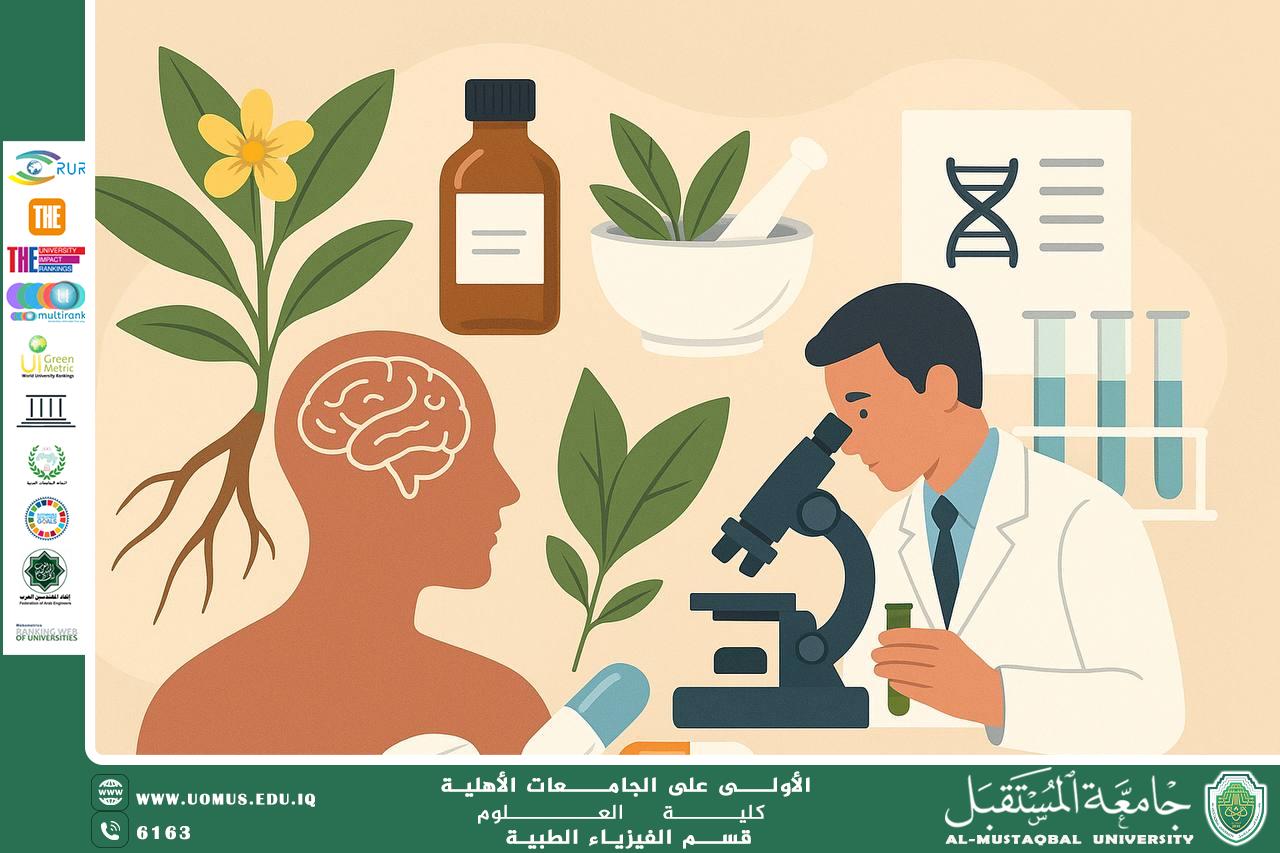
A scientific article by the administrator (Nour Issa) entitled “The Role of Medicinal Plants in the Modern Pharmaceutical Industry”
Introduction<br /><br />Since the dawn of history, humans have relied on medicinal plants to treat illnesses and alleviate pain, making them the earliest foundation of pharmacology. With scientific and technological progress, medicinal plants have become central to modern pharmaceutical industries, serving as a rich source of bioactive compounds that can be used directly or further developed in laboratories to produce safer and more effective drugs.<br /><br />First: The Importance of Medicinal Plants as a Pharmaceutical Source<br /><br />Medicinal plants contain a wide range of active compounds such as alkaloids, flavonoids, terpenoids, and glycosides, which have direct effects on human biological processes. Many well-known drugs today—such as aspirin (derived from the bark of the willow tree) and digoxin (from the foxglove plant)—originate from plant sources.<br /><br />Second: The Role of Plants in Modern Drug Development<br /> 1. Discovery of new compounds: Plants remain an inexhaustible source of chemical compounds that may lead to innovative medicines.<br /> 2. Inspiration for synthetic production: Even when the plant-derived compound itself is not used, it often inspires scientists to develop synthetic alternatives that are more stable and cost-effective.<br /> 3. Bridging traditional and modern medicine: Traditional herbal practices in many cultures continue to provide valuable data that modern pharmaceutical research can build upon.<br /><br />Third: Challenges in Using Medicinal Plants<br /> • Variability in active compound concentration depending on plant species and cultivation methods.<br /> • Scarcity of certain medicinal plants, posing risks to biodiversity.<br /> • Need for clinical trials to ensure the efficacy and safety of plant extracts before their approval as modern medicines.<br /><br />Fourth: The Future of Medicinal Plants in Drug Development<br /><br />Reliance on medicinal plants is expected to increase in the future as demand grows for natural alternatives to synthetic drugs. Advances in biotechnology and genetic engineering will also enable more efficient and sustainable production of plant-derived compounds.<br /><br />Conclusion<br /><br />Medicinal plants play a pivotal role in modern drug development, acting as a bridge between traditional medical heritage and advanced scientific technology. With continued research and international collaboration, medicinal plants hold great promise for addressing complex diseases and achieving sustainability in pharmaceutical production.<br /><br /><br /><br /><br />"AL_mustaqbal University is the first university in Iraq"<br/><br/><a href=https://uomus.edu.iq/Default.aspx target=_blank>al-mustaqbal University Website</a>