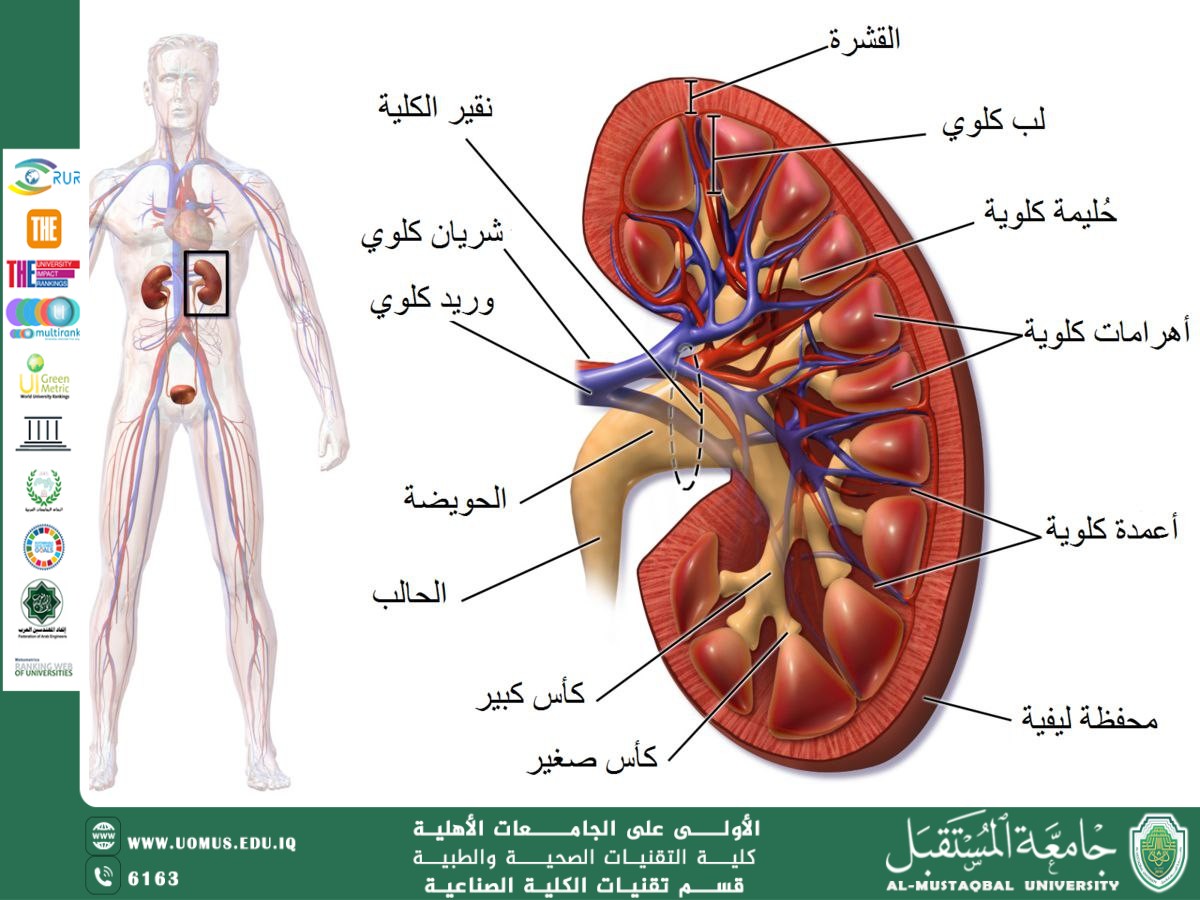
Anatomy and Function of the Human Kidney
zainab ali mohsen<br />Introduction<br />The human kidney is a vital organ responsible for filtering blood from waste products and excess fluids, while maintaining electrolyte and salt balance in the body. The kidneys are located at the posterior part of the abdomen, on either side of the vertebral column. Each kidney measures about 10–12 cm in length and weighs approximately 120–150 grams.<br /><br />The kidney consists of an outer cortex, known as the renal cortex, and an inner medulla that contains the renal pyramids, which include nephrons as the basic functional units. The nephron is responsible for filtration, reabsorption, and secretion, and is composed of a glomerulus, convoluted tubules, and collecting ducts. The kidney also regulates blood pressure through the renin–angiotensin system and secretes the hormone erythropoietin, which stimulates the bone marrow to produce red blood cells.<br /><br />Impairment of kidney function may lead to diseases such as acute or chronic renal failure, resulting in the accumulation of waste products in the blood. Therefore, understanding the detailed anatomy and function of the kidney is fundamental in medicine and physiology.<br /><br />References:<br /> 1. Guyton, A. C., & Hall, J. E. Textbook of Medical Physiology. 14th Edition, Elsevier, 2020.<br /> 2. Tortora, G. J., & Derrickson, B. Principles of Anatomy and Physiology. 16th Edition, Wiley, 2021.<br /><br />Al-Mustaqbal University the first university in Iraq