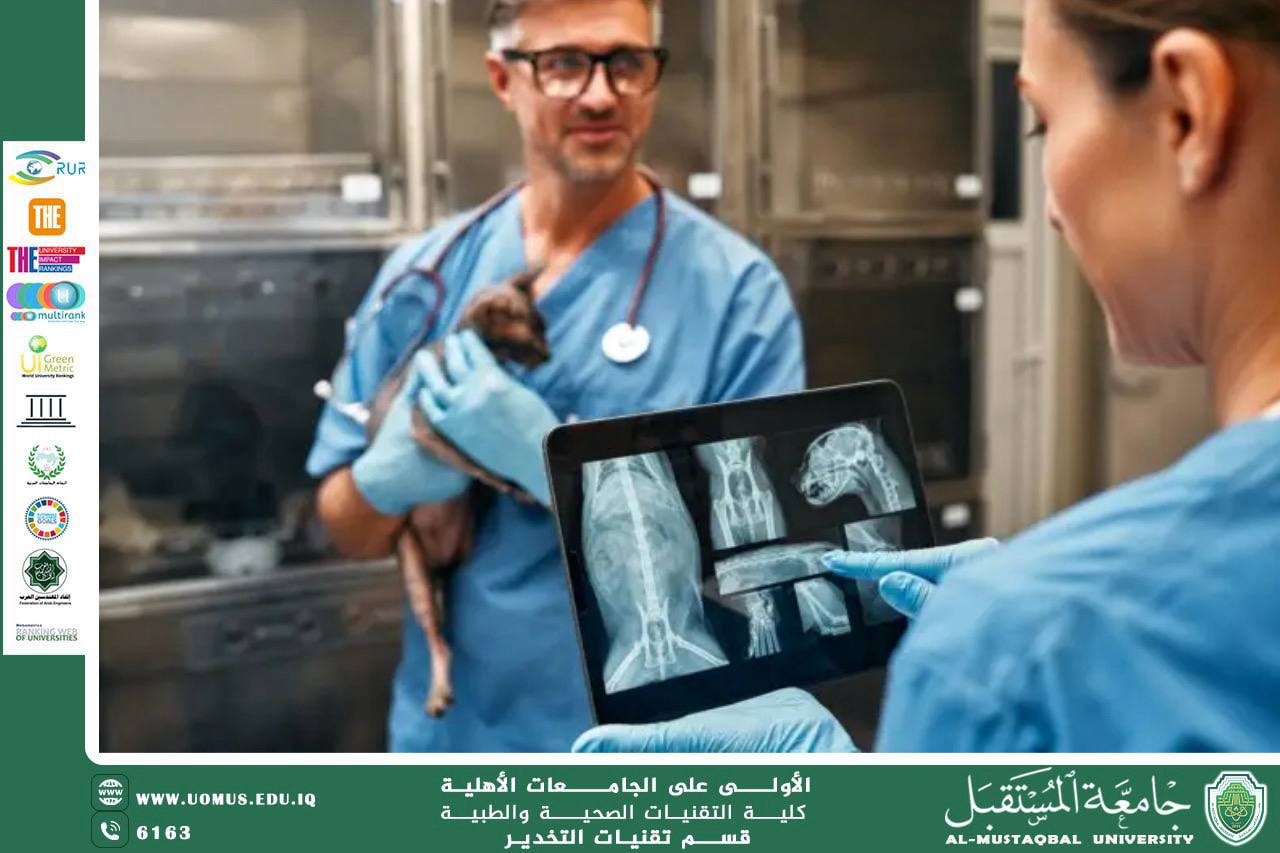
Modern Technologies in Veterinary Medicine
Introduction :<br /><br />In recent decades, veterinary medicine has witnessed remarkable progress due to the integration of modern technologies that have enhanced diagnostic accuracy, treatment effectiveness, and rapid response in emergency cases. These innovations not only improve animal health and welfare but also positively impact human health and food security within the framework of the One Health concept.<br /><br />1. Advanced Medical Imaging<br />The use of advanced imaging techniques such as computed tomography (CT) and magnetic resonance imaging (MRI) has become more common in veterinary practice. These tools allow veterinarians to obtain detailed views of internal structures such as the brain, joints, and internal organs. They are particularly useful in diagnosing tumors, neurological injuries, and complex diseases that were previously difficult to detect.<br /><br />2. Minimally Invasive Surgery<br />Laparoscopic and endoscopic surgeries have revolutionized the treatment of many conditions, including the removal of foreign bodies and the examination of the abdomen or joints. These procedures result in smaller incisions, less postoperative pain, and faster recovery compared to traditional surgery.<br /><br />3. Digital Technology and Artificial Intelligence<br />Artificial intelligence systems are increasingly being used to analyze radiographs and laboratory tests with high accuracy, assisting veterinarians in making faster and more precise decisions. Additionally, mobile applications and wearable devices are now available to monitor the health of pets remotely.<br /><br />4. Regenerative Medicine and Biological Therapies<br />Stem cell therapy and platelet-rich plasma (PRP) are promising options for treating tendon injuries, joint diseases, and fractures in horses and athletic animals. These therapies promote tissue regeneration and reduce the need for traditional surgical interventions.<br /><br />5. Biotechnology and Advanced Vaccines<br />Biotechnological advancements have contributed to the development of more effective vaccines against infectious diseases threatening livestock, such as foot-and-mouth disease and avian influenza. These innovations also help reduce antibiotic use, thereby limiting the development of antimicrobial resistance.<br /><br />Conclusion :<br /><br />Modern technologies in veterinary medicine have created a paradigm shift in diagnosis and treatment, contributing to improved animal health and enhanced productivity. With continuous innovation, veterinary medicine will remain at the forefront of disciplines that connect animal, human, and environmental health to ensure a safer and more sustainable future.<br /><br />Ameer bahaa fahim <br /><br />Al-Mustaqbal University <br />The first University in Iraq.