
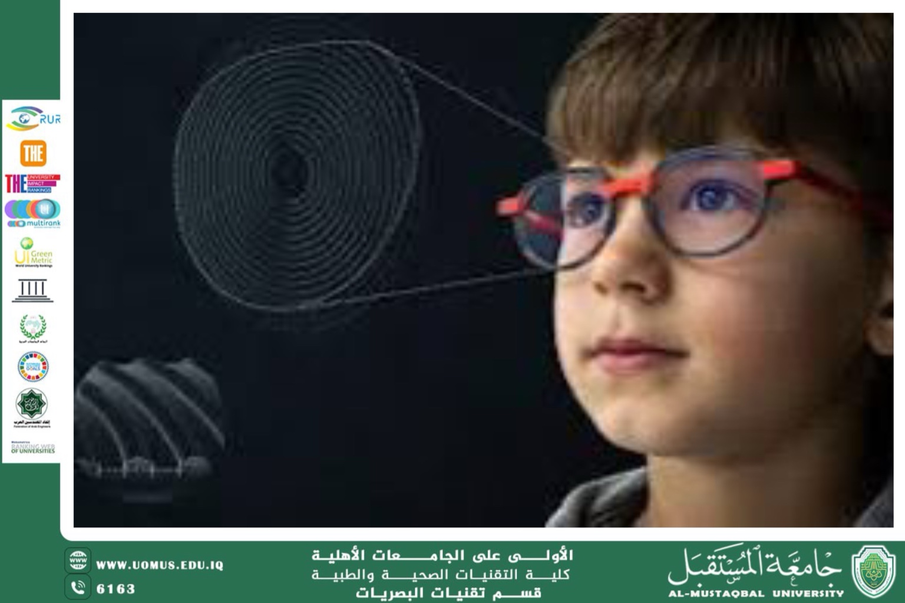
A scientific article by optician Hassan Abd Ali entitled (Myopia Control and Management in Children: Clinical Strategies and Emerging Treatments)
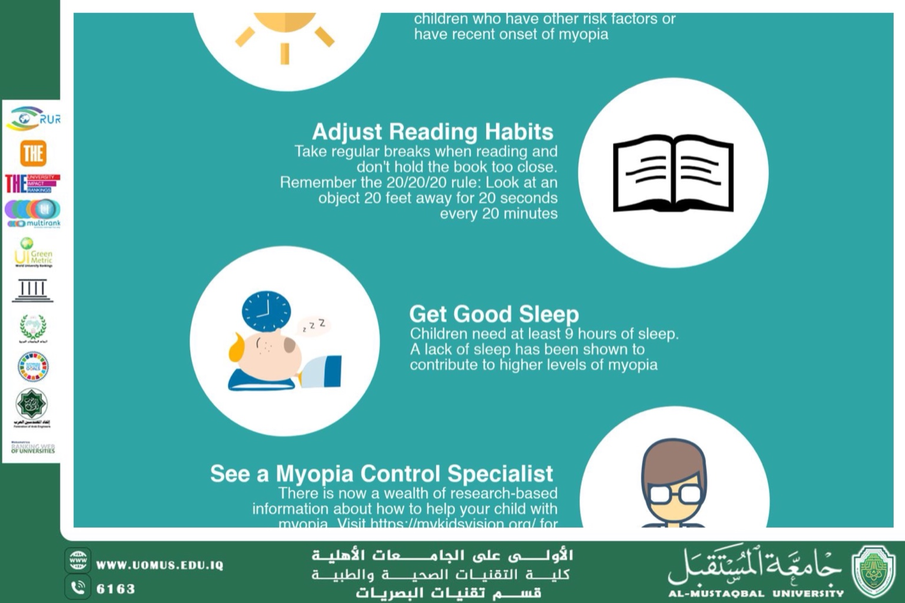
Abstract<br /><br />Myopia, or nearsightedness, has become a major public health concern worldwide, particularly in children. Uncontrolled progression can lead to high myopia, increasing the risk of retinal detachment, glaucoma, and macular degeneration. This article reviews current clinical strategies for myopia control, including optical, pharmacological, and behavioral interventions.<br /><br />⸻<br /><br />Introduction<br /><br />The prevalence of myopia is rising globally, with some East Asian countries reporting rates above 80% among school-aged children. Early detection and intervention are crucial to prevent progression to high myopia and associated ocular complications.<br /><br />⸻<br /><br />Etiology and Risk Factors<br /><br />The development of myopia is influenced by genetic, environmental, and lifestyle factors. Key risk factors include:<br /> • Family history of myopia<br /> • Excessive near work (reading, screen time)<br /> • Reduced outdoor activity<br /> • Ethnic predisposition<br /><br />⸻<br /><br />Clinical Strategies for Myopia Control<br /><br />1. Optical Interventions<br /> • Orthokeratology (Ortho-K): Specialized contact lenses worn overnight to reshape the cornea.<br /> • Multifocal Soft Contact Lenses: Reduce peripheral hyperopic defocus to slow myopia progression.<br /> • Specialized Spectacle Lenses: Designed to reduce eye strain and peripheral defocus.<br /><br />⸻<br /><br />2. Pharmacological Interventions<br /> • Low-dose Atropine (0.01–0.05%): Most evidence-based pharmacological approach; effective in slowing myopia progression with minimal side effects.<br /><br />⸻<br /><br />3. Behavioral and Environmental Approaches<br /> • Encourage outdoor activity (≥2 hours/day)<br /> • Reduce continuous near work; implement regular breaks<br /> • Ensure proper lighting for reading and studying<br /><br />⸻<br /><br />Clinical Considerations<br /> • Early intervention is crucial; younger children progress faster.<br /> • Combination therapy (optical + pharmacological) is often more effective.<br /> • Regular follow-up (every 6–12 months) is recommended to monitor axial length and refractive changes.<br /><br />⸻<br /><br />Conclusion<br /><br />Myopia control in children requires a multi-faceted approach involving optical, pharmacological, and lifestyle modifications. Early detection, patient education, and consistent follow-up are essential to prevent high myopia and related ocular complications.