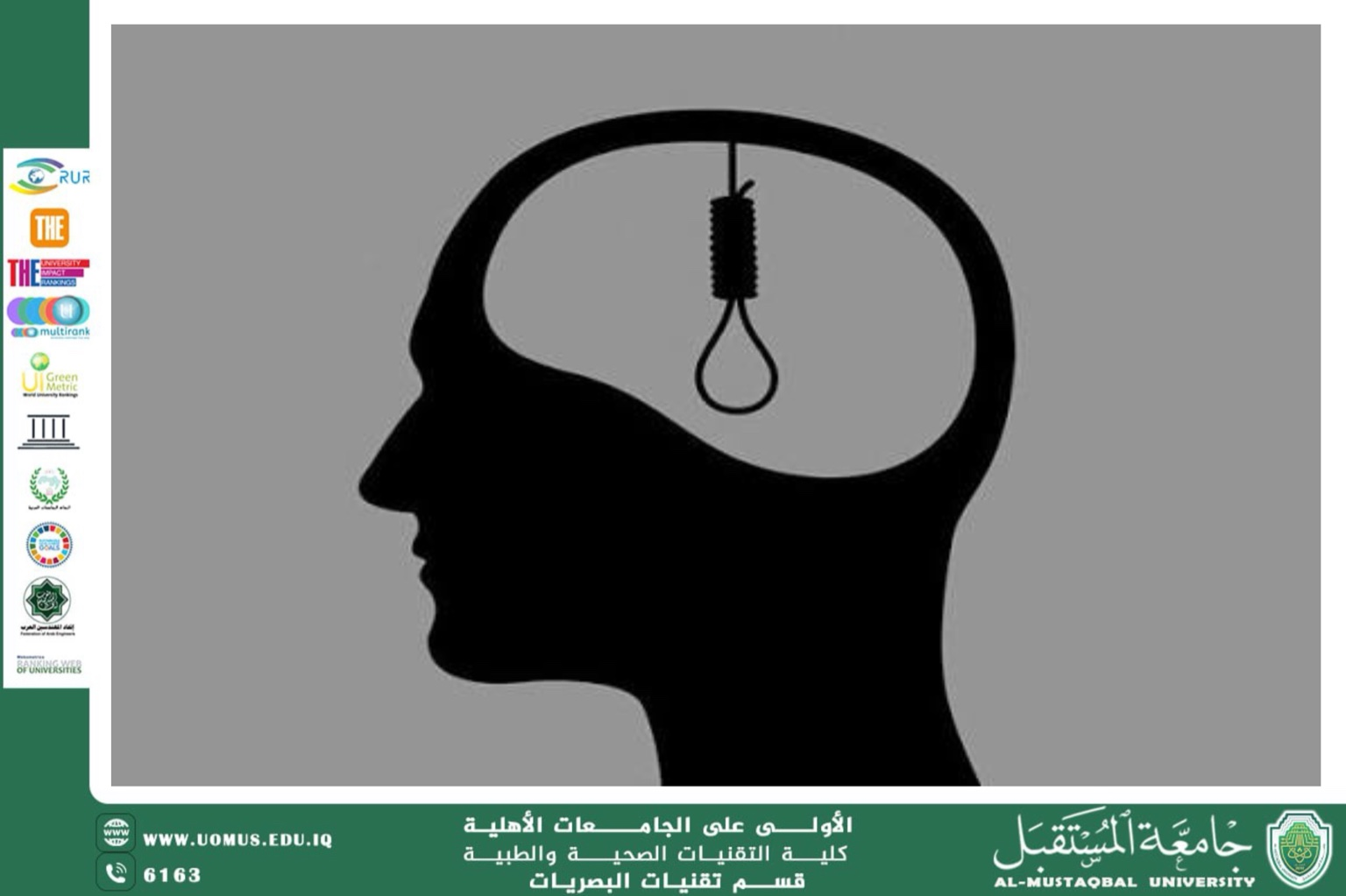
A scientific article by Assistant Lecturer Naba Yaseen titled (Suicide: Risks, Causes, and Prevention Strategies)
<br />Introduction<br /><br />Suicide is one of the most serious challenges to mental health worldwide. It is ranked among the leading causes of death among adolescents and adults. According to reports by the World Health Organization (WHO), more than 700,000 people die by suicide every year, making it not only a health issue but also a profound humanitarian and social concern that requires urgent awareness and preventive action.<br /><br />Causes and Contributing Factors<br /><br />Several factors may lead to suicidal ideation and behavior. These can be categorized as follows:<br /> 1. Psychological factors: Severe depression, bipolar disorder, post-traumatic stress disorder (PTSD), and anxiety disorders.<br /> 2. Social factors: Social isolation, family breakdown, bullying, and economic pressures.<br /> 3. Biological factors: A family history of suicide attempts or mental illness can increase an individual’s vulnerability.<br /> 4. Environmental factors: Easy access to lethal means (such as medications, firearms, or toxic substances) poses a significant risk.<br /><br />Impacts and Risks<br /><br />Suicide does not merely represent the loss of an individual’s life; it leaves deep psychological, social, and economic consequences on families and communities. Some of the major impacts include:<br /> • Increased risk of mental health disorders among the victim’s relatives and friends.<br /> • Loss of human potential that could have contributed to development and innovation.<br /> • Economic burdens due to medical and psychological care needs.<br /><br />Prevention Strategies<br /><br />Research shows that suicide prevention is possible through a combination of strategies:<br /> • Education and awareness: Promoting mental health awareness in schools, universities, and media outlets.<br /> • Early diagnosis and treatment: Providing accessible counseling and mental health services for all age groups.<br /> • Family and social support: Strengthening communication and emotional support within families and communities.<br /> • Public health policies: Developing national mental health strategies and restricting access to common means of suicide.<br /><br />Conclusion<br /><br />Suicide is a complex issue shaped by interrelated psychological, social, biological, and environmental factors. Addressing it requires coordinated efforts among health, educational, and social institutions, with an emphasis on prevention, awareness, and early psychological support. Universities, in particular, play a vital role in raising awareness and training professionals to address mental health challenges, ultimately contributing to a more resilient and informed society.<br /><br />References (Suggested)<br /> 1. World Health Organization (WHO). Suicide worldwide in 2019: Global Health Estimates. Geneva: WHO; 2021.<br /> 2. American Psychiatric Association. Diagnostic and Statistical Manual of Mental Disorders, 5th Edition (DSM-5). APA, 2013.<br /> 3. Mann JJ, Apter A, Bertolote J, et al. Suicide prevention strategies: a systematic review. JAMA. 2005;294(16):2064–2074