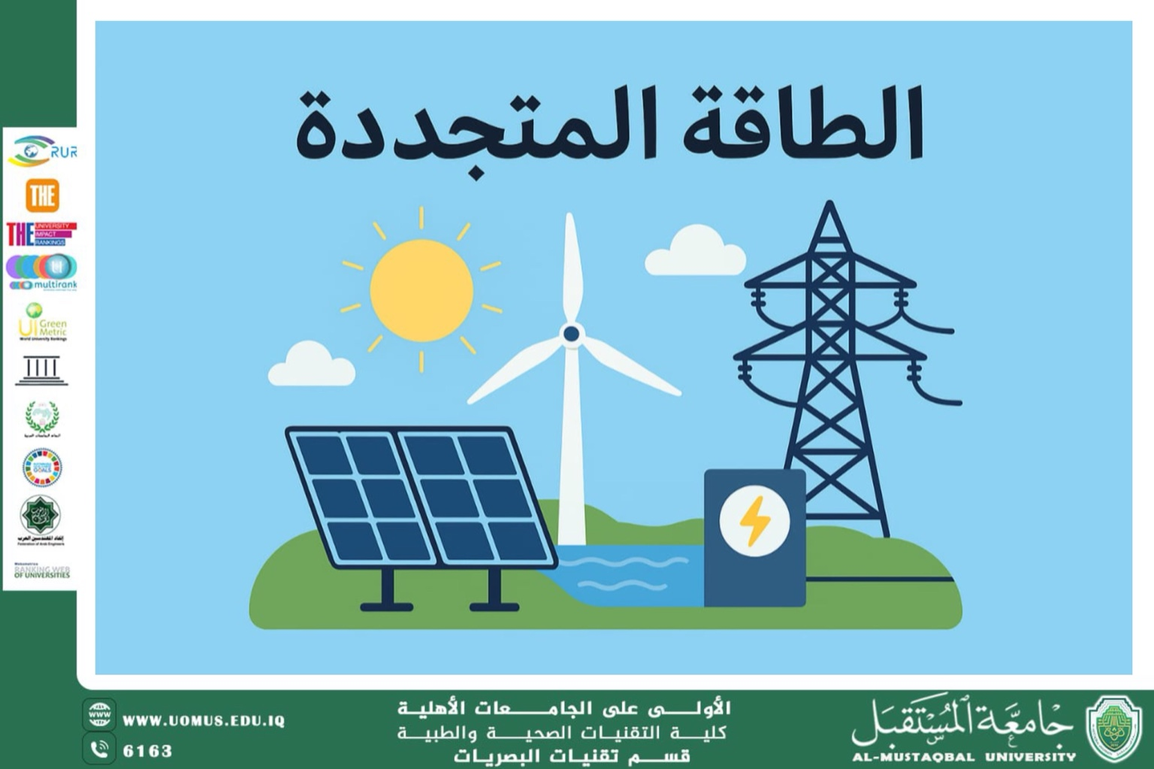
A scientific article by Assistant Lecturer Zainab Ahmed titled ( Renewable Energy: The Future of Sustainable Power)
Introduction<br /><br />The world is undergoing a fundamental transformation in the energy sector, driven by the urgent need to combat climate change and reduce dependence on fossil fuels such as coal, oil, and natural gas. With global energy demand increasing due to population growth and industrial development, renewable energy has emerged as a strategic necessity.<br /><br />Types of Renewable Energy Sources<br /><br />1. Solar Energy: Generated by converting sunlight into electricity using photovoltaic cells. It is one of the fastest-growing energy sources worldwide.<br /><br /><br />2. Wind Energy: Produced by large turbines that convert wind movement into electricity.<br /><br />3. Hydropower: Generated from the movement of water in rivers and dams, making it one of the oldest renewable sources.<br />4. Biomass Energy: Derived from organic matter such as agricultural waste and converted into biofuels.<br /><br />5. Geothermal Energy: Utilizes the Earth’s internal heat to generate electricity and provide heating.<br /><br />Benefits of Renewable Energy<br />Reduction of Carbon Emissions: Effectively mitigates global warming.<br /><br />Diversification of Energy Sources: Decreases reliance on imported fossil fuels.<br /><br />Job Creation: Studies show that the renewable energy sector generates millions of jobs worldwide.<br /><br />Technological Innovation: Significant investments are driving advancements in clean energy technologies.<br />Challenges Facing Renewable Energy<br />Infrastructure Costs: Although costs are steadily declining, some projects still require substantial investment.<br />Energy Storage: A challenge due to the intermittent nature of solar and wind power.<br /><br />Geographical Limitations: Not all countries have equal access to abundant natural resources such as strong winds or constant sunlight.<br />The Future of Renewable Energy<br />International forecasts suggest that by 2050, more than 70% of global electricity could be generated from renewable sources. Advances in smart battery technologies and smart grids are expected to resolve storage and distribution issues, making renewable energy more reliable.<br />Conclusion<br />The shift toward renewable energy is no longer a matter of political choice or economic strategy; it is an existential necessity. Investing in this sector means protecting the environment, supporting economies, and ensuring energy equity for future generations.