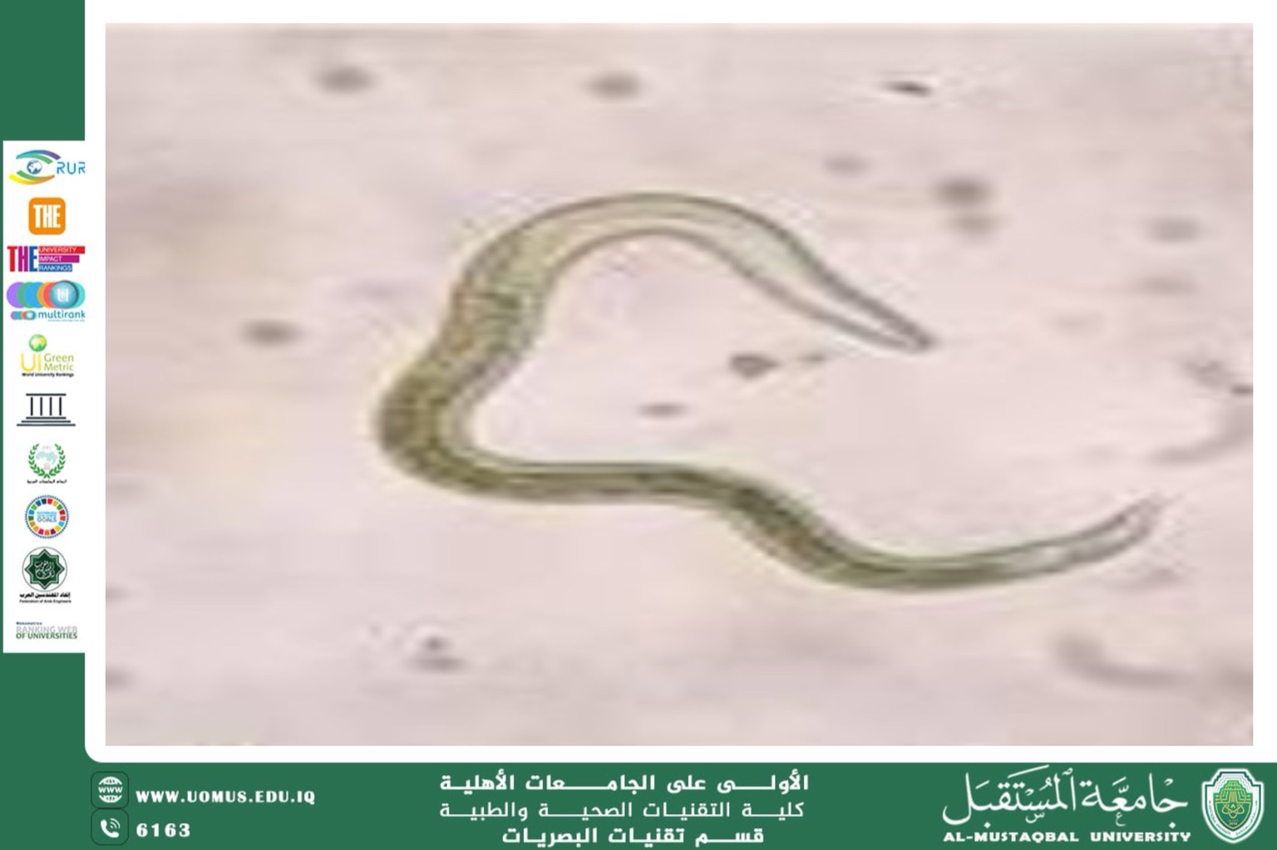
A scientific article by Assistant Lecturer Hassan Qahtan titled ( The Impact of Ascaris (Toxocara canis) on the Eye)
The dog roundworm, Toxocara canis, is a common parasite in dogs that can be transmitted to humans through contaminated soil or direct contact with infected dogs. Once ingested, the parasite’s eggs hatch in the human intestine, and the larvae migrate through the bloodstream to different organs, including the eye.<br /><br />This condition is known as Ocular Toxocariasis, and it primarily affects children and young adults. The main ocular manifestations include:<br />- Retinal and optic nerve inflammation.<br />- Granuloma formation inside the eye.<br />- Decreased visual acuity or partial blindness.<br />- Strabismus or vitreous opacity.<br /><br />Diagnosis is based on clinical examination, imaging techniques, and serological tests for Toxocara. Treatment typically involves anti-parasitic drugs such as Albendazole, combined with corticosteroids to control inflammation. In some cases, surgical intervention may be required to remove ocular lesions.<br /><br />Prevention relies on maintaining good hygiene, proper handwashing, avoiding contaminated soil, and regularly deworming dogs to reduce the risk of transmission.