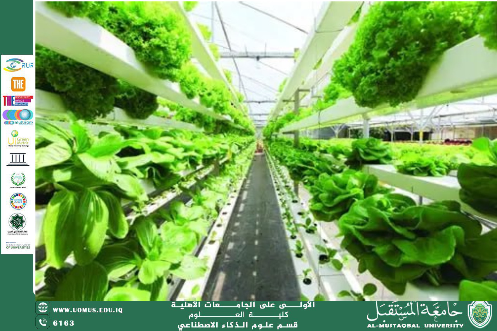
Vertical Farming: The Future of Food in Cities
With the growing global population and the shortage of arable land, the world is in urgent need of innovative solutions for sustainable food production. One of the most groundbreaking methods is Vertical Farming, which is considered a revolution in agriculture.<br /><br />What is Vertical Farming?<br /><br />Vertical Farming is a modern agricultural method that involves growing plants in stacked layers inside buildings or towers. It uses artificial lighting (LED) and advanced irrigation systems, such as misting or drip irrigation, to reduce water consumption and increase productivity.<br /><br />Advantages<br /> 1. Space-saving: Farms can be built inside cities without requiring large areas of land.<br /> 2. Water efficiency: Consumes up to 90% less water compared to traditional farming.<br /> 3. Year-round production: Not affected by seasons or climate change.<br /> 4. High quality: Produces healthy, pesticide-free crops.<br /><br />Challenges<br /> • High costs of building and operating vertical farms.<br /> • Large energy requirements for lighting and climate control.<br /> • Limitations on the types of crops that can be grown using this method.<br /><br />Conclusion<br /><br />Vertical farming represents the future of food production, especially in densely populated cities and under changing climate conditions. Despite the challenges, it offers a smart and promising solution for achieving global food security.