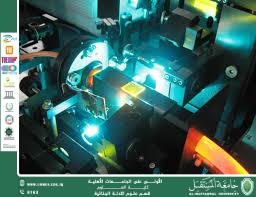
Introduction to Laser Technology and Its Medical Applications (Asst. Prof. Dr. Sami Abdul Hussein Habana)
Laser is considered a modern and advanced technology that relies on emitting concentrated, high-energy electromagnetic waves. It is widely used in various medical fields, where it plays an important role in providing precise and effective treatments. Laser technology is based on the phenomenon of photon amplification and stimulation, producing a beam that can be directed with extreme accuracy toward a specific target. This technology is characterized by its ability to penetrate tissues without the need for large surgical incisions, which reduces complications and speeds up recovery. Medical lasers vary according to their wavelengths, with red, green, and blue lasers being commonly used in different specialties, in addition to pulsed lasers that allow for a wider range of applications.<br /><br />The use of lasers in medicine focuses on achieving precise and effective results, especially in surgical procedures that require high accuracy. They allow for targeting and removing or modifying tissues with minimal impact on surrounding healthy tissue. Lasers are also widely used in dermatology to remove unwanted hair, treat acne, and address skin pigmentation issues, with each application requiring a specific technique to maximize effectiveness while minimizing pain and bleeding.<br /><br />In addition, lasers are highly significant in dentistry, being used to treat tooth decay, remove excess gum tissue, and whiten and enhance teeth. These applications provide painless treatments with immediate results. Lasers also play a crucial role in treating benign and malignant tumors by removing abnormal cells with high precision and effectiveness, thus improving the chances of recovery and reducing potential harm.<br /><br />Furthermore, lasers are used in the treatment of chronic pain and sports injuries, as they help reduce inflammation and accelerate the healing process. The benefits of medical laser applications are numerous, including high precision, reduced bleeding, and faster recovery after treatments. However, their use is not entirely risk-free, as there is a possibility of skin burns or tissue damage, making proper training and strict safety measures essential. With ongoing technological advancements, future research is expected to bring about significant improvements in the accuracy and efficiency of laser applications, enhance safety, reduce risks, and expand their use to achieve even better therapeutic outcomes.<br /><br />Al-Mustaqbal University – The First University in Iraq<br/><br/><a href=https://www.un.org/sustainabledevelopment/ar/education/ target=_blank>Goal 4</a>