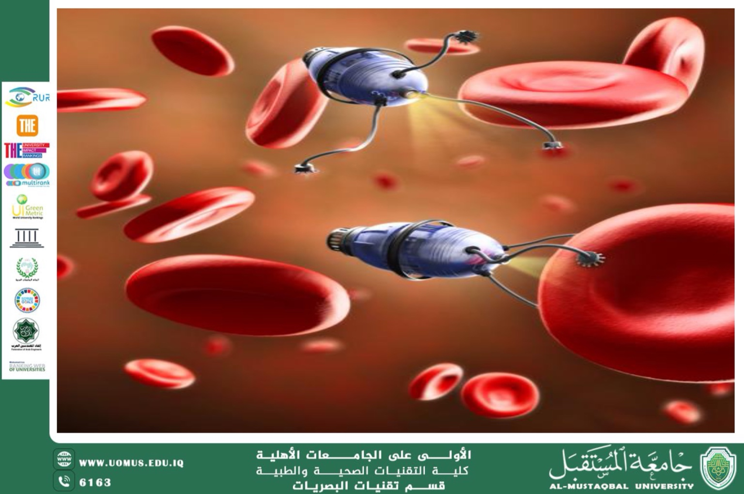
A scientific article by Nabaa Yaseen titled (Nanotechnology in Cancer Treatment: New Horizons for Modern Medicine)
Introduction<br /><br />Cancer is one of the most widespread and life-threatening diseases worldwide. Traditional treatments such as chemotherapy and radiotherapy face major challenges, including severe side effects and lack of precision. With the advancement of nanoscience, a new hope has emerged in the form of more accurate and efficient therapeutic systems.<br /><br />Importance of the Topic<br /><br />The significance of this approach lies in the ability of nanotechnology to design nanoparticles that can directly target cancer cells without harming healthy tissues. This represents a paradigm shift in modern medicine, offering solutions that were once thought impossible.<br /><br />Main Content<br /> 1. Mechanism of Action: Nanoparticles can be loaded with anticancer drugs and directed precisely to tumor sites.<br /> 2. Advantages:<br /> • Reduced drug dosage.<br /> • Minimized side effects.<br /> • Enhanced targeting efficiency.<br /> 3. Recent Applications: Ongoing clinical trials are exploring “nano-robots” that navigate the bloodstream and release drugs only at the tumor location.<br /><br />Summary<br /><br />Recent studies have shown that nanomedicine increases treatment response rates while reducing complications, giving patients greater chances of recovery with an improved quality of life.<br /><br />Closing<br /><br />The integration of nanotechnology into cancer therapy is not merely a medical advancement but a scientific revolution that brings hope to millions of patients worldwide. As research continues, these innovative techniques are expected to become a cornerstone of future healthcare systems.