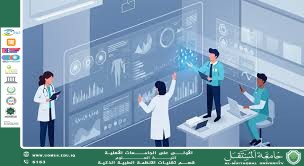
Improving Hospital Management Decisions Using Smart Data Analytics and Its Role in Achieving the Sustainable Development Goals ( Asst. Lecturer Ali Saleem Haleem)
<br />Hospitals worldwide are facing increasing pressures due to population growth, rising rates of chronic diseases, and escalating operational costs. In this context, Smart Data Analytics has emerged as a strategic tool for transforming the vast amounts of medical and administrative data into precise decisions that enhance healthcare efficiency, improve service quality, and support sustainability within health systems.<br />Technical Dimension: Smart Data Analytics in Hospitals<br />Hospitals rely on advanced health information systems (EHRs, IoT-enabled medical devices, human resources records, inventory data) to aggregate massive and complex datasets.<br />• Predictive Analytics: Helps forecast patient volumes, disease patterns, and resource allocation.<br />• Descriptive Analytics: Provides real-time dashboards on performance, resource consumption, and compliance with treatment protocols.<br />• Prescriptive Analytics: Suggests operational strategies such as staff scheduling or optimizing supply chains.<br />Impact on Hospital Management<br />1. Enhancing Administrative Decision-Making Efficiency:<br />Data analysis reduces waiting times, optimizes bed utilization, and ensures efficient distribution of medical staff.<br />2. Cost Reduction:<br />Through minimizing waste in medications and medical supplies, and improving energy and water consumption.<br />3. Improving Clinical Quality:<br />By supporting physicians with data-driven decisions, enabling early diagnosis and reducing medical errors.<br />4. Promoting Environmental Sustainability:<br />By monitoring resource usage and reducing the carbon footprint of supply chains.<br />Linking to the Sustainable Development Goals (SDGs)<br />Goal 3: Good Health and Well-being<br />• Supporting preventive healthcare through predictive analytics.<br />• Enhancing service quality and enabling early disease diagnosis.<br />Goal 9: Industry, Innovation, and Infrastructure<br />• Fostering innovation in health information systems.<br />• Integrating artificial intelligence and smart systems into hospital management.<br />The integration of Smart Data Analytics in hospital management represents a paradigm shift in supporting evidence-based decisions, achieving a balance between operational efficiency and clinical quality, and aligning with the Sustainable Development Goals. This synergy between technology, management, and sustainability forms the cornerstone of future smart and green hospitals.<br /><br />Al-Mustaqbal University—the first in Iraq.<br /><br /><br />