
Al-Mustaqbal University Hosts a Presentation on Digital Transformation and the Smart University
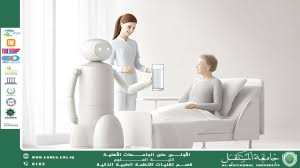
Smart Nursing Robots as a Solution to the Shortage of Medical Staff and Their Link to Sustainable Development Goals<br />(Programmer Ahib Hashem Kareem)<br /><br />Introduction<br />The global healthcare sector is facing an escalating crisis due to the shortage of medical and nursing staff. This shortage is driven by population growth, increasing life expectancy, the rise of chronic diseases, professional migration, and the unequal distribution of healthcare resources. In response to these challenges, smart nursing robots have emerged as an innovative solution that can help bridge the gap and ensure more efficient and sustainable healthcare.<br />Smart Nursing Robots: Concept and Role<br />Smart nursing robots are automated devices that rely on Artificial Intelligence (AI), the Internet of Things (IoT), and mobile robotics. They are designed to perform both basic and advanced nursing tasks, including:<br />• Continuous monitoring of patients’ vital signs.<br />• Assisting in administering medications on time.<br />• Transporting medical samples and supplies within hospitals.<br />• Supporting social and psychological interaction with patients, particularly the elderly.<br />• Providing accurate reports for doctors and nurses to aid in clinical decision-making.<br />Advantages in Addressing Staff Shortages<br />1. Reducing nurses’ workload: Robots take over routine tasks, allowing nurses to focus more on direct and human-centered care.<br />2. Minimizing medical errors: Smart systems ensure accurate medication schedules and patient monitoring.<br />3. Enhancing hospital efficiency: Robots operate 24/7 without fatigue or interruptions.<br />4. Integration with digital systems: They connect with Electronic Health Records (EHRs) to improve treatment decisions.<br />Link to Sustainable Development Goals (SDGs)<br />• Goal 3: Good Health and Well-being – Nursing robots improve healthcare quality and reduce the burden on health systems, leading to more inclusive and effective care.<br />• Goal 4: Quality Education – Robots can be integrated into training programs for students and trainee doctors through simulated healthcare scenarios.<br />• Goal 5: Gender Equality – Since most nurses worldwide are women, robots help reduce the workload predominantly borne by female staff.<br /><br />Future Challenges<br />Despite their significant benefits, smart nursing robots face challenges, including:<br />• High purchase and maintenance costs.<br />• The need to train medical staff to work alongside robots.<br />• Ethical concerns regarding the human-patient relationship.<br /><br />Smart nursing robots are not replacements for human nurses, but valuable partners that can help reduce the acute shortage of medical staff. By aligning with the Sustainable Development Goals, they represent a step toward a more resilient, inclusive, and sustainable healthcare system capable of facing future challenges and ensuring better health for generations to come.<br /><br /><br /><br /><br /><br /><br /><br /><br /><br />Al-Mustaqbal University—the first in Iraq.<br /><br /><br />