“Renewable Energy: The Path Towards a Sustainable Future” By: Ms. Saja Fadhel Abbass
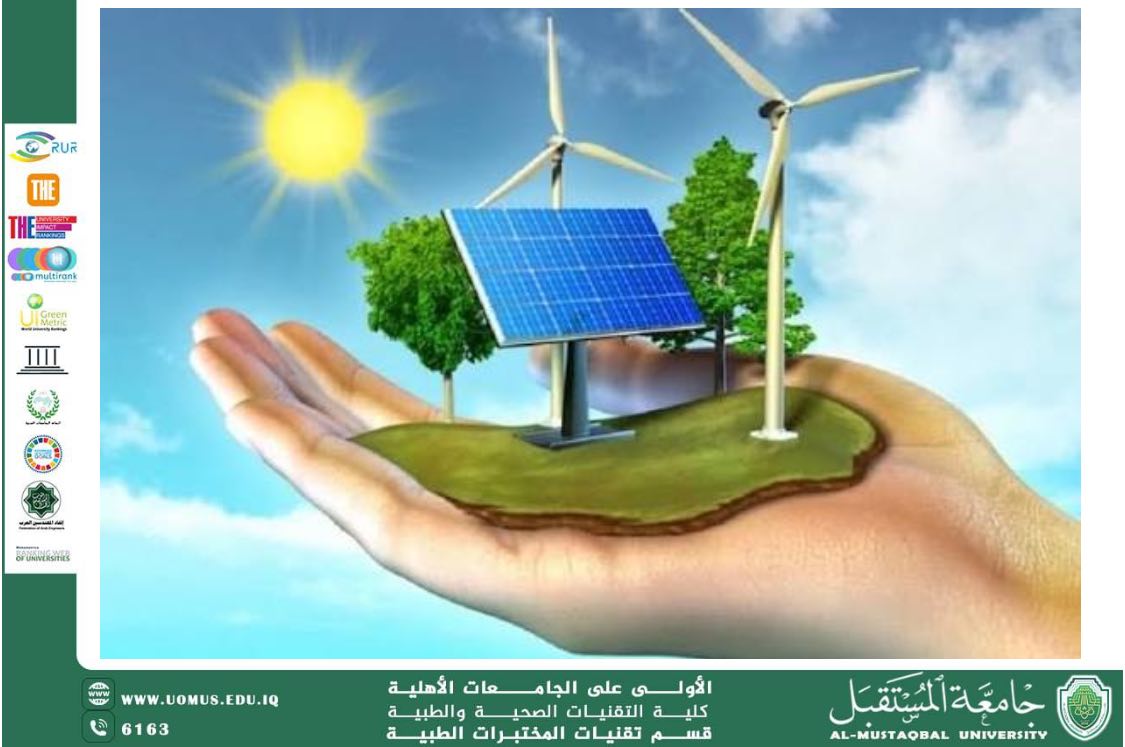
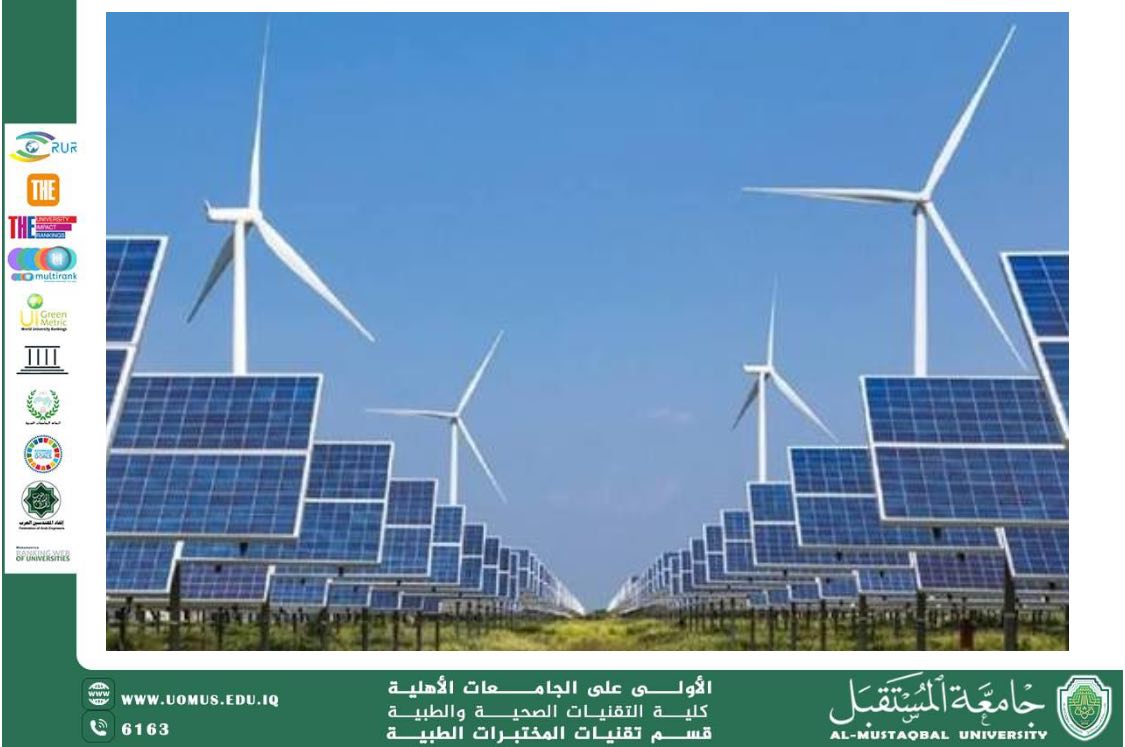
In light of the accelerating environmental challenges, the shift towards clean and renewable energy has become an urgent necessity rather than a luxury choice. Continuous reliance on fossil fuels leads to increased pollution levels and exacerbates global warming, threatening ecological balance and the lives of future generations.<br /><br />Forms of Renewable Energy<br /> 1. Solar Energy: An inexhaustible renewable source that contributes to electricity generation and water heating.<br /> 2. Wind Energy: Utilized to produce electricity through wind turbines.<br /> 3. Hydropower: Generated via dams and hydroelectric power stations.<br /> 4. Bioenergy: Produced by utilizing agricultural and animal waste to generate energy.<br /><br />Benefits of Renewable Energy<br /> • Reducing carbon emissions and protecting the environment from pollution.<br /> • Decreasing dependence on fossil fuels, thus mitigating associated economic and political crises.<br /> • Creating new job opportunities in technology, maintenance, and scientific research fields.<br /> • Ensuring energy security through local and sustainable sources.<br /><br />Challenges<br /><br />Despite its benefits, renewable energy faces several challenges:<br /> • High initial installation costs.<br /> • The need for advanced infrastructure for energy transmission and distribution.<br /> • Limited societal awareness about the importance of transitioning to clean energy.<br /><br />Conclusion<br /><br />Achieving affordable clean energy is a cornerstone for building a more sustainable future. It ensures environmental protection, economic growth, and social equity in access to safe energy sources. The commitment of nations, institutions, and communities to this transition will be a decisive step towards a cleaner and fairer world for future generations.<br /><br />Al_Mustaqbal University – The First University in Iraq<br />Department of Medical Laboratory Techniques – Ranked First in the Iraqi National Classification