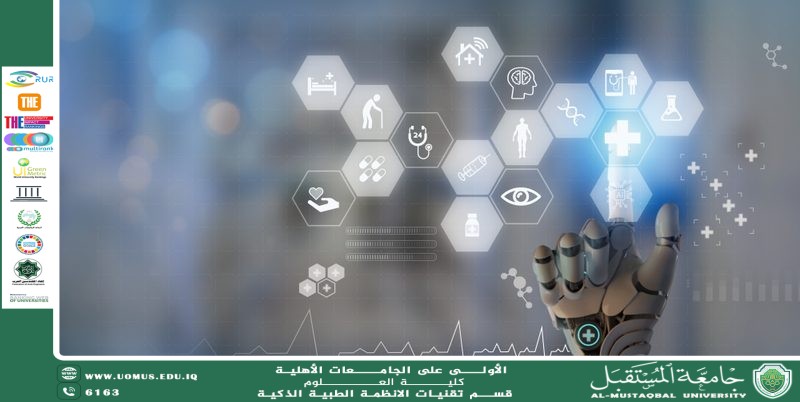
Artificial Intelligence: Your Companion at the University and the Hospital.
Artificial Intelligence has become an essential partner in various aspects of life. It is no longer just an innovative technology but has transformed into a daily companion for humans, whether in universities or hospitals. It opens wide horizons for learning, enhances healthcare quality, and provides innovative solutions to complex problems.<br /><br />In universities, AI contributes to developing an interactive and intelligent learning environment through e-learning systems that allow students to learn at their own pace and according to their individual abilities. It also supports instructors in analyzing student performance and offering personalized educational plans. Educational robots and virtual assistants help save teachers’ time and effort by answering student questions and following up on assignments, making the learning process more effective and inclusive.<br /><br />In hospitals, AI has become a pivotal element in diagnosing diseases and monitoring health conditions. Advanced algorithms can read medical images and analyze ECGs with a precision that sometimes surpasses the human eye, in addition to predicting the progression of medical cases, giving doctors the chance for early intervention and saving lives. AI systems also support hospital management by improving appointment scheduling, managing medications, and reducing medical errors.<br /><br />Between the university and the hospital, AI embodies the philosophy of human progress; it is not just a tool but a companion that helps build a more knowledgeable generation and a healthier society. Through this integration, we move closer to a future of sustainability and innovation, where AI supports the pursuit of a better life for all.<br />Al-Mustaqbal University The First University in Iraq.<br/><br/><a href=https://www.un.org/sustainabledevelopment/ar/infrastructure-industrialization/ target=_blank>https://www.un.org/sustainabledevelopment/ar/infrastructure-industrialization/</a>