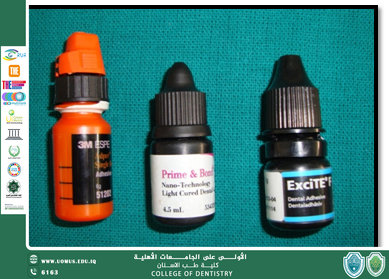
Adhesion in Dentistry
Author: Asst. Lecturer Basim Kareem Nasir<br /><br />Introduction:<br />Adhesion is the process by which two different surfaces stick together through physical or chemical forces. In dentistry, adhesion plays a critical role in restorative treatments, especially in bonding dental materials to tooth structures.<br /><br />Definition:<br />Adhesion in dentistry refers to the chemical and micromechanical attachment between restorative materials (such as composites, sealants, or cements) and the natural tooth structure (enamel and dentin).<br /><br />Mechanism:<br /><br />1. Micromechanical Retention: Adhesive penetrates into the rough surface of etched enamel or dentin, creating micro-tags that hold the material.<br /><br /><br />2. Chemical Bonding: Some adhesives form chemical bonds with hydroxyapatite or collagen in dentin.<br /><br /><br /><br />Steps in Adhesive Dentistry:<br /><br />Tooth surface preparation (etching with acid).<br /><br />Application of primer to improve wetting.<br /><br />Placement of adhesive resin.<br /><br />Bonding of restorative material.<br /><br /><br />Advantages of Adhesion:<br /><br />Preserves tooth structure (less need for mechanical retention).<br /><br />Provides strong bond and reduces microleakage.<br /><br />Improves esthetics and longevity of restorations.<br /><br />Enhances patient comfort by sealing dentin tubules, reducing sensitivity.<br /><br /><br />Applications:<br /><br />Composite restorations.<br /><br />Veneers and crowns.<br /><br />Orthodontic brackets.<br /><br />Pit and fissure sealants.<br /><br /><br />Conclusion:<br />Adhesion in dentistry revolutionized modern restorative techniques by allowing conservative, esthetic, and durable treatments. Continuous advancements in adhesive systems are improving the strength and reliability of dental restorations.