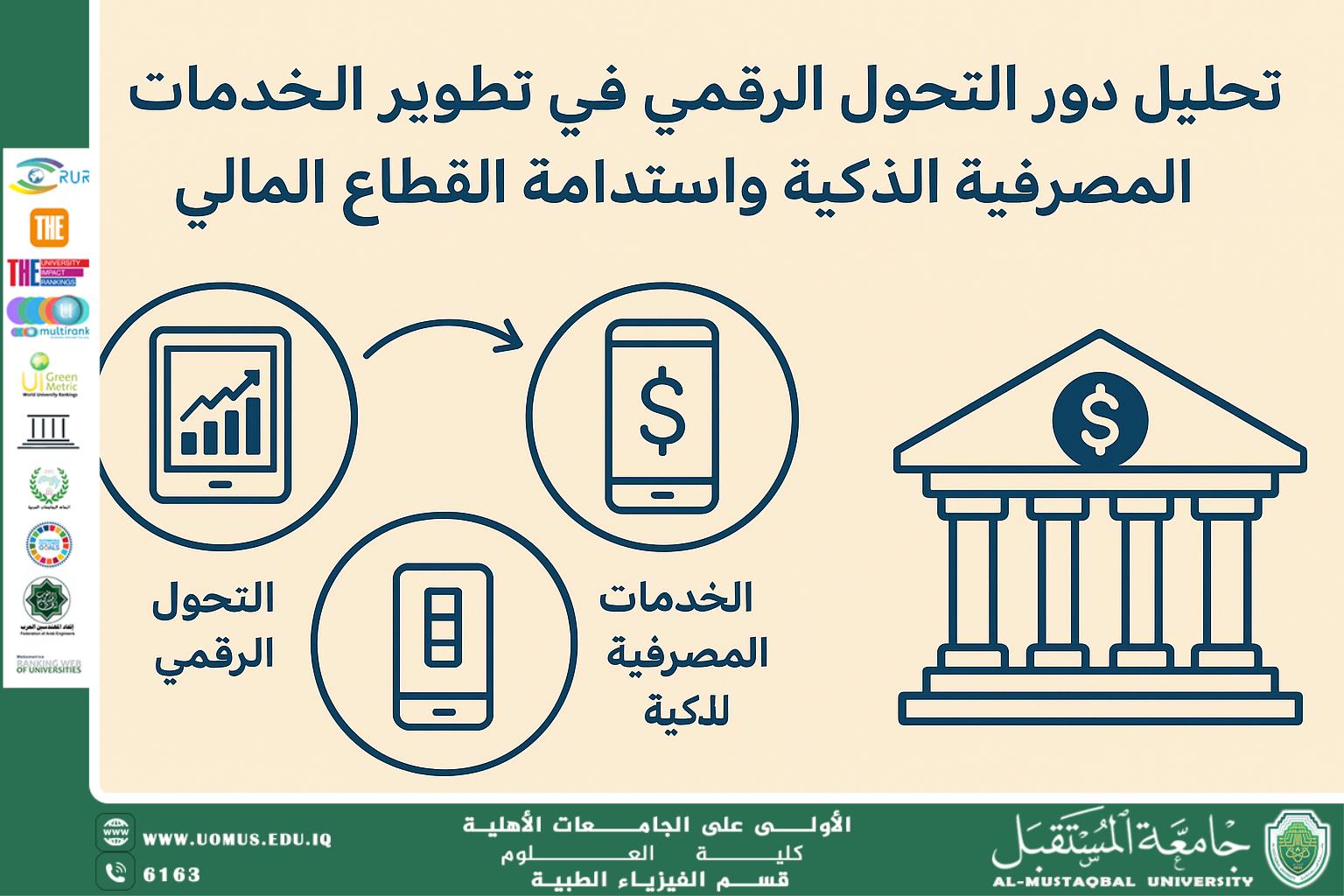
A scientific article by the lecturer (Assistant Lecturer ِAl-shaymaa Firas) title Analyzing the Role of Digital Transformation in Developing Smart Banking Services and Financial Sector Sustainability
Abstract:<br /><br />The financial and banking sector is undergoing fundamental changes driven by rapid digital transformation. This study aims to analyze the role of digital transformation in developing smart banking services and its impact on achieving financial and institutional sustainability. It also highlights the challenges faced by financial institutions in implementing digital strategies and proposes approaches to ensure sustainable innovation and growth.<br /><br />Introduction:<br /><br />In the era of digital revolution, digital transformation has become a strategic necessity for financial institutions. Banks today are integrating technologies such as artificial intelligence (AI), big data analytics, and blockchain to enhance customer experience and operational efficiency. Smart banking services have emerged as a major outcome of this transformation, offering secure, fast, and flexible financial solutions.<br /><br />1. The Concept of Digital Transformation in the Financial Sector<br /><br />Digital transformation refers to the integration of modern technology into all aspects of financial and banking operations. It involves using AI for forecasting trends, data analytics for personalized customer services, and mobile applications for seamless transactions anytime and anywhere.<br /><br />2. Smart Banking Services<br /><br />Smart banking services rely on automation and AI to deliver a comprehensive banking experience. Examples include mobile banking, e-wallets, chatbots, and digital fraud detection systems. These innovations improve customer satisfaction, reduce operational costs, and increase efficiency through predictive analytics and financial personalization.<br /><br />3. Digital Transformation and Financial Sustainability<br /><br />Digital transformation supports the sustainability of the financial sector by:<br /><br />Enhancing operational efficiency through automation and reduced paperwork.<br /><br />Increasing transparency via blockchain technologies that ensure secure, traceable transactions.<br /><br />Expanding financial inclusion by reaching unbanked populations through digital channels.<br /><br />Promoting environmental sustainability by reducing resource consumption and carbon footprint.<br /><br />4. Challenges of Digital Transformation<br /><br />Cybersecurity risks: increased exposure to digital attacks.<br /><br />Internal resistance to change: employees’ adaptation to new systems.<br /><br />High implementation costs: especially for small and medium-sized banks.<br /><br />Skill gaps: lack of qualified personnel in digital banking technologies.<br /><br />5. Recommendations and Conclusions<br /><br />Develop a comprehensive digital strategy including cybersecurity and risk management.<br /><br />Invest in employee training to build digital literacy.<br /><br />Encourage public–private collaboration to create a robust digital infrastructure.<br /><br />Support innovation in smart banking to meet dynamic customer needs.<br /><br />Conclusion:<br /><br />Digital transformation is the cornerstone of the future of the financial sector. It enhances efficiency, transparency, and sustainability, while enabling banks to remain competitive in the global digital economy. Institutions that embrace innovation and adaptability will lead the next generation of smart, sustainable banking<br /><br />"AL_mustaqbal University is the first university in Iraq"<br /><br/><br/><a href=https://uomus.edu.iq/Default.aspx target=_blank>al-mustaqbal University Website</a>