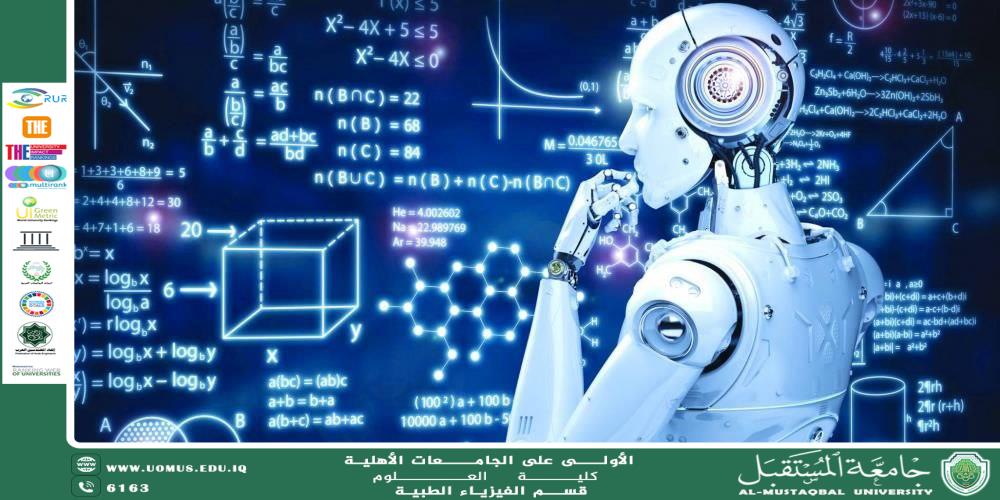
The Impact of Technology and Its Connection to Physics A scientific article by Ahmad abdalslam
Physics is one of the most important sciences that has contributed to the development of modern technology. Since the discovery of fundamental physical laws such as the laws of motion, energy, electricity, and magnetism, scientists and engineers have been able to transform these principles into practical applications that have revolutionized human life.<br /><br />Technology relies primarily on a deep understanding of physical phenomena. For example, artificial intelligence and computers are based on the principles of electronic physics and the movement of charges in electrical circuits. Likewise, smartphones combine several physical applications, such as electromagnetic waves in communication, optics in display screens, and mechanics in the precise design of device structures.<br /><br />Moreover, advances in quantum physics have led to the development of quantum computers, which are considered the future of modern technology due to their ability to process data at speeds millions of times faster than traditional systems. Meanwhile, material physics has contributed to the creation of new materials such as semiconductors and superconductors, making devices more efficient and compact.<br /><br />The relationship between physics and technology is a reciprocal one: every advancement in physics leads to a new technological invention, and every technological innovation drives scientists to discover deeper physical laws. Thus, physics remains the foundation upon which all modern technologies shaping the future are built.<br />"AL_mustaqbal University is the first university in Iraq"<br /><br/><br/><a href=https://uomus.edu.iq/Default.aspx target=_blank>al-mustaqbal University Website</a>