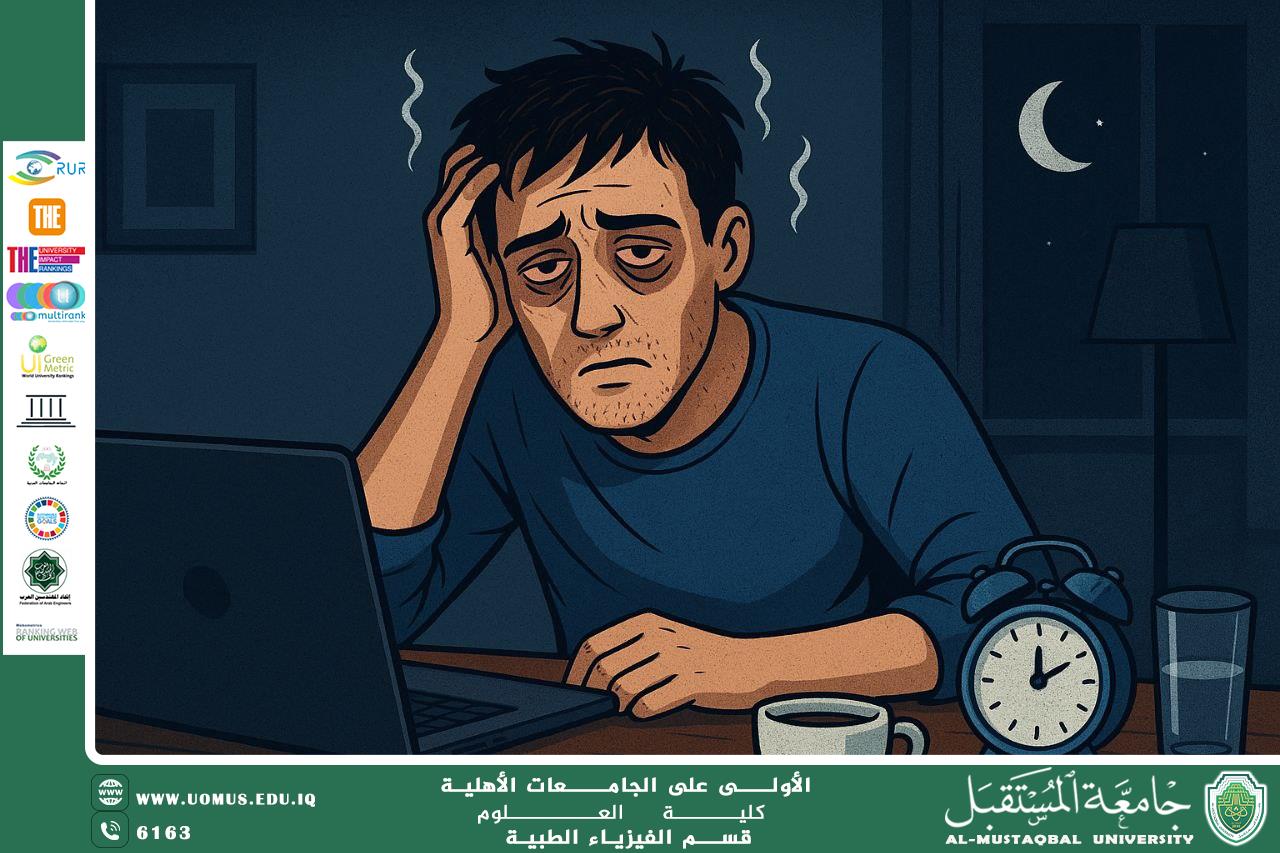
A scientific article by the teaching assistant (Hassan Hadi Saleh) on the effect of staying up late on a person’s physical and psychological health.
💤 The Impact of Staying Up Late on Human Physical and Mental Health<br /><br />Introduction<br /><br />Sleep is one of the most vital factors that maintain the balance of the body and mind. It helps in restoring energy, regulating hormones, and enhancing the immune system. However, many people in the modern era suffer from staying up late due to work or study pressures or prolonged use of electronic devices, which leads to increasing physical and psychological disorders.<br /><br /><br />---<br /><br />1. Concept and Causes of Staying Up Late<br /><br />Staying up late refers to being awake for long periods during the night and postponing sleep until late hours or even morning.<br />The main causes include:<br /><br />1. Using phones and smart devices before sleep.<br /><br /><br />2. Anxiety and psychological stress that prevent relaxation.<br /><br /><br />3. Excessive intake of stimulants such as coffee and energy drinks.<br /><br /><br />4. Night work or late-night studying.<br /><br /><br />5. Hormonal disturbances or chronic insomnia.<br /><br /><br /><br /><br />---<br /><br />2. Physical Effects of Staying Up Late<br /><br />Frequent late nights cause a series of negative effects on various body systems, including:<br /><br />1. Weakened immune system: reduced resistance to viruses and bacteria.<br /><br /><br />2. Weight gain and hormonal imbalance: as staying up late affects the hunger and satiety hormones (leptin and ghrelin).<br /><br /><br />3. High blood pressure and increased risk of heart diseases: due to elevated cortisol (stress hormone) levels.<br /><br /><br />4. Memory and concentration weakness: caused by reduced brain activity during late nights.<br /><br /><br />5. Eye strain and vision problems: due to excessive screen use.<br /><br /><br /><br /><br />---<br /><br />3. Psychological Effects of Staying Up Late<br /><br />The impact of staying up late is not limited to the body; it also affects mental health:<br /><br />1. Anxiety and depression: caused by disruption of the biological clock.<br /><br /><br />2. Mood swings and irritability.<br /><br /><br />3. Reduced productivity at work or study.<br /><br /><br />4. Decreased ability to make sound decisions.<br /><br /><br /><br /><br />---<br /><br />4. Staying Up Late and Adolescents<br /><br />Studies show that adolescents are the most affected by staying up late, mainly due to internet and video game addiction. This leads to:<br /><br />Poor academic performance.<br /><br />Hormonal growth disturbances.<br /><br />Increased risk of early-onset depression.<br /><br /><br /><br />---<br /><br />5. Ways to Overcome Staying Up Late<br /><br />To reduce the harms of staying up late, the following steps are recommended:<br /><br />1. Set a fixed time for sleeping and waking up.<br /><br /><br />2. Avoid using electronic devices one hour before sleep.<br /><br /><br />3. Avoid stimulants after sunset.<br /><br /><br />4. Practice light exercise during the day.<br /><br /><br />5. Create a comfortable sleep environment free of light and noise.<br /><br /><br /><br /><br />---<br /><br />Conclusion<br /><br />Excessive staying up late is not merely a bad habit; it is a real health issue that may lead to serious diseases if it persists for long periods. Therefore, maintaining a regular sleep schedule is an essential step towards a healthy and balanced life, combining physical activity with mental<br /><br />"AL_mustaqbal University is the first university in Iraq"<br /><br/><br/><a href=https://uomus.edu.iq/Default.aspx target=_blank>al-mustaqbal University Website</a>