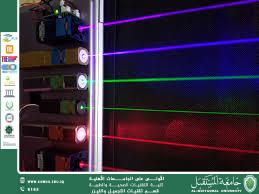
What Makes Laser Light So Unique Compared to Ordinary Light?
1. Monochromaticity<br /><br />A laser produces light of a single wavelength (or a very narrow range of wavelengths).<br />This means laser light is highly pure and monochromatic, unlike sunlight or light from a bulb, which contains a broad spectrum of colors (wavelengths).<br /><br />Applications: Spectroscopic analysis, medical uses (e.g., eye surgery), optical communications.<br /><br />2. Coherence<br /><br />This is the most important property that differentiates laser light from ordinary light.<br /><br />Spatial Coherence:<br />All photons in a laser beam travel in the same direction and are nearly parallel.<br />This explains why a laser beam can travel long distances without significant spreading.<br /><br />Temporal Coherence:<br />All photons have the same phase and remain synchronized over long periods or distances.<br />This enables interference phenomena and applications such as holography.<br /><br />Applications: Holography (3D imaging), precise distance measurements, laser interferometry.<br /><br />3. Directionality / Low Divergence<br /><br />A laser beam spreads at a very small angle, making it highly directional.<br />Unlike light from a lamp, which radiates in all directions, a laser beam can be accurately directed over long distances with minimal intensity loss.<br /><br />Applications: Range finding, material cutting, welding, laser pointers.<br /><br />4. High Intensity<br /><br />Although the energy of a single laser photon is not very high, the laser concentrates a large amount of energy into a very narrow beam.<br />This concentration gives it extremely high power density.<br />Applications: Laser cutting, engraving, precision surgeries, and high-energy scientific research.<br />AL_mustaqbal University is the first university in Iraq