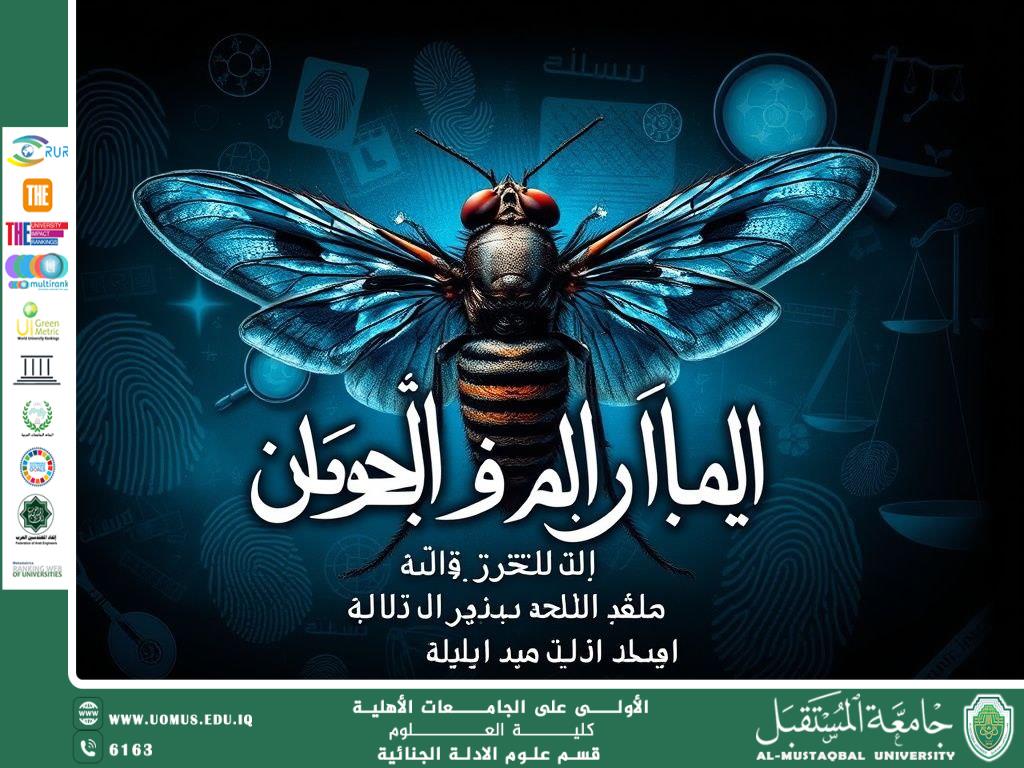
Justice Through the Wings of Flies: An Introduction to Forensic Entomology (M.M. Howayda Nazzal Hussein)
In the world of forensic science, the search for truth is not limited to DNA or fingerprints — it also involves tiny creatures that play a crucial role in uncovering hidden secrets: flies and insects.<br />This fascinating field is known as Forensic Entomology, a branch of biology that studies the relationship between insects, death, and criminal investigations.<br />What Is Forensic Entomology?<br />Forensic entomology focuses on the insects that colonize a body after death. By analyzing their species and stages of development, experts can estimate the postmortem interval (PMI) — the time since death — and sometimes determine the location or whether the body was moved.<br />The most common insects used in this field are blowflies (family Calliphoridae), which lay eggs on a corpse within hours of death. These eggs develop into larvae and pupae following predictable patterns that can be matched to a timeline.<br />How Do Flies Help Serve Justice?<br />Different insect species thrive under specific environmental conditions such as temperature, humidity, and light. By collecting larvae and adult flies from a crime scene, forensic scientists can estimate when death occurred.<br />In some cases, the discovery of unusual insect species on a body can indicate that it was moved after death, revealing important clues about the crime.<br />Other Applications<br />Forensic entomology is not limited to human deaths. It also contributes to investigations involving animal deaths, poisoning, food contamination, and even illegal trafficking of wildlife.<br />Conclusion<br />Forensic entomology demonstrates that every living creature, no matter how small, can become a witness to crime.<br />Through the wings of flies, justice can take flight — as nature itself reveals the silent story of death<br /><br />Al-Mustaqbal University – the first university in Iraq.<br/><br/><a href=https://www.un.org/sustainabledevelopment/ar/education/ target=_blank>Goal 4</a>