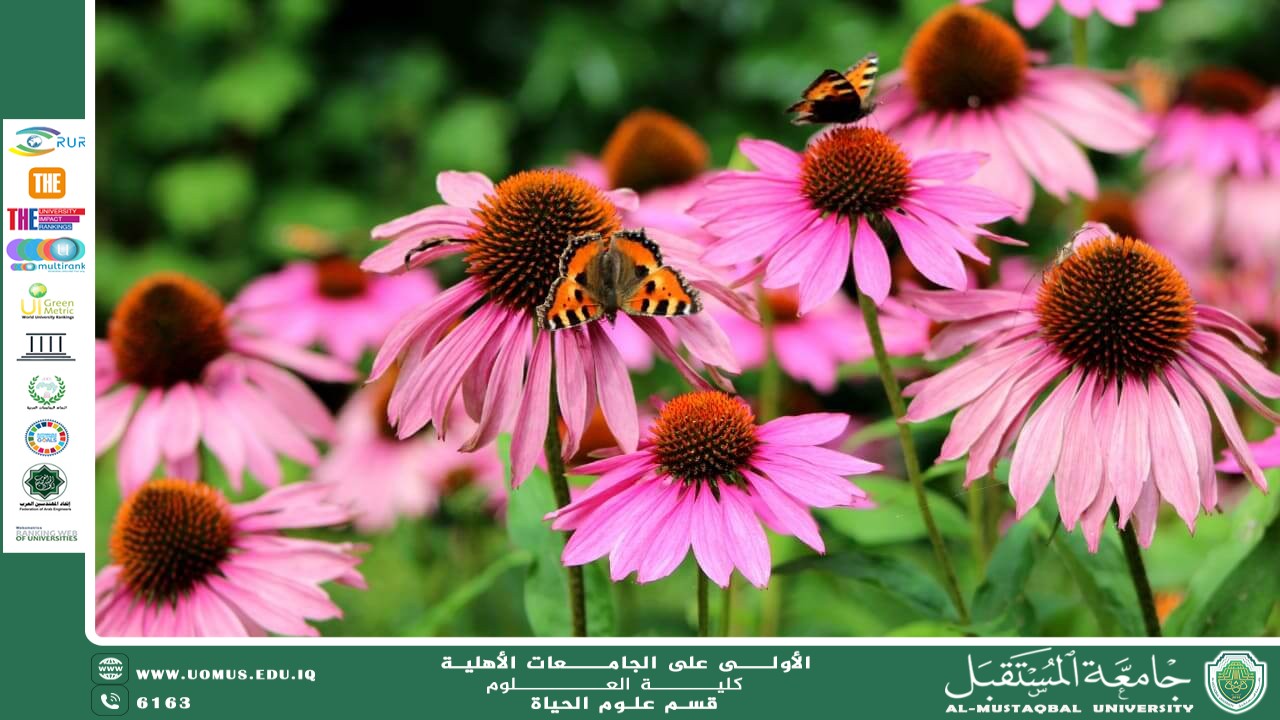
A scientific article by Ms. Noor Al-Huda Azmi Hassan entitled "Echinacea"
Echinacea, also known as echinacea, is a herbaceous plant popular for its use in traditional and modern medicine to combat colds and boost the immune system. It grows in temperate regions of North America and Europe and boasts beautiful flowers in colors ranging from purple to pink.<br /><br />Echinacea Habitat and Environment<br /><br />Echinacea prefers to grow in areas with well-drained soil and in direct sunlight or partial shade. It can grow in forests, meadows, and sometimes in areas near rivers. It tolerates relatively poor soil but requires moderate moisture.<br /><br />Adaptations That Help Echinacea Survive<br /><br />Echinacea has several adaptations that help it survive:<br /><br />Storage Roots: Echinacea roots contain chemical compounds that help it withstand harsh conditions and improve its resistance to disease.<br /><br />Rapid Growth in Spring: The plant takes advantage of the spring season to grow quickly before other plants compete for resources.<br /><br />Strong Leaves: Its leaves withstand various environmental conditions such as wind and rain.<br /><br />The Medicinal Benefits of Echinacea<br /><br />Echinacea is known for its immune-boosting properties, helping to shorten the duration of colds and reduce the severity of symptoms. It contains antioxidants and natural compounds that help the body fight infections. Many also use it to improve wound healing and reduce skin inflammation.<br /><br />Echinacea is an important medicinal plant, reflecting nature's ability to provide health solutions in natural ways. With its environmental adaptations and medicinal benefits, echinacea remains a popular choice for many people around the world.<br /><br /><br /><br />Al-Mustaqbal University is the first university in Iraq.<br /><br /><br /><a href=https://www.un.org/sustainabledevelopment/education/ target=_blank>Goal 4 - Quality Education</a>