Workshop: “The Role of Smart Medical Systems in Monitoring Chronic Diseases”
Under the patronage of the President of Future University, Prof. Dr. Hassan Shaker Majdi, and the direct supervision of the Dean of the College of Science, Asst. Prof. Dr. Furat Hamza Al-Sultani, the Department of Smart Medical Systems at the College of Science – Future University held a specialized scientific workshop titled:
“The Role of Smart Medical Systems in Monitoring Chronic Diseases.”
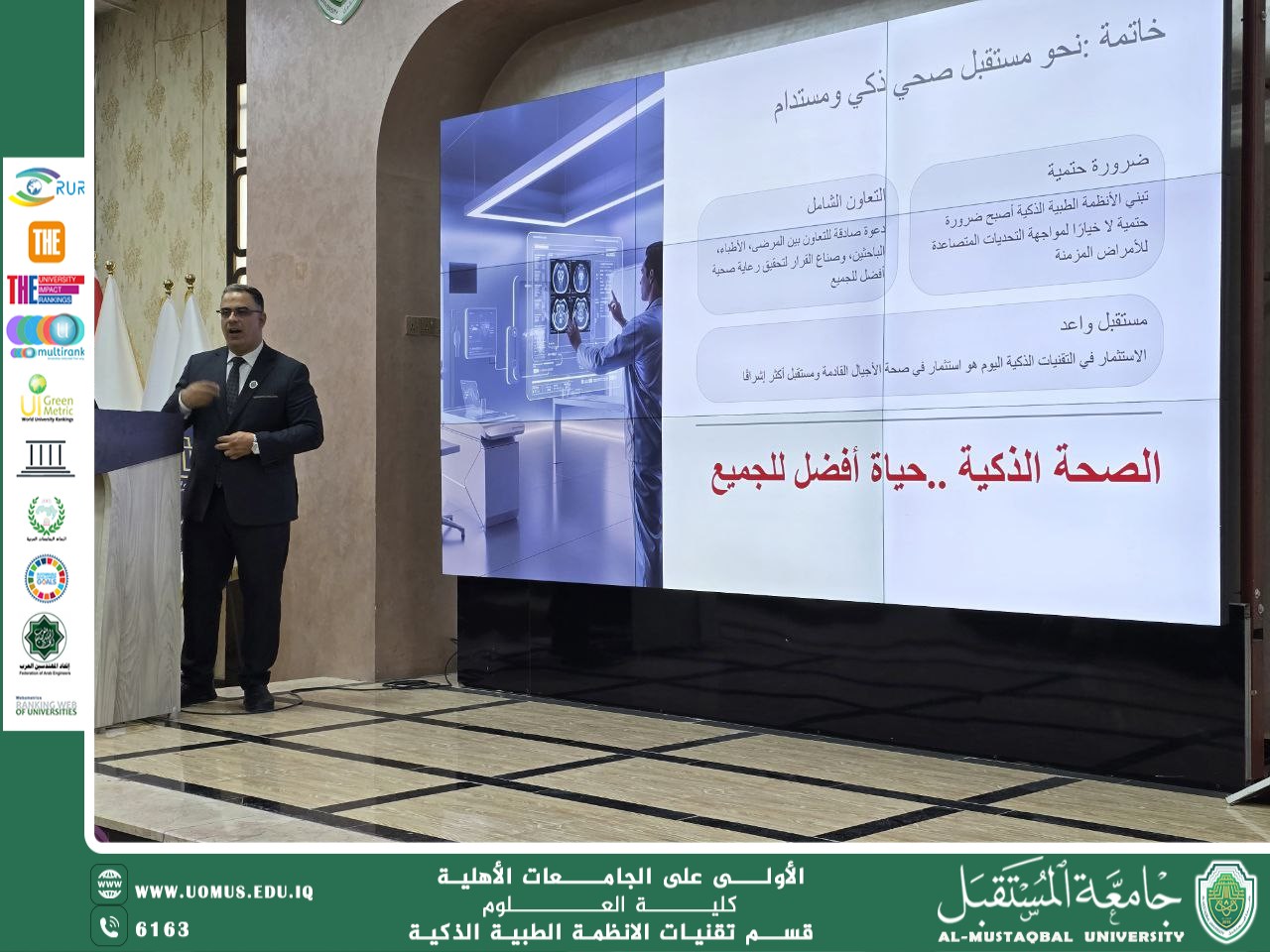
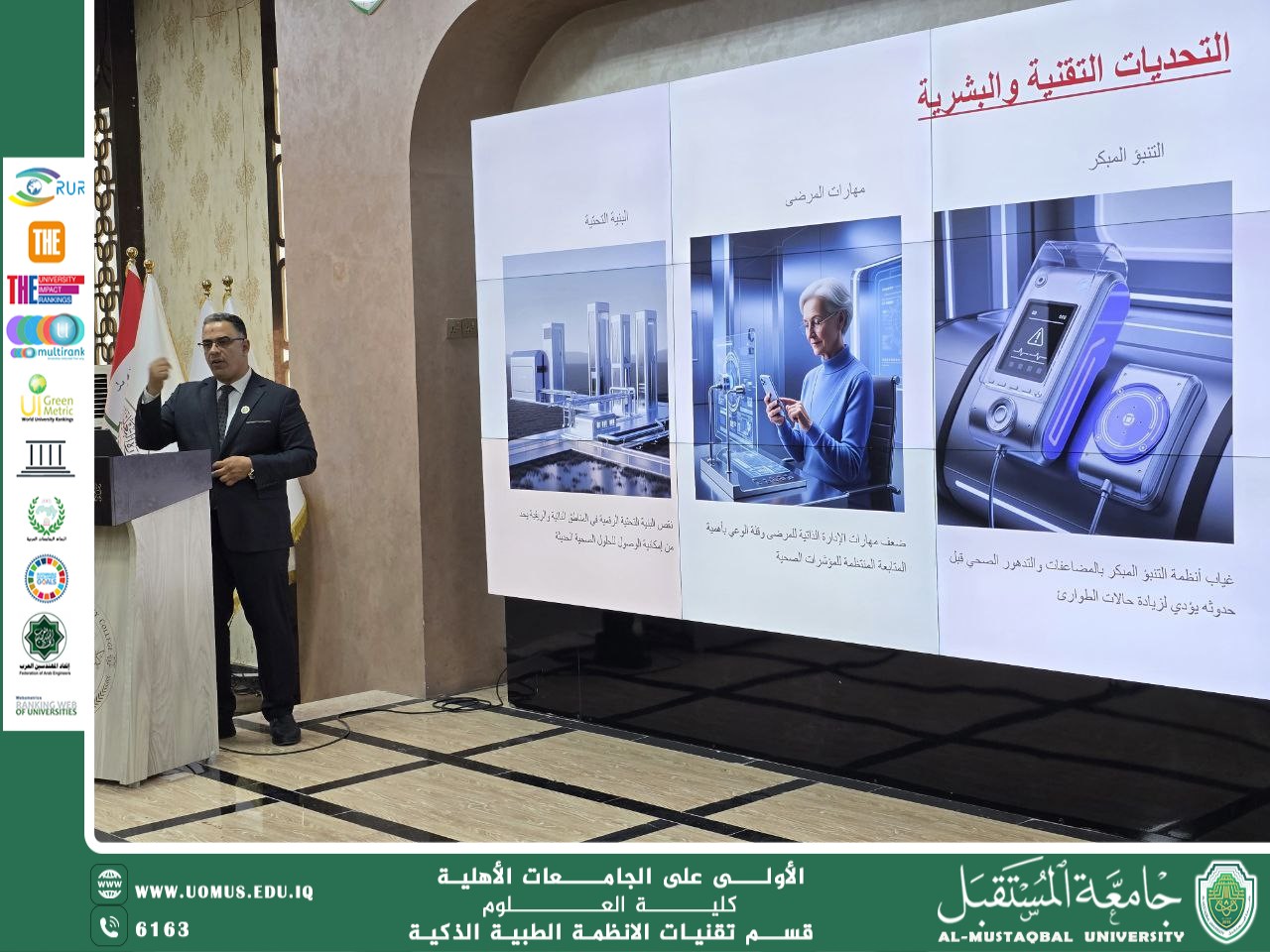
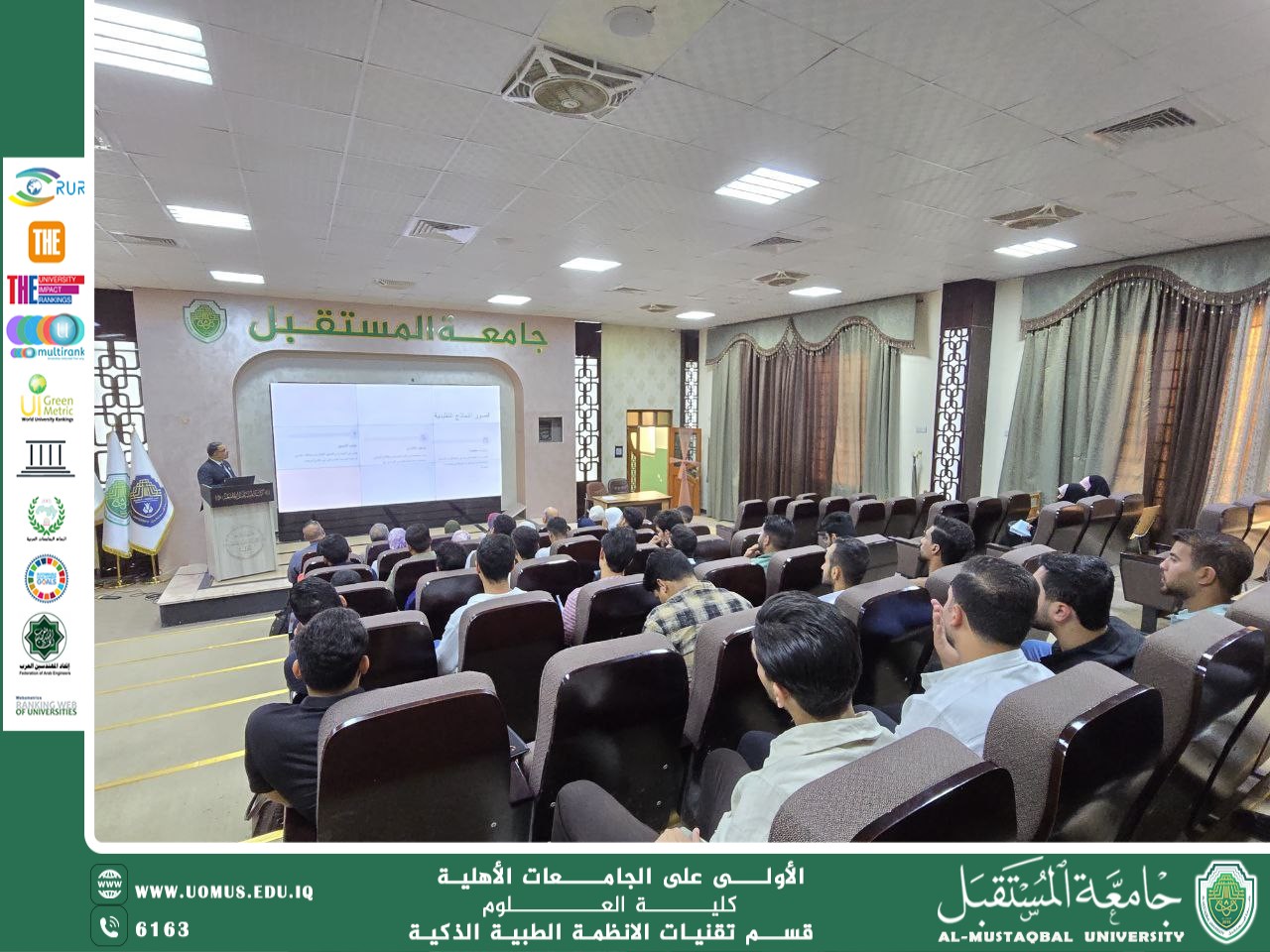
The workshop took place on Saturday, October 25, 2025, at 12:00 PM in the Student Activities Hall, Engineering Building. It was presented by Prof. Dr. Mahdi Abadi Mani, Head of the Department of Smart Medical Systems.
The workshop highlighted the latest innovations in smart medical systems and their vital role in analyzing biometric data and monitoring chronic conditions such as heart disease, diabetes, and hypertension.
Dr. Mahdi Abadi Mani discussed the integration of Artificial Intelligence (AI) and the Internet of Things (IoT) in real-time monitoring of patients’ health indicators, enabling early diagnosis and precise, timely medical decisions.
The session also explored how these systems contribute to reducing human errors, lowering healthcare costs, and enhancing remote healthcare services, especially in rural areas lacking advanced medical facilities.
Furthermore, the workshop connected research outputs in smart system technologies with the United Nations Sustainable Development Goals (SDGs), particularly Goal 3: Good Health and Well-being, by improving the quality and accessibility of healthcare services through innovative technological solutions.
The lecturer emphasized that investing in smart medical systems represents a strategic step toward building a more efficient and sustainable healthcare ecosystem, reducing mortality rates, and improving quality of life — in alignment with Future University’s vision of promoting applied scientific research and serving the community.
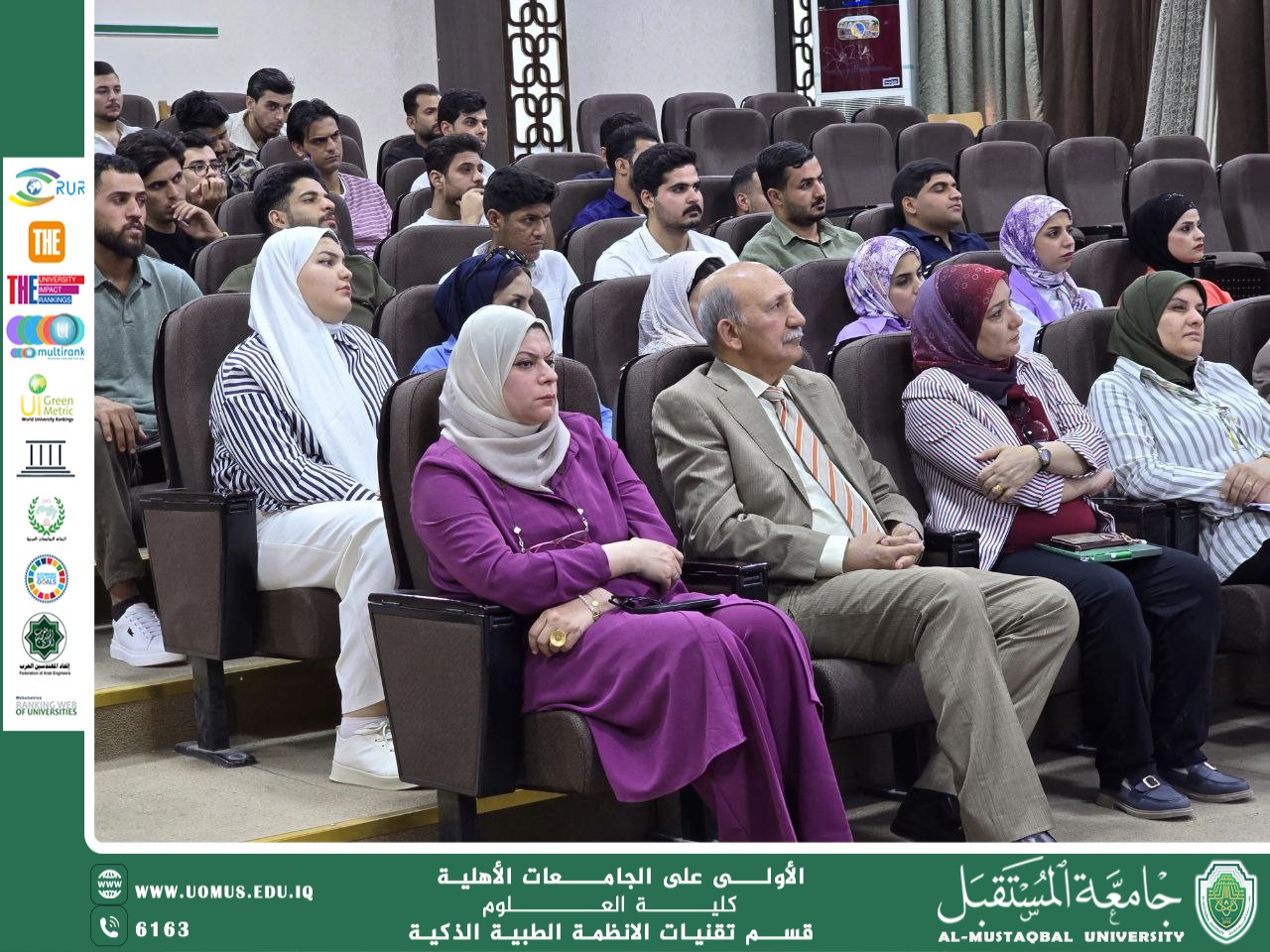
The workshop witnessed an active attendance of faculty members, students, researchers, and professionals interested in medical technologies. The discussions revolved around the challenges of implementing smart systems in healthcare institutions and the proposed solutions to strengthen their role in continuous patient care.