The Nervous System
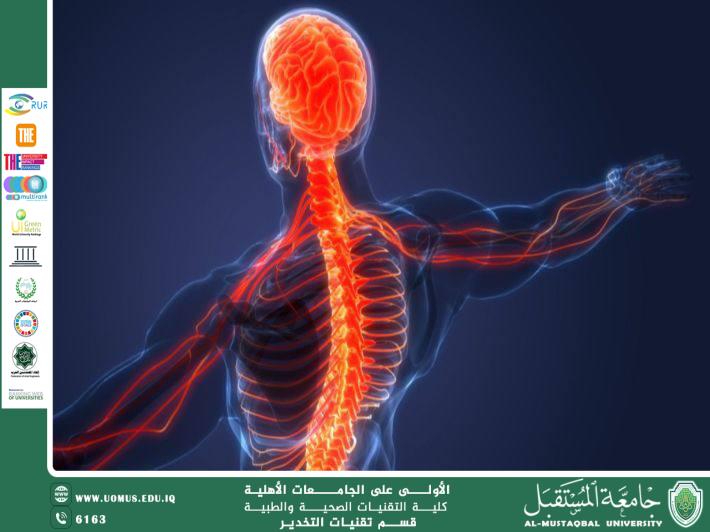
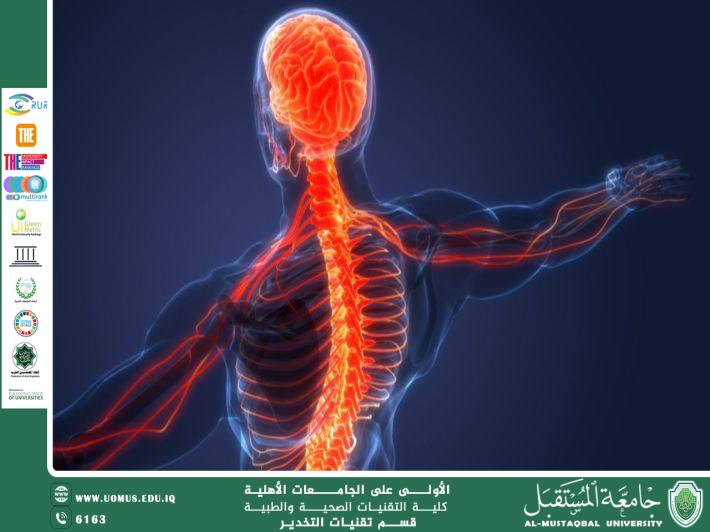
The nervous system is a complex network of nerves and neurons responsible for transmitting signals between the brain and different parts of the body. It coordinates vital functions such as movement, sensation, thinking, and breathing, and serves as the primary control center of the body.
Divisions of the Nervous System
1. Central Nervous System (CNS):
Consists of the brain and spinal cord and is responsible for processing information and issuing commands that regulate bodily functions.
2. Peripheral Nervous System (PNS):
Includes all nerves extending from the brain and spinal cord to the rest of the body, and is divided into:
• Somatic Nervous System: Controls voluntary movements and sensory responses.
• Autonomic Nervous System: Regulates involuntary functions such as breathing, heartbeat, and digestion, and includes the sympathetic and parasympathetic divisions.
Functions of the Nervous System
• Transmitting signals between the brain and the rest of the body.
• Controlling voluntary and involuntary movements.
• Processing sensory information.
• Regulating internal organ functions.
• Storing and retrieving information (memory).
Common Nervous System Disorders
• Stroke: Reduced blood flow or bleeding in the brain leading to sudden weakness or paralysis.
• Multiple Sclerosis (MS): An autoimmune disorder that affects nerve coverings and impairs motor and sensory functions.
• Parkinson’s Disease: A neurological disorder that affects movement, causing tremors and slowed motion.
• Epilepsy: Electrical disturbances in the brain resulting in recurring seizures.
• Neuropathy: Damage to peripheral nerves causing pain, numbness, or weakness.
Ahmed Ibrahim
Al-Mustaqbal University
The First University in Iraq.