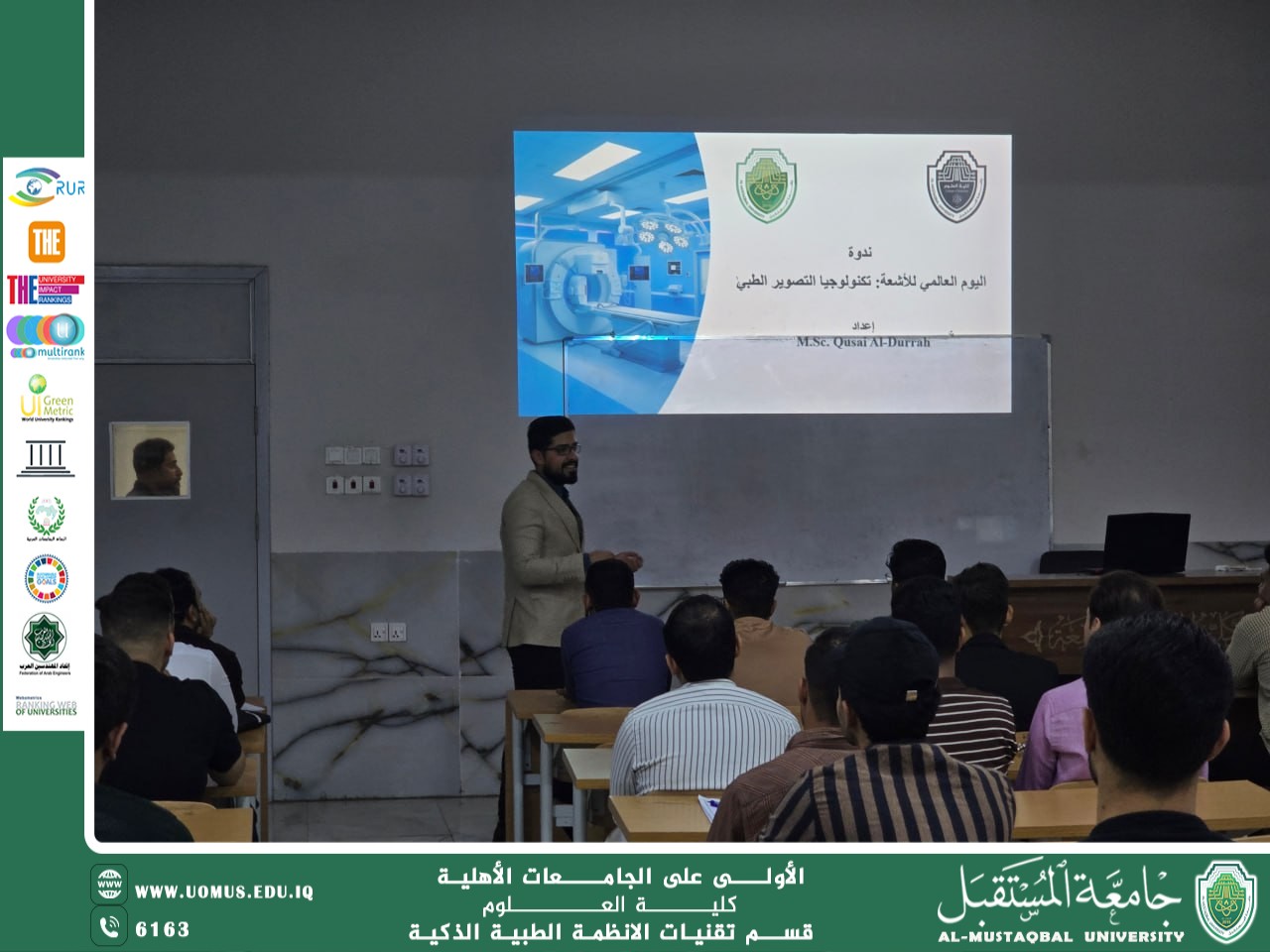
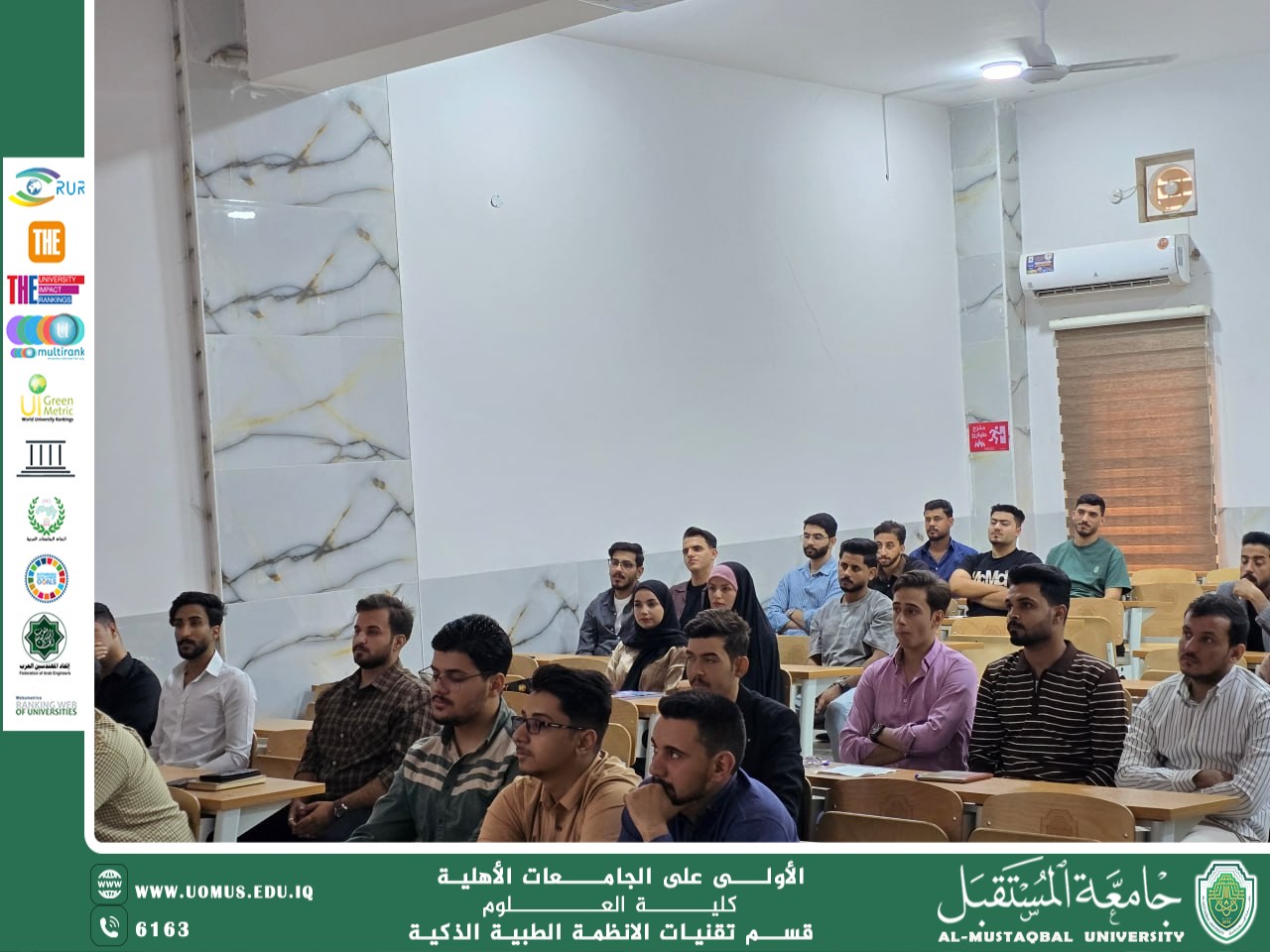
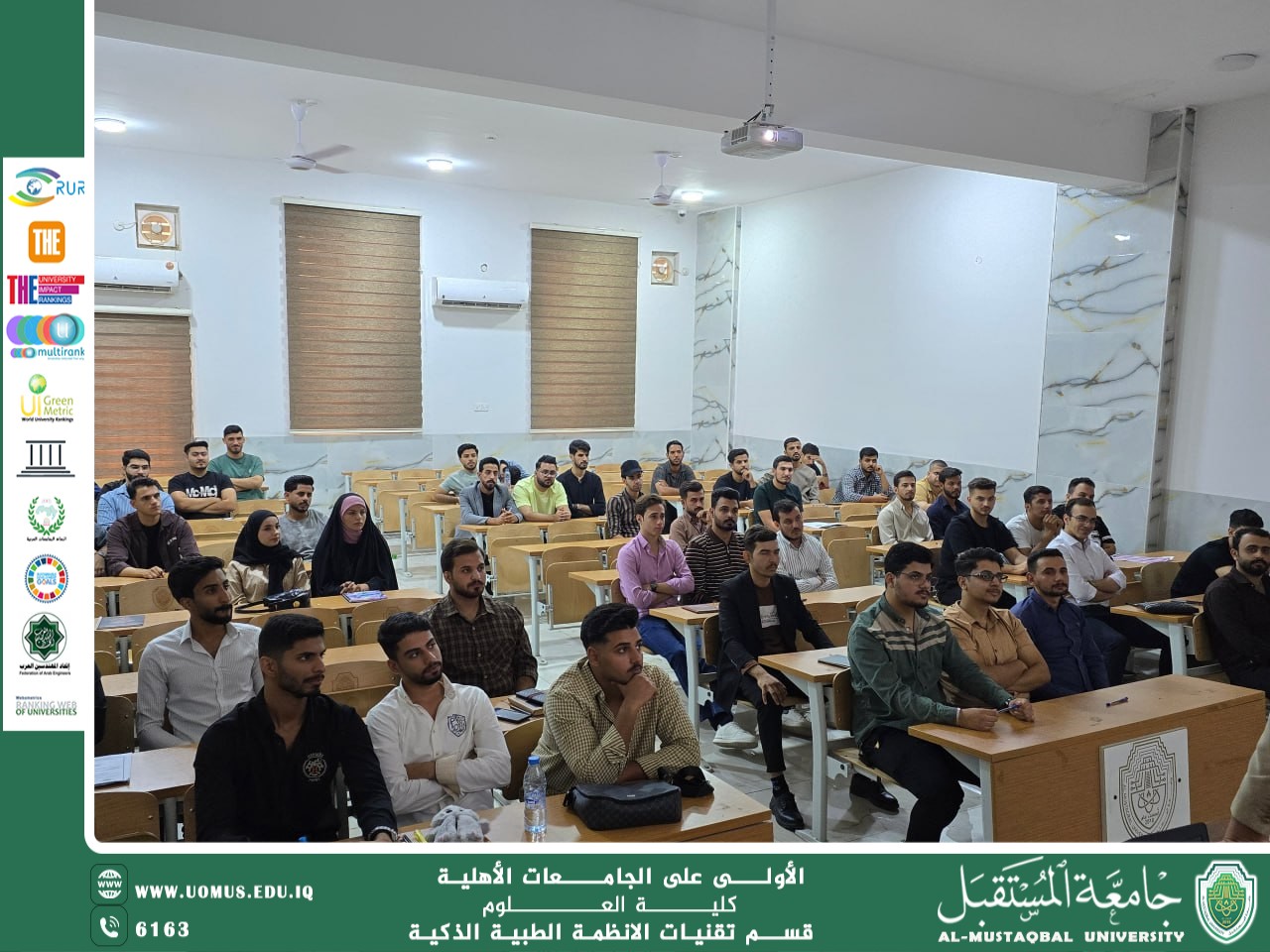
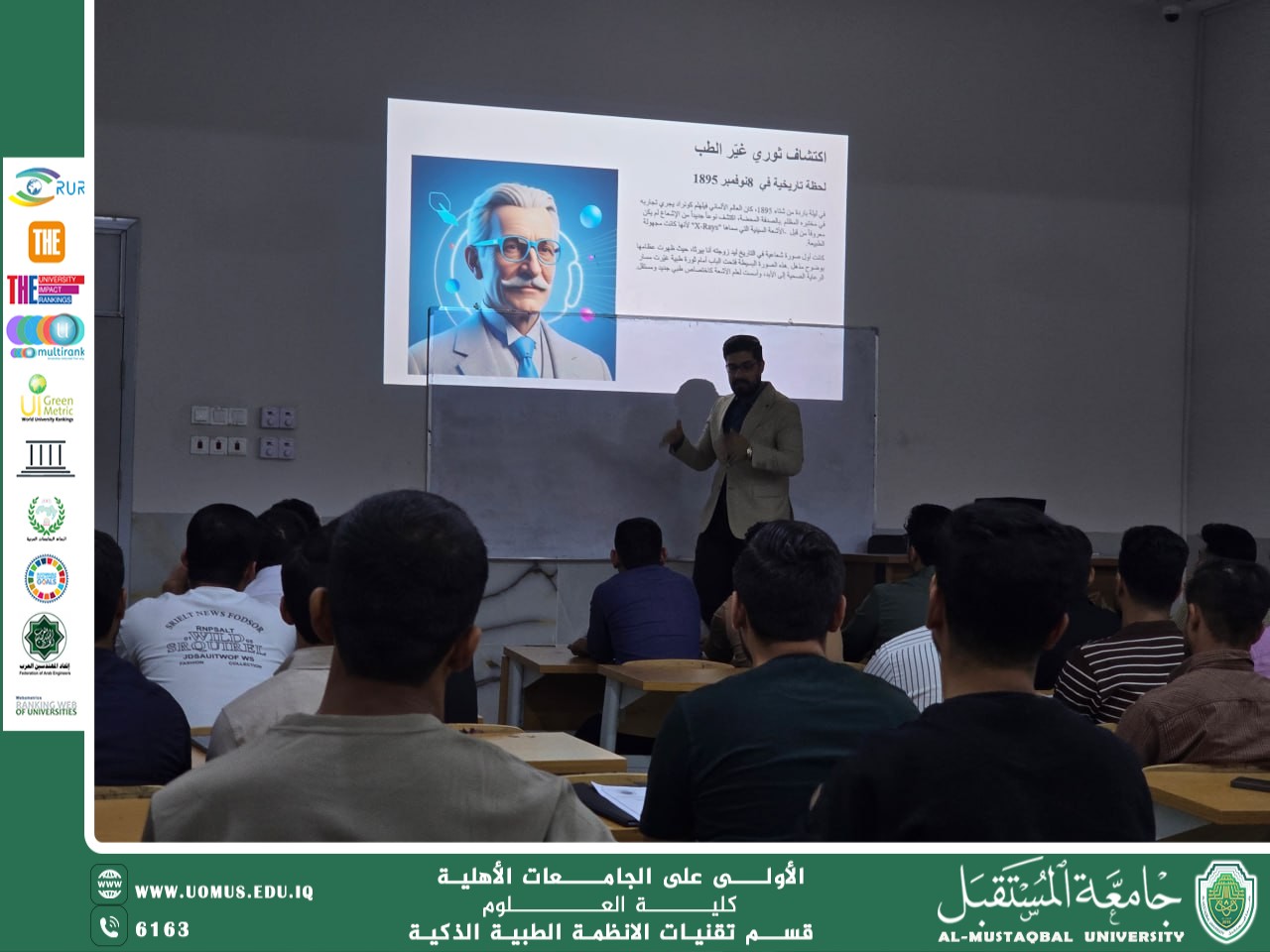
A scientific workshop was held on the occasion of World Radiography Day, entitled “Medical Imaging Technology,” presented by Asst. Lecturer Qusay Munir Diab, Head of Quality Assurance in the department.
The Department of Smart Medical Systems at the College of Science – Al-Under the patronage of Prof. Dr. Hassan Shakir Majdi, President of Al-Mustaqbal University,
and under the supervision of Asst. Prof. Dr. Furat Hamza Al-Sultani, Dean of the College of Science,
and Prof. Dr. Mahdi Abadi Maan, Head of the Department of Smart Medical Systems, Mustaqbal University organized a scientific workshop today, November 8, 2025, on the occasion of the World Radiography Day, entitled “Medical Imaging Technology.”
The workshop was presented by Asst. Lecturer Qusay Munir Diab, Head of Quality Assurance in the department.
The event aimed to shed light on the latest advancements in medical imaging technologies and highlight how technological development contributes to enhancing diagnostic accuracy and speeding up the processing of medical images. It also discussed the importance of integrating artificial intelligence and digital image processing techniques to support physicians and improve the efficiency and reliability of radiological data analysis.
During the workshop, participants were introduced to various modern imaging devices, including X-ray, Magnetic Resonance Imaging (MRI), and Computed Tomography (CT). A practical explanation was provided on how each technology works and its role in advancing healthcare services.
This workshop comes as part of Al-Mustaqbal University’s commitment to achieving the United Nations Sustainable Development Goals (SDGs), particularly:
Goal 3: Good Health and Well-being – by promoting awareness of modern medical technologies that improve healthcare services.
Goal 4: Quality Education – through continuous training of students in advanced practical fields.
Goal 9: Industry, Innovation, and Infrastructure – by encouraging the adoption of medical technology and fostering research innovation.